
Turnkey Robotic Material Handling & Packaging Automation Solutions in India
India’s Trusted Partner for Robotic Material Handling & Packaging Automation
Mahajan Automation Pvt. Ltd. is a leading provider of turnkey robotic material handling and packaging automation solutions in India. With 3,000+ successful robotic projects and an experienced in-house engineering team, we deliver customized automation solutions from design to commissioning.
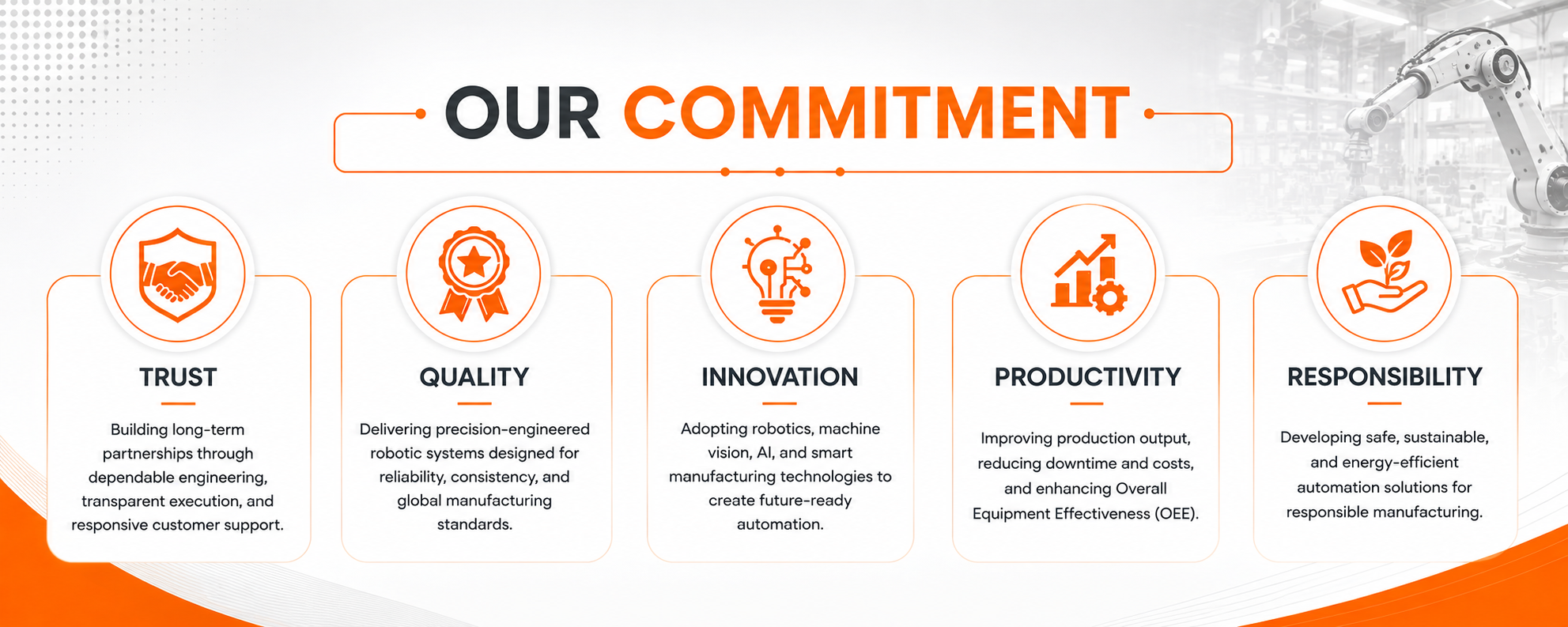
Our systems use trusted robots from FANUC, ABB, KUKA, Yaskawa Motoman, and Kawasaki Robotics to improve productivity, quality, efficiency, and workplace safety across FMCG, Food & Beverage, Pharmaceutical, Chemical, Packaging, Warehousing, Logistics, and E-commerce industries. Driven by Trust, Quality, Innovation, Productivity, and Responsibility, we build scalable, reliable, and Industry 4.0-ready automation solutions.
Complete Turnkey Robotic Material Handling Solutions
Mahajan Automation provides complete turnkey automation solutions covering engineering, manufacturing, robot integration, software development, installation, commissioning, operator training, and after-sales support. Our capabilities include automation feasibility studies, material flow analysis, factory layout optimization, robotic cell design, mechanical and electrical engineering, PLC/HMI programming, vision and conveyor integration, EOAT design, safety guarding, robot simulation, offline programming, installation, production support, preventive maintenance, and AMC services. Whether you need a single robotic palletizing cell or a fully automated packaging line integrated with conveyors, vision systems, barcode scanners, and warehouse automation, Mahajan Automation delivers reliable, end-to-end solutions tailored to your production and business requirements.
Complete Robotic Automation Capabilities
Multi-Brand Industrial Robot Integration
Mahajan Automation integrates globally recognized industrial robots from FANUC, ABB, KUKA, Yaskawa Motoman, and Kawasaki Robotics. As an independent system integrator, we select the right robot based on payload, reach, cycle time, accuracy, and application needs. Our multi-brand approach provides greater flexibility in designing application-specific robotic systems. This ensures reliable performance, optimized productivity, and scalable automation solutions.
In-House Engineering & Design Excellence
Mahajan Automation has a dedicated in-house engineering team of 10+ experienced automation professionals. Our expertise covers robotic cell design, mechanical systems, conveyors, EOAT, grippers, servo positioners, and safety systems. We also specialize in vision-guided robotics, PLC, and SCADA integration for complete automation solutions. Every system is custom-engineered to maximize productivity, minimize downtime, and ensure long-term reliability.
Robotic Material Handling & Packaging Solutions
Robotic Palletizing Solutions
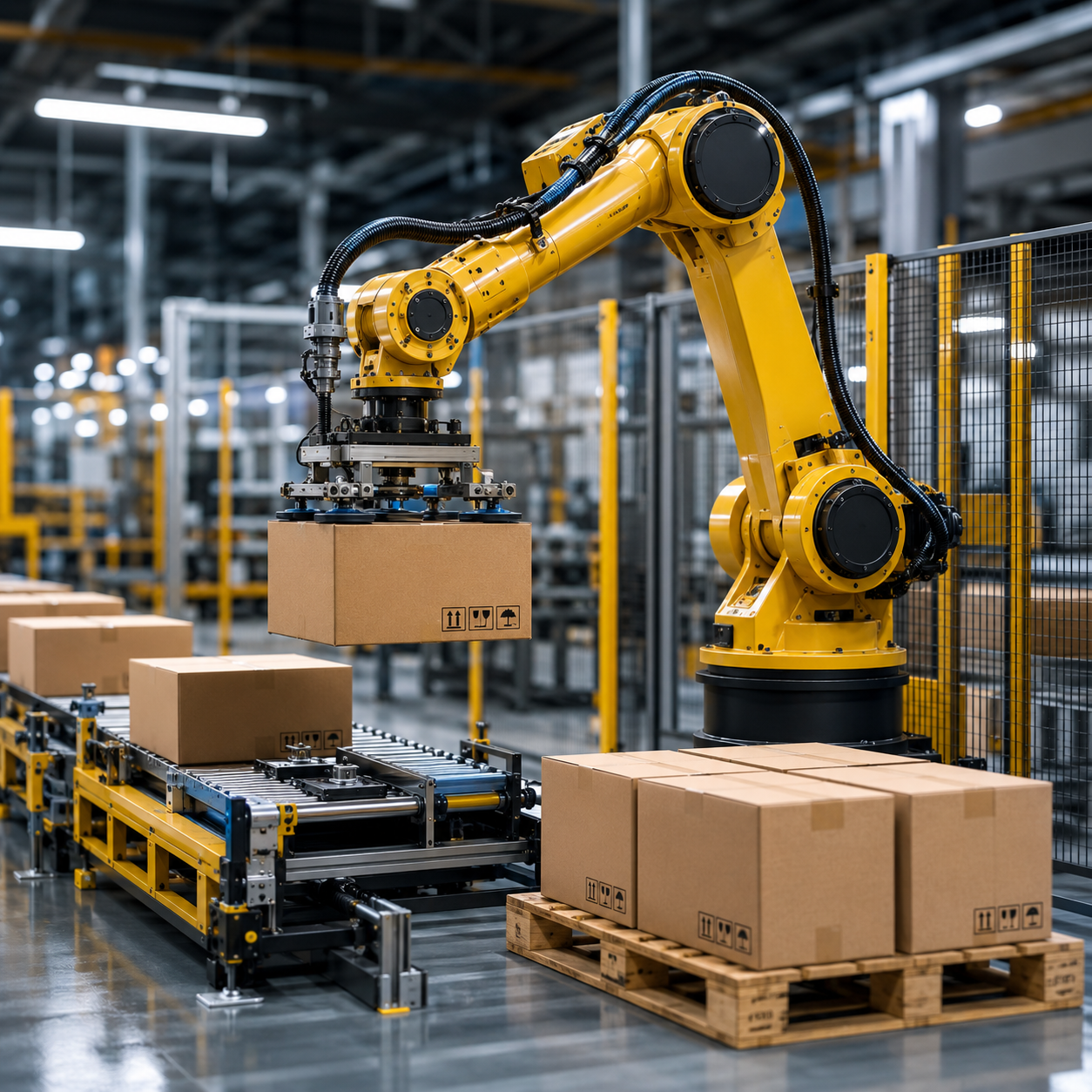
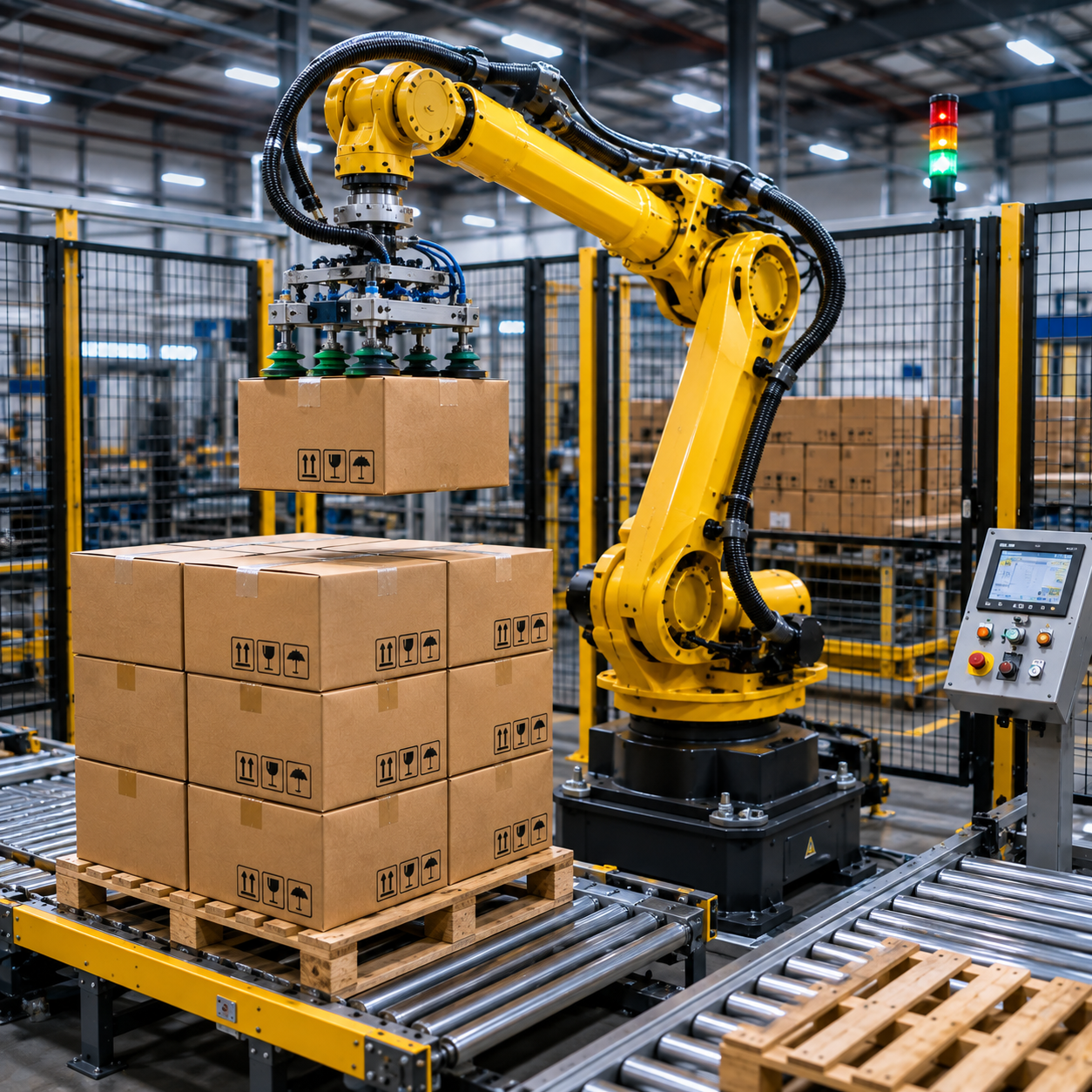
High-speed robotic palletizing for cartons, bags, boxes, bottles, trays, and packaged products. Supports mixed-product palletizing, automatic pallet handling, layer pattern generation, and wrapping integration. Improves throughput, stacking consistency, pallet stability, and reduces labor costs and product damage.
Robotic Depalletizing Systems
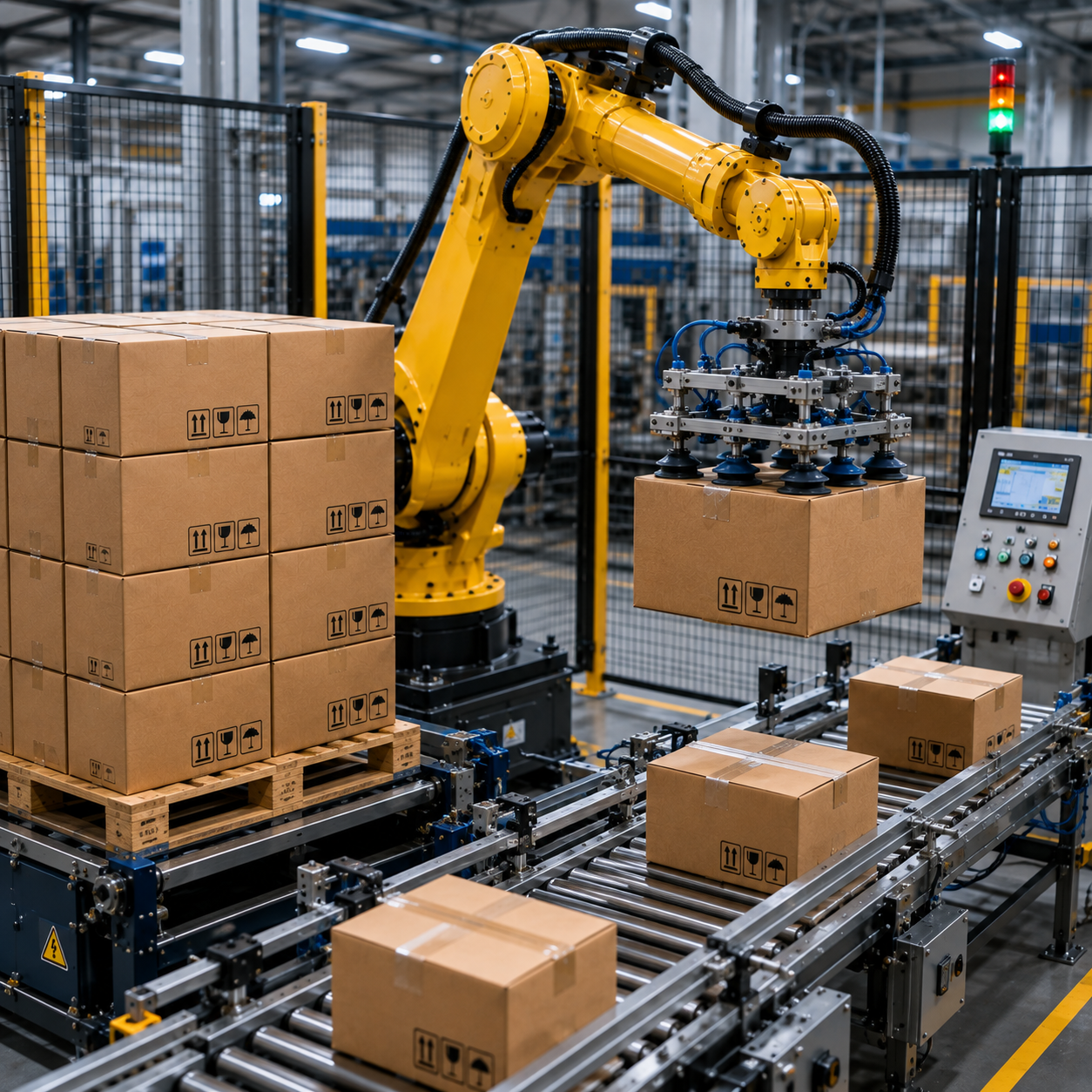
Automated unloading of cartons, bags, bottles, trays, and containers for continuous downstream production. Features vision-guided detection, automatic layer recognition, slip-sheet removal, and empty pallet handling.
Ideal for beverage, food, pharmaceutical, chemical, and packaging operations.
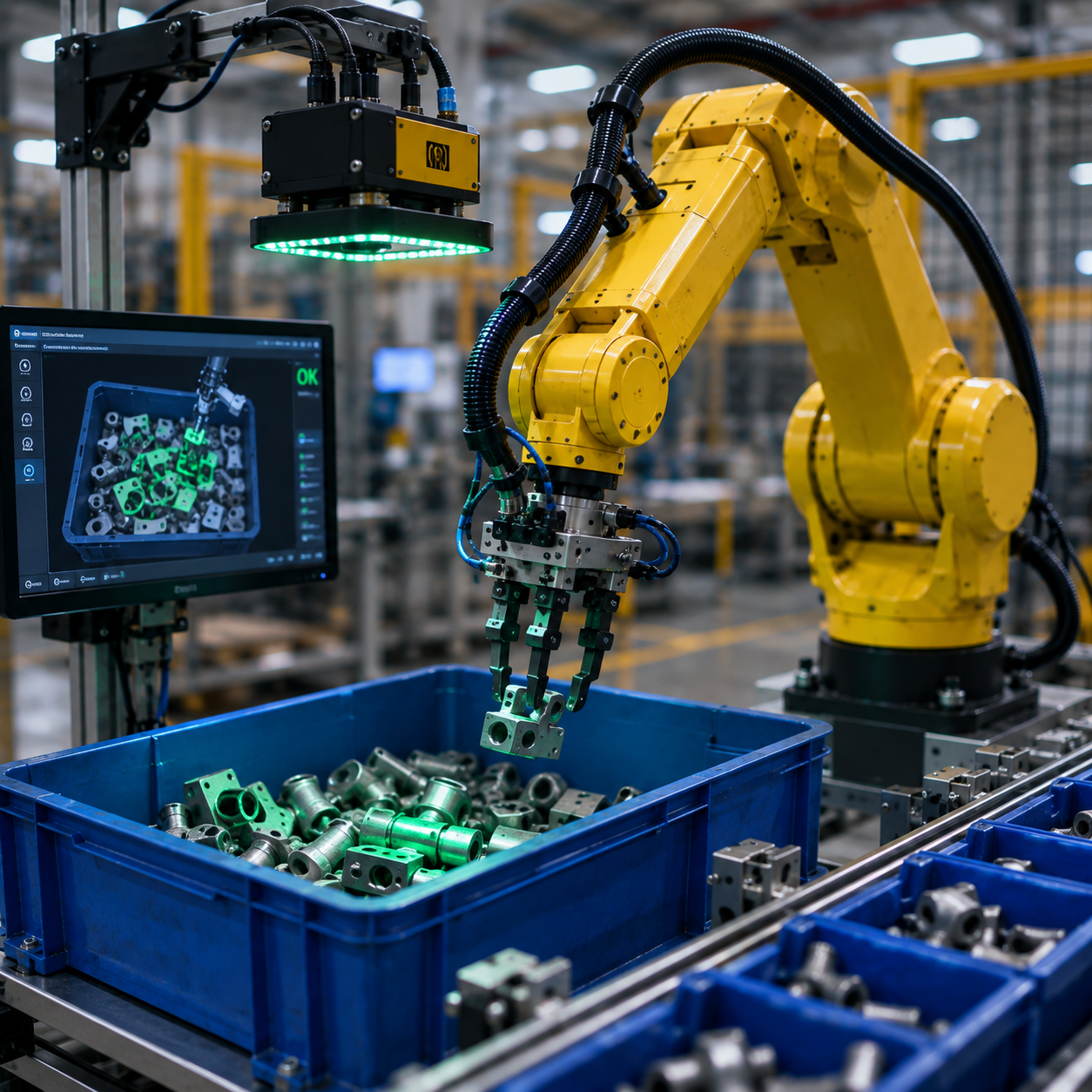
Vision-Guided Robotic Bin Picking
3D vision-guided robots identify randomly oriented components and pick them automatically without manual intervention. Supports 2D/3D vision, AI-based object recognition, part localization, and barcode/QR code reading. Reduces manual sorting, improves flexibility, and enables faster product changeovers.
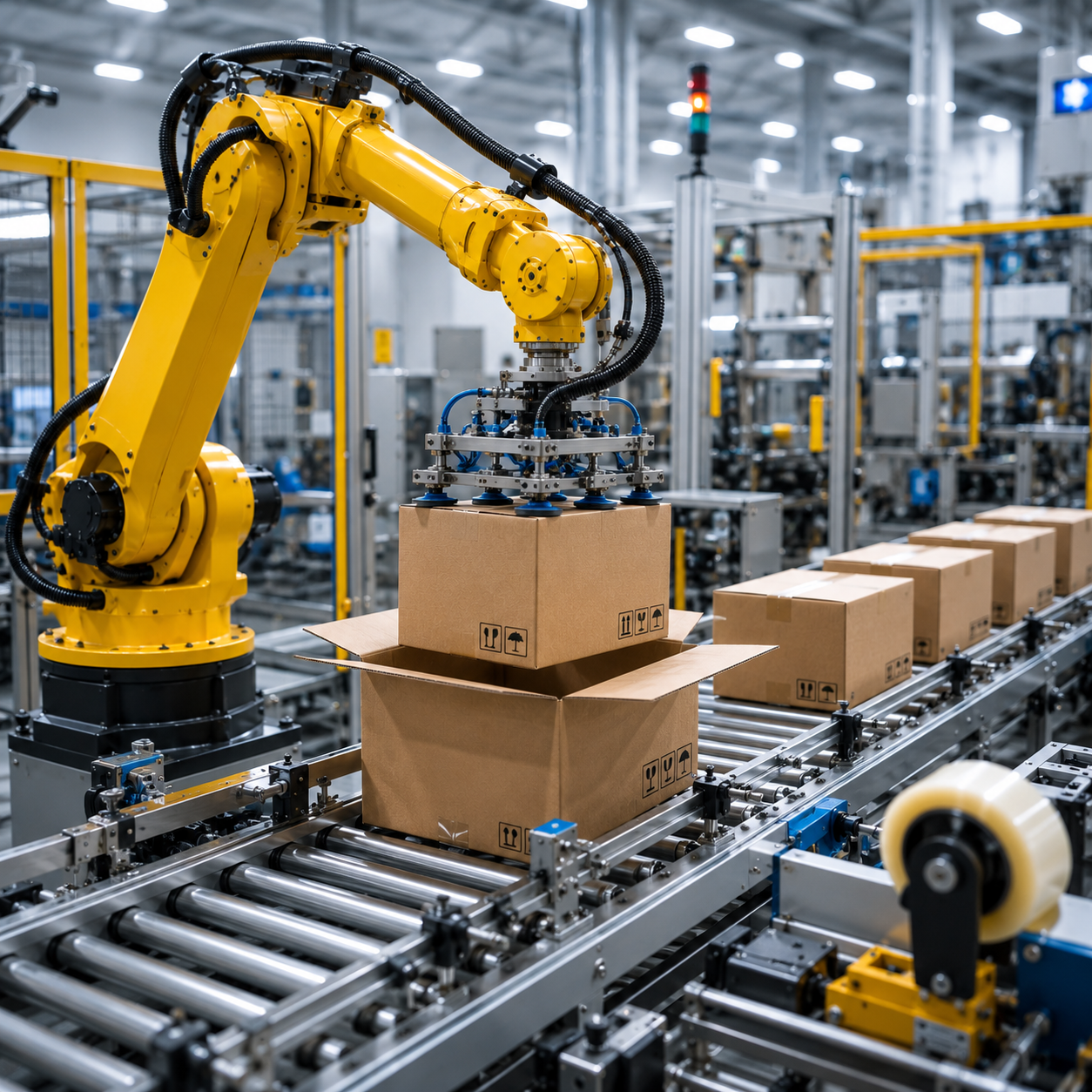
Robotic Primary Packaging Automation
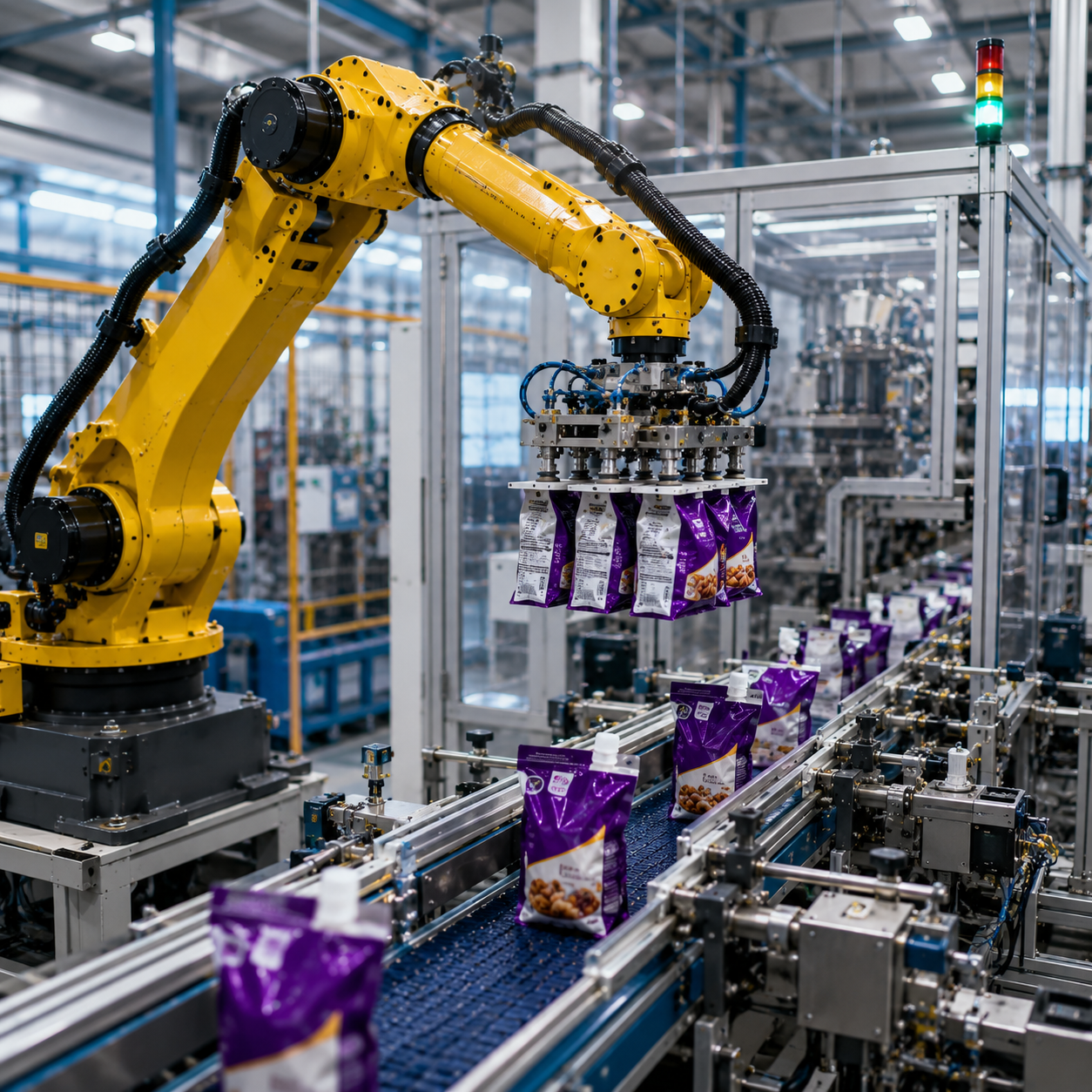
Automates product picking, placement, orientation, tray loading, filling-line feeding, and inspection. Handles bottles, pouches, sachets, blister packs, cartons, containers, and trays with precision.
Increases packaging speed, consistency, and overall production efficiency.
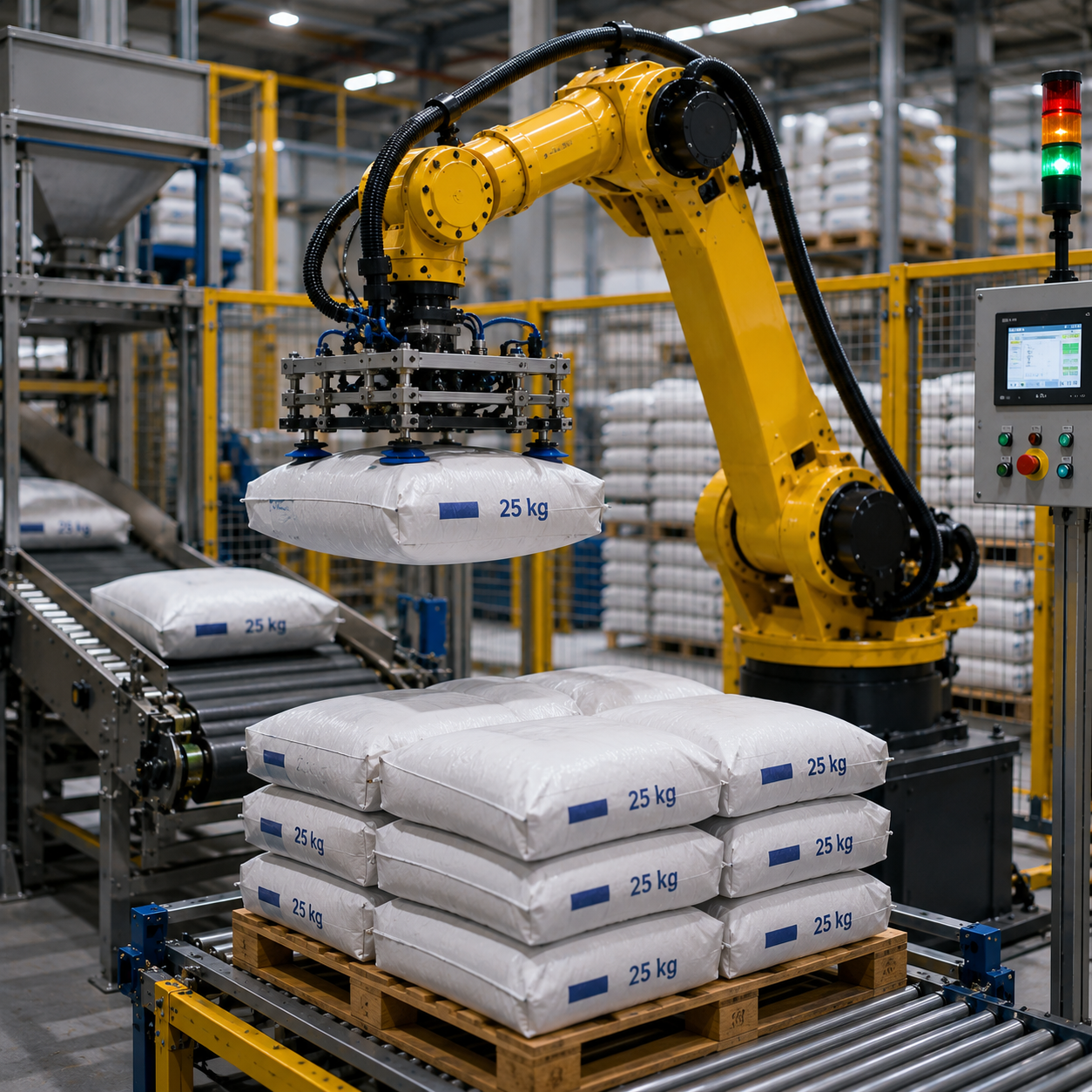
Robotic Bag Handling Systems
Automates the picking, loading, stacking, palletizing, and conveyor transfer of industrial and consumer bags. Suitable for flour, sugar, rice, food ingredients, animal feed, fertilizer, chemical, and cement industries. Reduces manual handling, improves workplace safety, and increases operational efficiency.
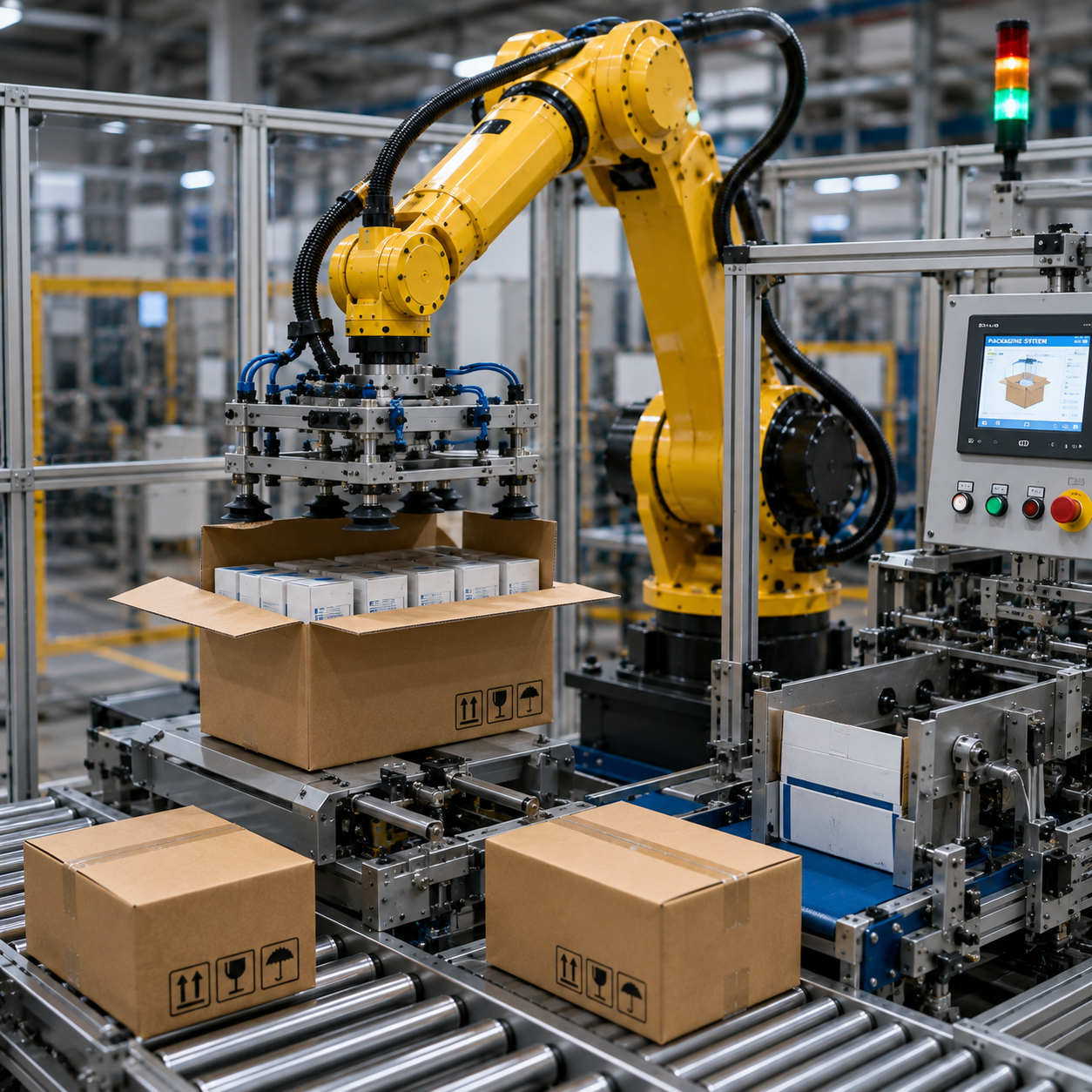
Robotic Cartoning & Secondary Packaging
High-speed robotic systems for product insertion, carton loading, case packing, tray packing, and product grouping. Designed for pharmaceutical, FMCG, food, cosmetics, personal care, and household products. Improves packaging productivity, consistency, flexibility, and quality control.
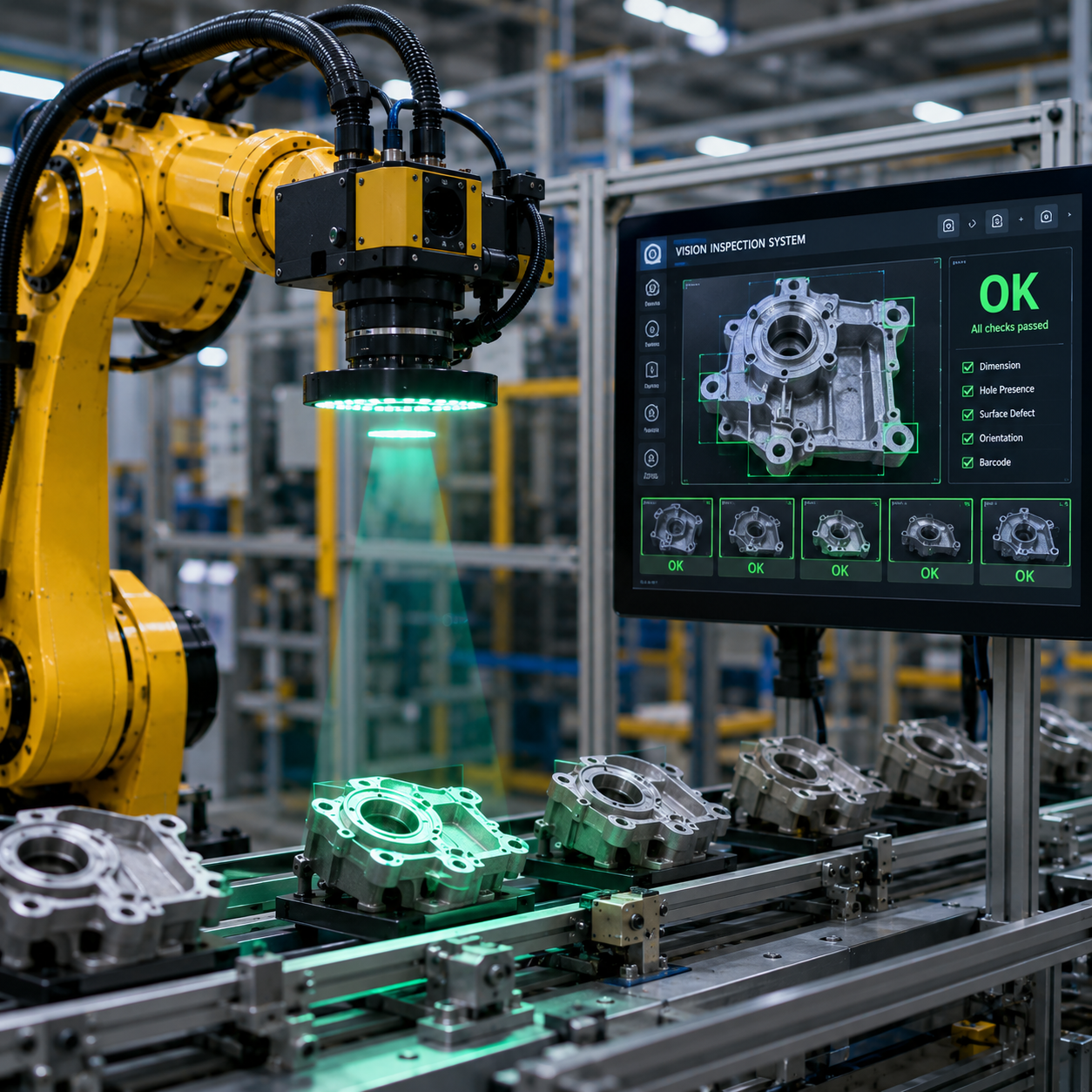
Intelligent Vision Inspection
Integrates machine vision with robotic systems for defect detection, product inspection, OCR, and barcode verification. Enables product counting, orientation detection, label inspection, and presence verification. Improves quality control while reducing inspection errors and manual intervention.

Conveyor & End-of-Line Automation
Complete conveyor automation using belt, roller, modular, pallet, and chain conveyor systems. Includes sorting, transfer, lifting, and accumulation systems for efficient material movement. Ensures smooth, reliable material flow across production and end-of-line operations.
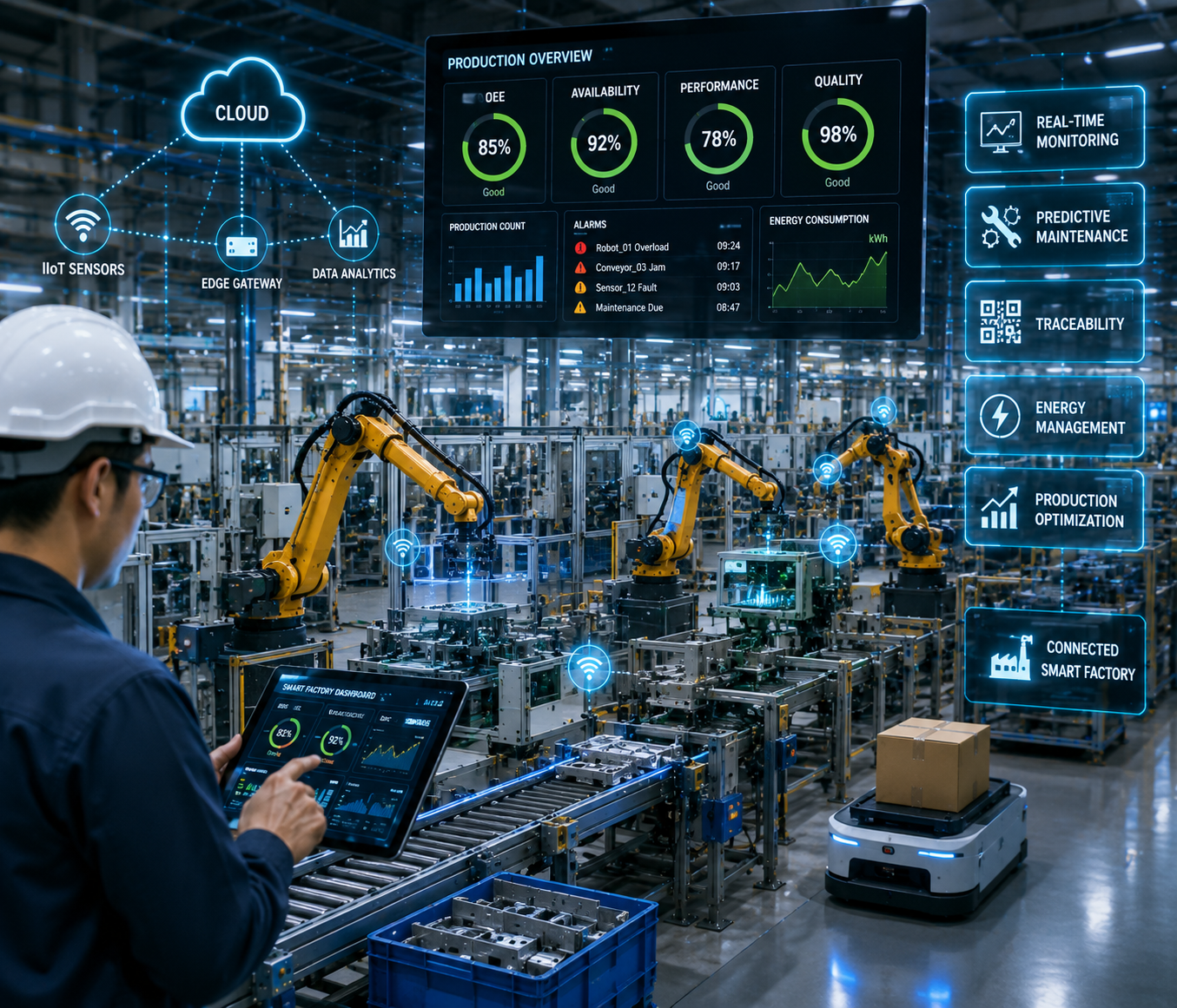
Smart Factory & Industry 4.0 Integration
Connects robotic automation with PLC, SCADA, MES, WMS, ERP, IoT, barcode, and RFID systems. Enables production dashboards, real-time data monitoring, and OEE tracking. Provides greater production visibility and supports data-driven manufacturing decisions
Industries Powered by Robotic Automation

FMCG, FMEG & Consumer Goods
Robotic solutions for high-volume product handling, packaging, and palletizing. Improve throughput, consistency, and production efficiency across consumer goods operations.

Food, Beverage & Dairy
Automated handling, packing, palletizing, and bottling solutions for food and beverage production. Designed for hygienic, reliable, and high-speed manufacturing environments.

Chemical & Industrial Manufacturing
Robotic handling solutions for chemicals, industrial products, bags, containers, and packaged materials. Reduce manual handling while improving workplace safety and productivity.

Packaging & Warehousing
End-of-line automation for packaging, cartoning, palletizing, depalletizing, and material handling. Integrate robots, conveyors, vision systems, and warehouse automation for seamless operations

Logistics & E-commerce Fulfillment
Smart robotic solutions for sorting, picking, packing, palletizing, and order fulfillment. Improve speed, accuracy, scalability, and efficiency across modern logistics operations.

Pharmaceuticals, Cosmetics & Personal Care
Precision automation for product handling, packaging, inspection, and material movement. Enhance product quality, traceability, and operational efficiency.
Benefits of Robotic Material Handling Solutions
Faster, Higher-Throughput Handling
Robotic material handling systems move products, cartons, and components continuously at high speed, reducing cycle times and increasing overall production output compared to manual handling.
Improved Accuracy & Consistency
Programmable robots repeat the same pick, place, and transfer motions with precision every time, minimizing product damage, misplacement, and handling errors.
Enhanced Workplace Safety
Automating heavy lifting, repetitive movements, and hazardous transfers reduces operator strain and workplace injuries, creating a safer production environment.
Reduced Labor Dependency & Operational Costs
Robotic handling reduces reliance on manual labor for repetitive tasks, lowering long-term labor costs while freeing up staff for higher-value work.We use robot simulation, vision-guided robotics, PLC, and SCADA integration. Solutions are designed for precision, productivity, and Industry 4.0 readiness
Flexible, Scalable Automation
Vision-guided grippers and reprogrammable robot sequences let the same system handle multiple product sizes, shapes, and packaging formats — making it easy to scale or reconfigure as production needs change.
Frequently Asked Questions FAQ
What is Robotic Material Handling Automation?
Robotic Material Handling Automation uses industrial robots to *pick, move, load, unload, transfer, sort, and place materials or components* between machines, conveyors, storage areas, and production stations. It helps manufacturers automate repetitive handling operations with greater speed, accuracy, and consistency.
What material handling applications can be automated with robots?
Robots can automate *machine loading and unloading, part transfer, palletizing, depalletizing, bin picking, conveyor handling, sorting, stacking, and material movement*. Custom robotic cells can be designed for automotive, foundry, forging, engineering, FMCG, warehousing, and other manufacturing applications.
What are the benefits of robotic material handling systems?
Robotic material handling improves *production throughput, handling accuracy, operational efficiency, workplace safety, and process consistency*. It also reduces manual handling, minimizes repetitive tasks, and enables continuous production with optimized material flow.
Can robotic material handling systems handle different products and component sizes?
Yes. Robotic systems can be customized with *grippers, vacuum systems, vision guidance, conveyors, fixtures, and programmable robot sequences* to handle different component shapes, weights, sizes, and packaging formats. Automated recipe changes can also support multiple products on the same production line.
Can Robotic Material Handling Automation be integrated with existing machines?
Yes. Robotic material handling cells can integrate with *CNC machines, presses, conveyors, welding systems, packaging lines, storage systems, PLCs, sensors, and vision systems*. This enables automated transfer of materials between processes and supports a connected, streamlined production workflow..