
Robotic TIG Welding System
Upgrade your production with our advanced Robotic TIG Welding System designed for precision, consistency, and superior weld quality. Contact us today to streamline your welding operations, reduce manual errors, and achieve higher efficiency with intelligent automation solutions built for modern industrial manufacturing needs.
Robotic TIG Welding
Robotic TIG Welding is an automated welding process that uses programmable robotic arms to perform Tungsten Inert Gas (TIG) welding with exceptional precision and control. In this system, a non-consumable tungsten electrode creates a stable arc, while shielding gas protects the weld area from contamination. As a result, it produces clean, high-quality welds with minimal spatter and excellent finish. Robotic TIG welding is widely used for stainless steel, aluminum, and thin materials in industries where accuracy, aesthetics, and strong weld integrity are essential.

Robotic Tungsten Inert Gas TIG Welding
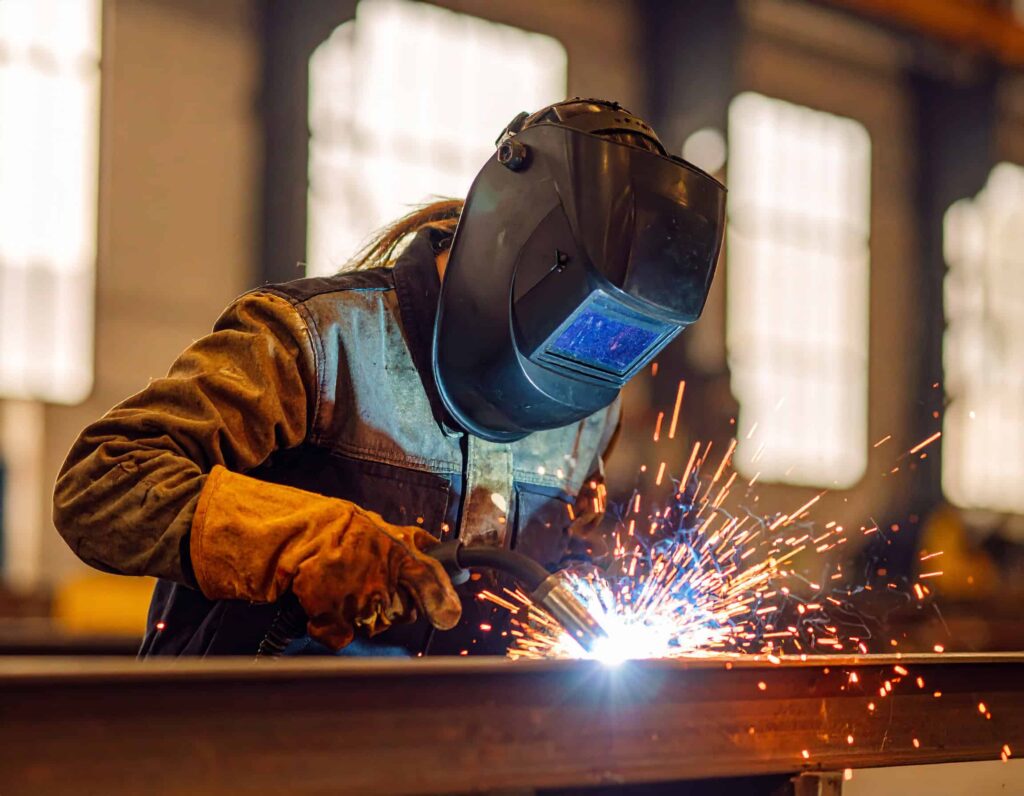
High Precision & Clean Finish –
Delivers accurate weld control with minimal spatter, ensuring smooth and high-quality weld appearance.
Consistent Performance –
Provides repeatable weld penetration and uniform results across large production volumes.
Improved Efficiency & Safety –
Reduces manual intervention, enhances workplace safety, and increases overall manufacturing productivity.
Robotic Tungsten Inert Gas (TIG) Welding is an automated precision welding process that delivers clean, accurate, and high-quality welds for stainless steel, aluminum, and thin materials.
Robotic Tungsten Inert Gas (TIG) Welding combines advanced robotic automation with the precision of TIG welding to achieve superior arc stability and weld control. Using a non-consumable tungsten electrode and shielding gas protection, this system produces clean, spatter-free welds with excellent finish and structural integrity. Moreover, it ensures consistent weld penetration and repeatability across high-volume production runs. As a result, industries such as automotive, aerospace, heavy fabrication, and industrial equipment manufacturing benefit from improved productivity, enhanced safety, and reduced rework. The automated system also minimizes human error while maintaining strict quality standards, making it ideal for applications where precision and aesthetics are critical. In addition, programmable welding paths and real-time parameter control allow manufacturers to optimize heat input, reduce distortion, and maintain tight tolerances. Therefore, businesses can achieve faster cycle times, lower operational costs, and long-term reliability while meeting demanding industrial specifications.
Robotic TIG Welding Applications
Construction Equipment Industry
In the construction equipment industry, robotic TIG welding is used for applications that require high weld precision, clean finish, and controlled heat input, especially for sheet-metal structures and cabin assemblies. It is commonly applied in the fabrication of excavator, loader, and crane cabins, operator floor panels, roof panels, doors, hoods, engine covers, seat frames, dashboard structures, and sheet-metal subframes before painting. Robotic TIG welding ensures strong, high-quality welds with minimal distortion, making it suitable for machines such as excavators, backhoe loaders, wheel loaders, cranes, and aerial work platforms where structural reliability and finish quality are important.
Heavy Engineering Industry
In the heavy fabrication industry, robotic TIG welding is used for applications that require high precision, clean welds, and superior finish, especially on thin to medium-thickness metal components. It is commonly applied in the fabrication of sheet-metal sub-assemblies, brackets, stiffeners, gussets, enclosures, panels, machine guards, and structural frames made from medium-thickness sheets (2–6 mm). Robotic TIG welding ensures consistent weld quality, controlled heat input, and minimal distortion, making it suitable for components that demand accuracy and strong weld integrity. Automation also improves productivity while maintaining high welding standards in fabrication environments.
Automotive and Defence
In the automotive and defence industries, robotic TIG welding is used for applications that require high precision, clean weld appearance, and strong joint quality. In the automotive sector, it is commonly applied in components such as Body-in-White (BIW) sub-assemblies, car doors, roof structures, pillars (A/B/C), floor panels, cross members, EV battery enclosures, and seat structures, especially where high-quality finishing or thin materials are involved.In the defence sector, robotic TIG welding is used for manufacturing armored vehicle body panels, internal frames and brackets, shielding enclosures, and electronics racks. For heavy-duty defence structures, TIG welding is often combined with seam welding or MIG welding to achieve higher structural strength and durability while maintaining precise weld quality.
White Goods & Electronic Appliances
In the white goods and electronic appliances industry, robotic TIG welding is used for applications that require clean weld appearance, precision, and minimal heat distortion, especially in thin sheet-metal assemblies. It is commonly applied in the manufacturing of washing machine outer bodies, refrigerator cabinets and rear panels, microwave oven chassis, air-conditioner indoor and outdoor units, and electrical control cabinets. Robotic TIG welding is suitable for thin sheet metals (0.6–1.2 mm) and helps achieve high-quality weld finish, precise joints, and consistent production in automated manufacturing lines.
PEB (Pre-Engineered Buildings) / General Fabrication
In the PEB (Pre-Engineered Buildings) and general fabrication industry, robotic TIG welding is used for applications that require precise welding, controlled heat input, and clean weld finish, particularly for light to medium-thickness steel structures. It is commonly applied in the fabrication of secondary steel members such as purlins and girts, sheet-metal cladding supports, cable trays, ladder trays, electrical and HVAC duct supports, and light steel frames and panels. Robotic TIG welding helps improve weld consistency, structural quality, and fabrication accuracy, making it suitable for automated production environments where reliable and repeatable welding is required.
Agriculture Equipment Industry
In the agriculture equipment industry, robotic TIG welding is used for applications that require clean weld finish, precision, and controlled heat input, especially for sheet-metal assemblies and visible components. It is commonly applied in the fabrication of tractor body panels and covers, engine hoods and side panels, tool boxes, battery boxes, operator cabins and roofs, and sheet-metal guards and shields. Robotic TIG welding ensures high-quality welds with minimal distortion and consistent appearance, making it suitable for agricultural machines such as tractors, harvesters, seed drills, and sprayers where durability and finishing quality are important.
Benefits of TIG Welding Applications
Superior Weld Quality
TIG welding produces clean, precise, and high-strength welds with excellent finish, making it ideal for critical applications.
Minimal Spatter & Clean Appearance
The process generates very little spatter, ensuring smooth weld beads and reducing post-weld cleaning requirements.
Better Control & Accuracy
TIG welding offers precise heat and arc control, which is especially beneficial for thin materials and complex components.
Strong & Durable Joints
It delivers deep penetration and reliable weld strength, ensuring long-term structural integrity.
Versatility in Materials
TIG welding is suitable for stainless steel, aluminum, copper, and other non-ferrous metals across various industries.
Benefits of TIG Welding Applications
Lorem Ipsum is simply dummy text of the printing and typesetting
Lorem Ipsum is simply dummy text of the printing and typesetting
Lorem Ipsum is simply dummy text of the printing and typesetting
Lorem Ipsum is simply dummy text of the printing and typesetting
Lorem Ipsum is simply dummy text of the printing and typesetting
Lorem Ipsum is simply dummy text of the printing and typesetting
Lorem Ipsum is simply dummy text of the printing and typesetting
Lorem Ipsum is simply dummy text of the printing and typesetting
Lorem Ipsum is simply dummy text of the printing and typesetting
Lorem Ipsum is simply dummy text of the printing and typesetting
Frequently Asked Questions FAQ
What is a Robotic TIG Welding System?
A Robotic TIG Welding System is an automated welding solution that uses programmable robots to perform Tungsten Inert Gas (TIG) welding with high precision and consistent quality.
Why is TIG welding preferred for thin materials?
TIG welding offers excellent heat control and arc stability, which helps prevent burn-through and distortion in thin metals like stainless steel and aluminum.
Which industries commonly use robotic TIG welding?
Industries such as automotive, aerospace, heavy engineering, food processing equipment, and oil & gas rely on robotic TIG welding for precise and clean welds.
What are the advantages of robotic TIG welding over manual welding?
Robotic TIG welding provides greater accuracy, repeatability, improved safety, reduced human error, and consistent weld strength in high-volume production.
Is robotic TIG welding cost-effective for manufacturing?
Yes, it reduces rework, minimizes material waste, improves productivity, and ensures long-term operational efficiency, resulting in better return on investment.