
Robotic Casting System
Transform your foundry operations with our advanced Robotic Casting System, designed for precision, safety, and higher productivity. Moreover, intelligent automation reduces manual handling, improves consistency, and minimizes defects in casting processes. In addition, it enhances workflow efficiency and ensures reliable performance even in high-temperature environments. Upgrade to smarter, safer, and more efficient casting solutions today!
Robotic Casting System
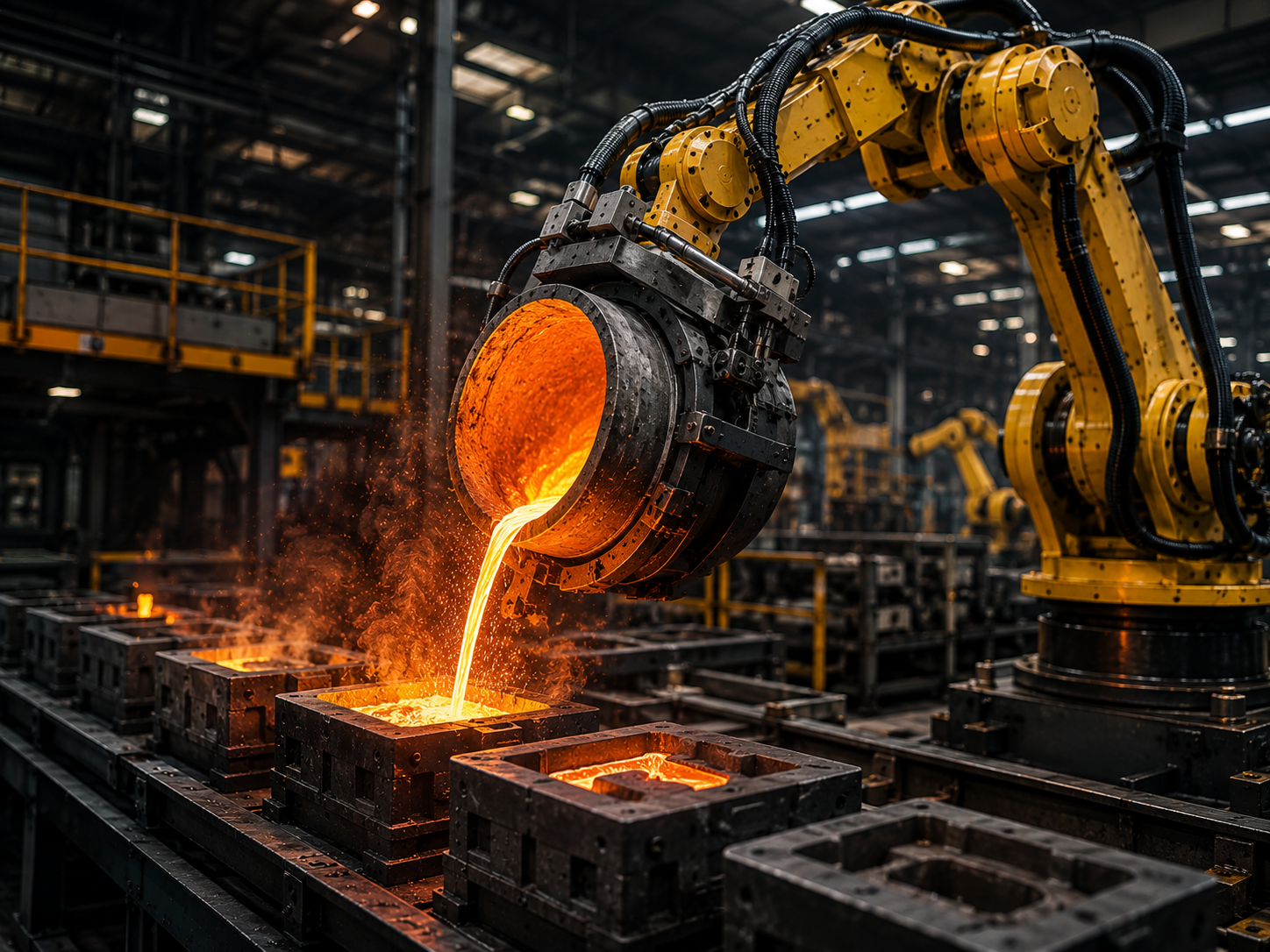
A Robotic Casting System is an advanced automation solution that enhances foundry operations by integrating industrial robotics with casting processes. It automates tasks such as mold handling, molten metal pouring, casting extraction, and component transfer, ensuring greater precision, consistency, and process control throughout production.
By reducing manual intervention in high-temperature environments, robotic casting automation improves workplace safety while increasing production efficiency. Integrated with industrial automation solutions, these systems help minimize casting defects, reduce material waste, and deliver consistent product quality. As a result, manufacturers benefit from faster cycle times, improved throughput, and more reliable casting operations across automotive, heavy engineering, and industrial manufacturing applications.
Robotic Casting Technology
Pressure Die Casting (PDC) is a high-precision manufacturing process where molten metal is injected into a steel mold under high pressure. Moreover, it ensures excellent surface finish, dimensional accuracy, and faster production cycles. Consequently, PDC is widely used for producing complex, lightweight, and durable components in automotive and industrial applications.
Investment Casting (IC) is a precision manufacturing process in which a wax pattern is coated with ceramic material to create a mold, and molten metal is then poured to form detailed components. Moreover, it delivers exceptional surface finish and tight dimensional tolerances. Consequently, IC is ideal for producing complex, high-strength parts used in aerospace, automotive, and industrial applications.
Gravity Die Casting (GDC) is a metal casting process where molten metal is poured into a reusable metal mold using gravity rather than high pressure. Moreover, it provides better mechanical strength and improved surface finish compared to sand casting. Consequently, GDC is widely used for producing durable, high-quality components in automotive, engineering, and industrial applications.
Robotic Pressure Die Casting PDC
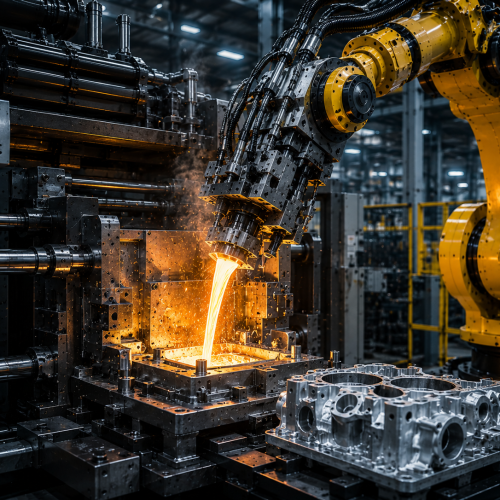
Robotic pressure die casting technology is an advanced manufacturing solution that combines industrial robotics with high-pressure die casting processes to improve precision, consistency, and production efficiency. By automating operations such as molten metal pouring, die lubrication, component extraction, and trimming, the system reduces manual intervention while ensuring reliable casting quality.
In addition to enhancing workplace safety in high-temperature environments, robotic automation helps minimize casting defects, reduce material waste, and optimize cycle times. Integrated with sensors and real-time process monitoring, these systems support better quality control, predictive maintenance, and seamless integration with industrial automation solutions. As a result, manufacturers achieve higher productivity, improved surface finish, and greater operational efficiency across automotive, heavy engineering, and industrial manufacturing applications.
Robotic Investment Casting IC
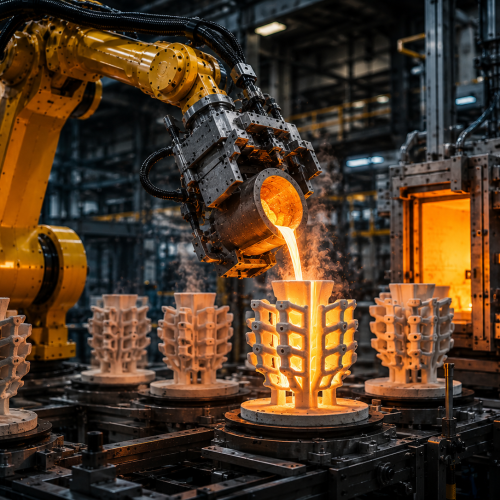
Robotic investment casting is an advanced automation solution that enhances the precision and efficiency of the traditional investment casting process. By integrating industrial robots for tasks such as wax pattern handling, ceramic shell building, molten metal pouring, and part extraction, it ensures consistent quality and reduced manual intervention. Moreover, robotic automation improves dimensional accuracy and surface finish while minimizing defects and material waste. Consequently, manufacturers achieve higher productivity and reliable repeatability in complex component production. In addition, the system enhances workplace safety by limiting human exposure to high temperatures and hazardous environments. Furthermore, real-time monitoring and process control enable better quality assurance, predictive maintenance, and seamless integration with modern smart manufacturing systems, making it ideal for aerospace, automotive, and high-precision industrial applications.
Robotic Gravity Die Casting GDC
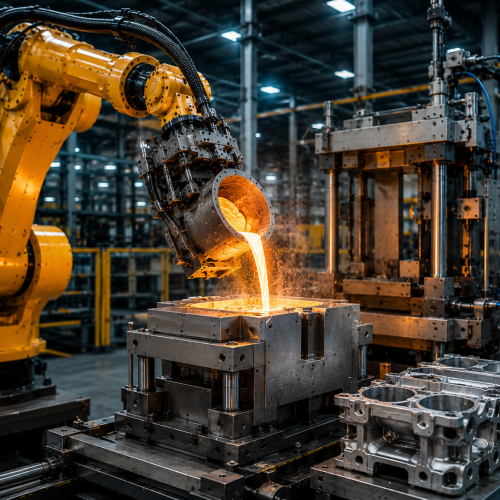
Robotic Gravity Die Casting (GDC) is an advanced casting solution that combines industrial robotics with gravity-fed metal casting processes to improve precision, consistency, and production efficiency. By automating operations such as molten metal pouring, mold handling, component extraction, and trimming, the system reduces manual intervention while ensuring reliable casting quality and repeatable results.
Robotic automation helps optimize cycle times, minimize casting defects, and improve the surface finish and dimensional accuracy of finished components. In addition, it enhances workplace safety by reducing operator exposure to high temperatures and demanding foundry environments. Integrated with intelligent process monitoring and robotic foundry automation solutions, robotic GDC supports better production control, improved productivity, and efficient manufacturing operations across automotive, heavy engineering, and industrial casting applications.
Robotic Casting Application's

Automotive Industry
Robotic casting systems are widely used in the automotive sector for manufacturing engine blocks, transmission housings, cylinder heads, alloy wheels, and structural components. Automated casting improves dimensional accuracy, reduces defects, and ensures consistent quality for high-volume production environments.

Heavy Engineering Industry
In heavy engineering, robotic casting supports the production of large machine components, pump housings, gear casings, valves, and industrial equipment parts. Automation enhances process reliability, improves casting quality, and increases manufacturing efficiency in demanding production conditions.

Infrastructure & Structural Fabrication
Robotic casting enables the production of durable structural components, support brackets, connection elements, and infrastructure-related castings. The technology ensures consistent quality, improved material utilization, and efficient manufacturing for large-scale construction projects.

Oil & Gas Industry
The oil and gas industry relies on robotic casting systems for producing valve bodies, pump components, pipeline fittings, flanges, and pressure-resistant cast parts. Automated casting processes help deliver high-strength components capable of operating in extreme temperatures and harsh environments.

Railways & Transport
Robotic casting systems are used to manufacture railway components, brake systems, axle housings, couplings, and transport equipment parts. Precision automation improves product durability, dimensional consistency, and production throughput for critical transportation applications.

Shipbuilding & Offshore
In shipbuilding and offshore industries, robotic casting supports the production of marine-grade components, pump housings, propeller parts, valve bodies, and structural castings. The technology ensures reliable quality, corrosion resistance, and high-performance components for demanding marine environments.
Benefits of Robotic Casting System
Improved Precision and Consistency
Robotic Casting Systems ensure accurate metal pouring and component handling. Moreover, automation reduces human error, delivering uniform quality across production batches.
Enhanced Workplace Safety
By automating high-temperature and hazardous casting tasks, the system minimizes direct human exposure. Consequently, it significantly reduces workplace risks and injuries.
Increased Production Efficiency
Robotic automation accelerates casting cycles and streamlines workflow. In addition, it reduces downtime and improves overall operational productivity.
Reduced Defects and Material Waste
With precise process control, robotic casting lowers the chances of porosity and casting flaws. Furthermore, optimized material usage decreases scrap rates and rework costs.
Cost-Effective Long-Term Operations
Although the initial investment may be higher, robotic systems lower labor costs and improve output quality. As a result, manufacturers achieve better ROI and sustainable production growth.
Frequently Asked Questions FAQ
What is a Robotic Casting System?
A Robotic Casting System is an automated solution that integrates industrial robots with casting processes to handle pouring, mold management, and part extraction. Moreover, it improves accuracy, safety, and production efficiency.
How does robotic casting improve safety?
Since casting involves high temperatures and molten metal, robotic systems reduce direct human involvement. Consequently, they minimize workplace hazards and improve overall operational safety.
Which industries benefit from Robotic Casting Systems?
Industries such as automotive, heavy engineering, oil & gas, railways, shipbuilding, and infrastructure benefit significantly. In addition, any sector requiring durable and high-precision cast components can leverage this technology.
Does robotic casting reduce defects?
Yes, robotic automation ensures precise metal pouring and consistent process control. Furthermore, it reduces common casting defects like porosity, shrinkage, and dimensional variations.
Is Robotic Casting suitable for high-volume production?
Absolutely, robotic systems are designed for continuous and high-volume operations. As a result, manufacturers achieve faster cycle times, improved repeatability, and better long-term cost efficiency.