
Robotic Laser and Plasma Welding
Accelerate production with our cutting‑edge Robotic LASER AND PLASMA WELDING solutions designed to deliver unmatched accuracy, superior consistency, and improved cycle times. Moreover, our automated systems reduce material waste and boost safety, helping manufacturers stay competitive. Discover smarter robotic welding automation that elevates quality and efficiency — get started today!
Robotic Laser & Plasma Welding | Cutting
Robotic Laser & Plasma Welding is an advanced manufacturing process that combines precision, speed, and automation to achieve high-quality welds consistently. Unlike conventional welding, it uses robotic arms to control laser or plasma arcs, ensuring exact placement and minimal human error. Moreover, this technology enhances productivity by reducing cycle times and material waste, while also improving workplace safety. Consequently, manufacturers can achieve superior structural integrity, consistent results, and cost-efficient operations. With these benefits, Robotic Laser & Plasma Welding is transforming modern industrial fabrication and setting new standards for quality and efficiency.
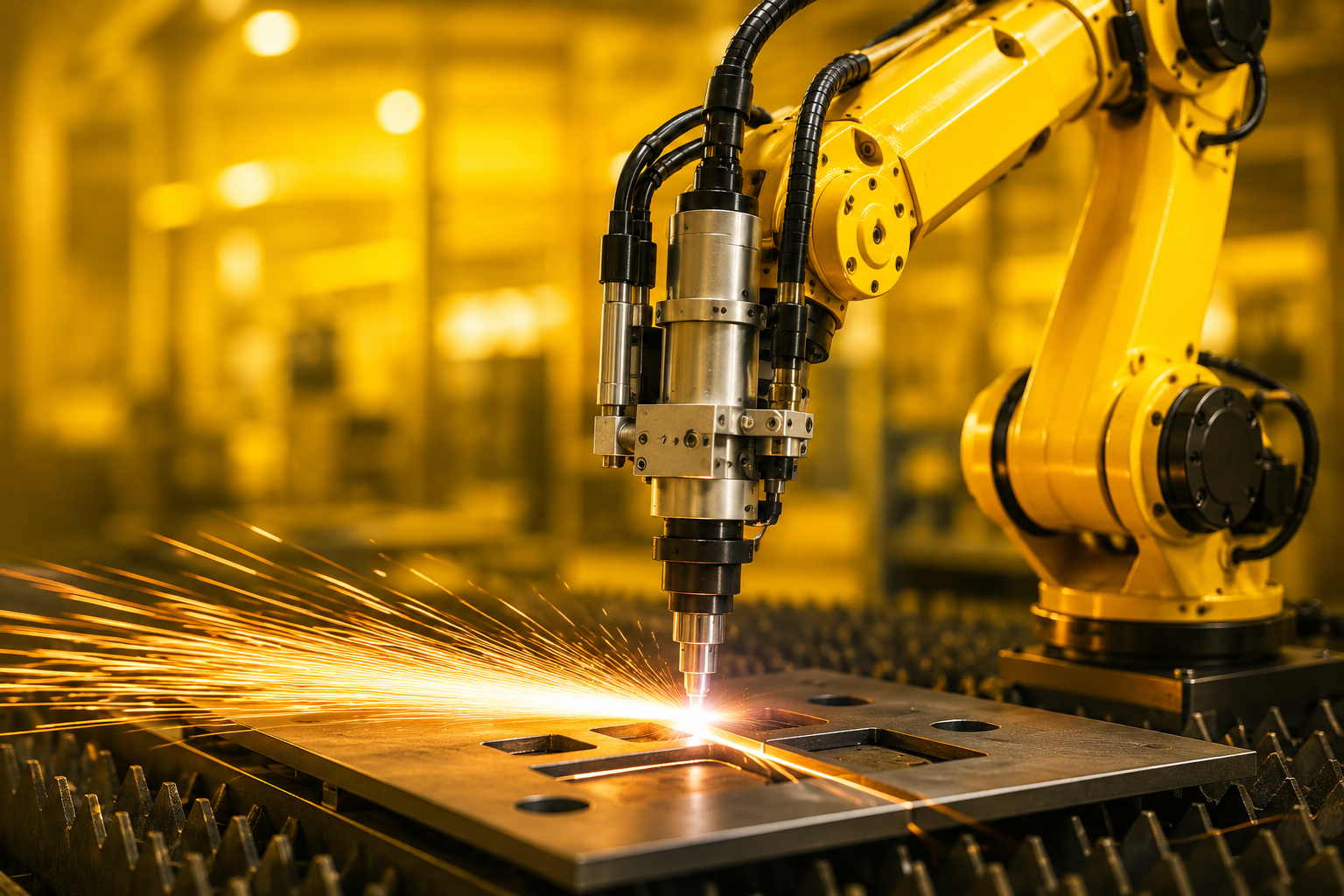
Cutting Technology
Experience precise and efficient material processing with Robotic Laser Cutting. This advanced cutting technology delivers high accuracy, smooth edge quality, and minimal heat-affected zones, making it ideal for complex geometries and intricate designs. Automated laser cutting improves production efficiency, reduces material waste, and ensures consistent results across high-volume manufacturing environments. It is widely used in automotive, aerospace, sheet metal fabrication, and industrial equipment manufacturing.
Robotic Plasma Cutting provides fast, accurate, and cost-effective cutting for mild steel, stainless steel, and other conductive metals. Designed for high-productivity manufacturing environments, robotic plasma systems can handle thick materials while maintaining excellent cut quality and repeatability. The integration of industrial robots enables precise motion control, reduced operator intervention, faster cycle times, and improved throughput. This technology is commonly used in structural steel fabrication, heavy engineering, construction equipment, and metal processing industries where speed and reliability are critical.
Robotic Laser Cutting/Welding Technology in Pune
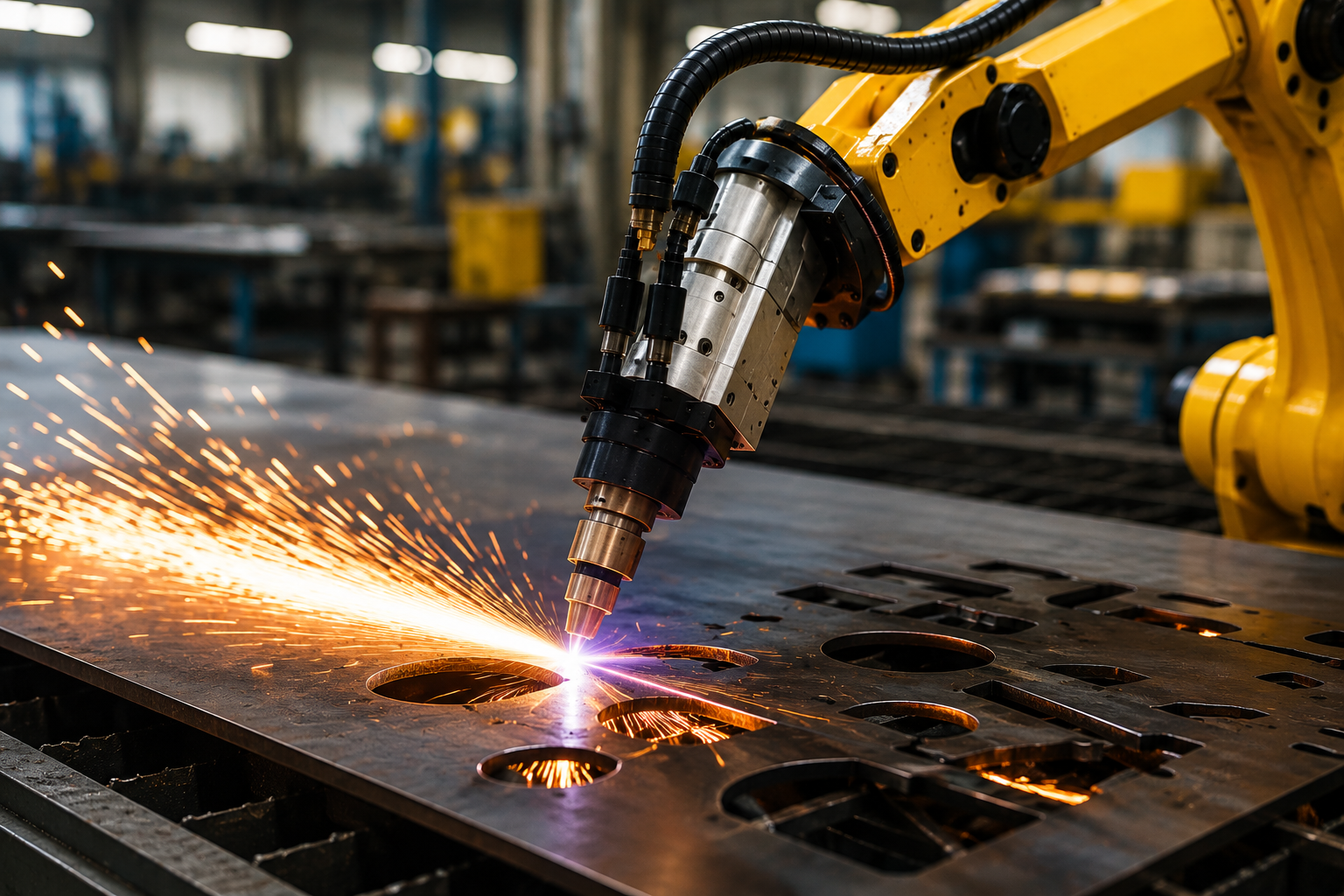
Robotic Laser and Plasma Welding Solutions combine advanced robotic automation with high-precision laser and plasma technologies to deliver fast, accurate, and repeatable welding and cutting performance. Designed for modern manufacturing, Laser and Plasma Welding Solutions minimize material waste, reduce production time, and improve workplace safety while ensuring consistent weld quality. These systems easily process a wide range of materials, including steel, stainless steel, aluminum, and other alloys, making them ideal for automotive, aerospace, heavy engineering, and metal fabrication industries. Integrated with intelligent software, they enable real-time monitoring, predictive maintenance, and seamless production control for maximum efficiency. By enhancing productivity, reducing operational costs, and delivering superior precision, robotic laser and plasma welding automation helps manufacturers achieve higher ROI and remain competitive in today’s rapidly evolving industrial landscape.
Robotic Plasma Cutting Technology in India
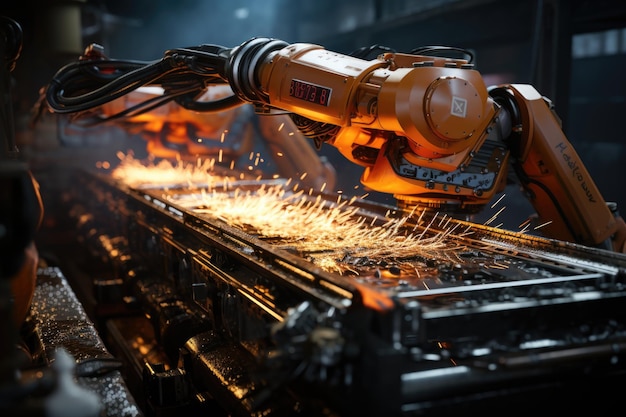
Robotic Plasma cutting is a state-of-the-art manufacturing solution that combines automation, precision, and high-speed cutting to handle a wide range of metal materials efficiently. By integrating robotic arms with plasma cutting systems, it ensures consistent, accurate cuts even on thick or complex components. Moreover, this technology minimizes human error, reduces material waste, and improves overall safety in the workplace. Consequently, manufacturers can achieve higher productivity, maintain superior quality, and meet tight production deadlines with ease. In addition, these systems are highly adaptable for different industrial applications, including automotive, aerospace, and heavy fabrication. Furthermore, advanced software controls enable real-time monitoring, predictive maintenance, and optimized workflow management. As a result, Robotic Plasma Cutting Technology not only streamlines operations but also enhances cost-efficiency, ensuring businesses remain competitive while delivering precise, high-quality products consistently.
Robotic Laser & Plasma Welding/Cutting Applications

Heavy Engineering Industry
In the heavy fabrication industry, robotic laser and plasma welding/cutting systems are widely used for processing large and thick metal components with high efficiency and consistency. Plasma cutting is generally the preferred technology for heavy fabrication because it is cost-effective and suitable for materials with thickness greater than 25 mm, making it ideal for cutting thick base plates, structural frames, pressure vessel components, and large weld preparation profiles. Laser cutting is used selectively in cases where higher precision is required, such as precision holes and assembly-critical parts, ensuring accurate fitment and improved production quality.

Construction Equipment (JCB, Excavators, Loaders)
In the construction equipment industry, robotic laser and plasma cutting systems are widely used to manufacture components for machines such as JCBs, excavators, and loaders. Both technologies are used depending on the precision and thickness requirements of the parts. Laser cutting is commonly used for high-precision components such as cab panels, mounting brackets, and control enclosures, while plasma cutting is preferred for thicker structural parts like chassis members, boom and arm plates, and undercarriage components. Integrating robotic cutting with robotic welding ensures accurate part fitment, improved productivity, and eliminates mismatches during assembly.

Automotive & Defence
In the automotive and defence sectors, robotic laser cutting is the preferred technology due to its high precision, tight tolerances, and excellent repeatability required for mass production. Laser systems are commonly used for manufacturing high-strength steel components, armor sub-components for defence applications, BIW (Body-in-White) brackets, and lightweight structural parts. Laser cutting ensures low distortion, clean edges, and accurate fitment, which are critical for assembly and performance. Plasma cutting is generally used only for thicker defence plates, where rough cutting is required before further machining or finishing processes.

Agriculture Equipment
In the agriculture equipment industry, robotic plasma and laser cutting systems are used depending on the material thickness and precision requirements. Plasma cutting is used for most heavy-duty components such as tractor frames, rotavator blades, and heavy mounting plates, as it is cost-effective and suitable for thicker materials. Laser cutting is used selectively for parts that require higher precision, including sheet metal covers, control panels, and precision assemblies. This combination works well for the sector because agricultural equipment manufacturing involves cost-sensitive production and mixed material thickness.

PEB (Pre-Engineered Buildings) & Fabrication
In the PEB (Pre-Engineered Buildings) and structural fabrication industry, robotic plasma cutting is widely preferred for processing heavy structural steel components used in large building frameworks. Plasma cutting is commonly used for manufacturing I-beams, columns and rafters, gusset plates, and base plates, where thick materials and high production speed are required. It offers high throughput and lower cost per cut, making it ideal for large-scale fabrication projects. Laser cutting is used selectively for secondary precision components or when bolt-hole accuracy and tighter tolerances are critical for proper assembly.

White Goods & Electronic Appliances
In the consumer appliances and electronics industry, robotic laser cutting is almost exclusively used due to the need for high precision and clean finishing on thin sheet metals. Laser cutting is ideal for processing washing machine panels, refrigerator bodies, AC chassis and brackets, and electronic enclosures. The technology provides clean edges, minimal distortion, and high aesthetic quality, eliminating the need for rework. It is especially suitable for thin sheet materials ranging from 0.6 mm to 1.2 mm, ensuring consistent quality in mass production.
Robotic Laser & Plasma Cutting | Welding | Applications
Benefits of Advanced Laser & Plasma Cutting Technology
Exceptional Precision and Accuracy
Advanced Laser & Plasma Cutting Technology delivers unparalleled precision, ensuring clean and accurate cuts even on complex designs. Moreover, it reduces human error, guaranteeing consistent quality for every component.
Increased Production Efficiency
By automating the cutting process, these systems significantly speed up production cycles. In addition, reduced setup times and minimal material wastage help manufacturers achieve higher output at lower costs.
Versatility Across Materials
Laser & Plasma Cutting can handle a wide range of metals and composites efficiently. Furthermore, it accommodates both thin and thick materials, making it suitable for diverse industrial applications.
Enhanced Safety for Operators
Automated cutting reduces direct human involvement, minimizing exposure to high heat and sparks. Consequently, workplaces become safer while maintaining productivity and quality.
Cost-Effective and Sustainable Operations
These technologies minimize material waste and energy consumption, lowering operational costs. In addition, precise cutting reduces rework, contributing to sustainable manufacturing practices.
Frequently Asked Questions FAQ
What is Robotic Laser & Plasma Welding?
Robotic Laser & Plasma Welding is an automated process that uses robotic arms to control laser or plasma arcs for precise and consistent welds. Moreover, it reduces human error, improves safety, and accelerates production in various industries.
Which industries benefit most from this technology?
Industries such as automotive, heavy engineering, shipbuilding, oil & gas, railways, and infrastructure benefit significantly. In addition, any sector requiring high precision, consistency, and efficiency in metal fabrication can leverage this technology.
How does Robotic Plasma Cutting differ from traditional cutting?
Unlike conventional methods, Robotic Plasma Cutting uses automated plasma arcs controlled by robotic arms. Consequently, it delivers cleaner cuts, handles thicker metals, and ensures consistent quality while reducing material waste.
What are the key advantages of using Laser & Plasma Cutting systems?
These systems offer high precision, increased efficiency, material versatility, enhanced safety, and cost-effectiveness. Furthermore, they allow manufacturers to complete complex projects faster and with minimal errors.
Is it suitable for small-scale manufacturing?
Yes, with the right configuration, Robotic Laser & Plasma Welding and Cutting systems can be scaled for small or medium production setups. Additionally, they help reduce labor costs and improve consistency, even in smaller operations.