
Turnkey Robotic Fluid Dispensing, Painting & Surface Finishing Automation Solutions
India’s Trusted Partner for Robotic Painting, Powder Coating, Glue Dispensing & Adhesive Application Automation
Mahajan Automation Pvt. Ltd. delivers turnkey robotic fluid dispensing and surface finishing automation solutions for manufacturers across India. With 3,000+ successful robotic automation projects and an experienced in-house engineering team, we provide customized robotic painting, powder coating, glue and adhesive dispensing, sealant dispensing, bead application, spray coating, and automated finishing systems using leading robots from FANUC, ABB, KUKA, Yaskawa Motoman, and Kawasaki Robotics—helping manufacturers achieve higher precision, consistent quality, reduced material waste, improved productivity, and Industry 4.0-ready manufacturing.
Complete Turnkey Robotic Fluid Dispensing Solutions
Mahajan Automation provides complete turnkey robotic automation projects, managing every stage from process feasibility and production analysis to robotic cell layout, mechanical and electrical engineering, PLC/HMI and robot programming, offline simulation, vision and EOAT integration, paint booth, dispensing and conveyor automation, safety systems, installation, commissioning, production trials, and operator training. We also provide preventive maintenance and Annual Maintenance Contracts (AMC) to ensure long-term system reliability. Every robotic solution is engineered to deliver better coating quality, precise dispensing, faster production, reduced manual intervention, improved safety, and reliable manufacturing performance.
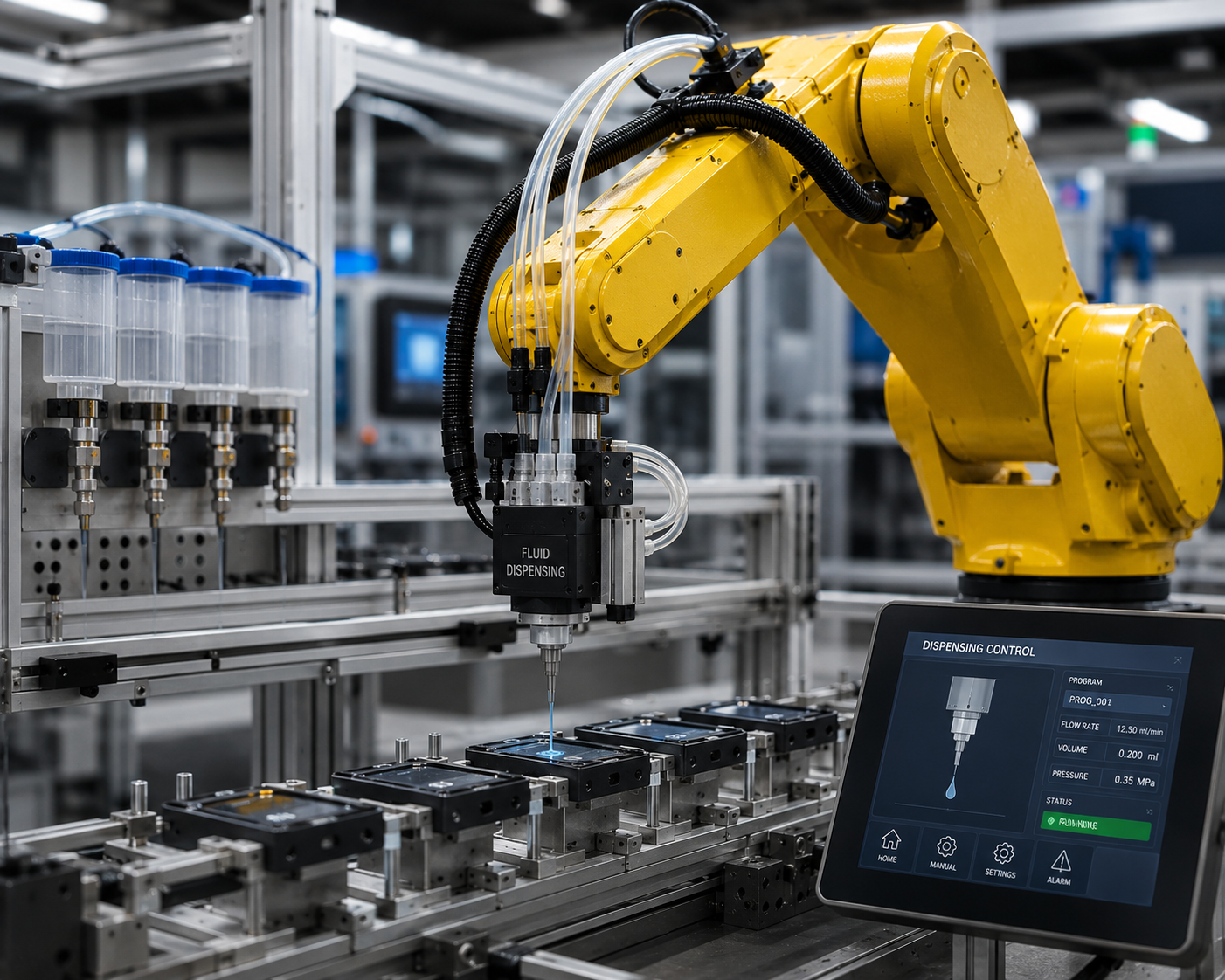
Robotic Fluid Dispensing Solutions FDS Types
Mahajan Automation combines machine vision with robotic dispensing systems for precise application, automatic position correction, quality inspection, barcode reading, and AI-based defect detection. Vision-guided robotics improves accuracy, reduces errors, and enables flexible automation for high-mix manufacturing.
Mahajan Automation integrates robotic fluid dispensing systems with conveyors, assembly lines, turntables, servo positioners, rotary indexing tables, AGVs, AMRs, barcode tracking, and MES/ERP systems. This connected automation enables synchronized production, accurate material application, real-time tracking, and minimal manual intervention for efficient manufacturing.
Mahajan Automation uses offline robot programming and digital simulation with platforms such as ENCY CAM to optimize robotic operations before production. Capabilities include CAD model import, robot path generation, spray and dispensing simulation, collision detection, reachability analysis, cycle time optimization, and multi-robot coordination.
Robotic Glue Dispensing Systems from Mahajan Automation provide precise and automated adhesive application with consistent bead patterns, controlled material flow, and accurate dispensing paths. These systems improve bonding quality, reduce glue consumption and material waste, minimize manual variability, and increase production efficiency across automotive, electronics, furniture, white goods, plastic assembly, and consumer product manufacturing.
Robotic Spray Painting Automation
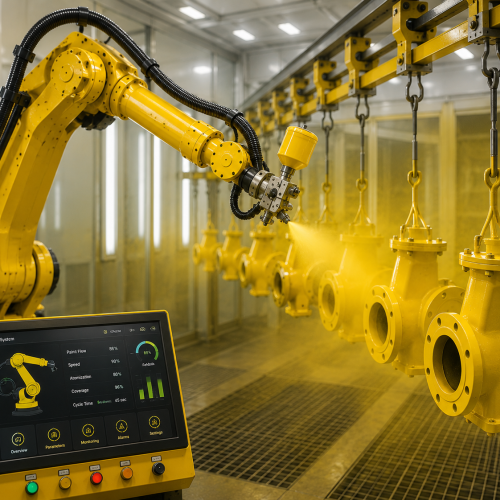
Robotic Spray Painting Solution from Mahajan Automation automates industrial paint application to deliver consistent coating thickness, uniform surface finish, and high production efficiency. Our advanced robotic spray painting systems use programmable industrial robots and precision spray equipment to maintain accurate gun distance, spray angle, paint flow, and robot speed across complex components. These solutions are suitable for automotive components, heavy engineering equipment, structural steel, agricultural machinery, industrial machinery, furniture, metal fabrication, and plastic parts. Robotic spray painting helps reduce overspray, paint consumption, material waste, and operator exposure to paint fumes while improving transfer efficiency and workplace safety. Mahajan Automation provides customized automated painting solutions supporting primer, base coat, clear coat, solvent-based, water-based, and multi-color applications for reliable, repeatable, high-quality industrial finishing.
Robotic Powder Coating Automation
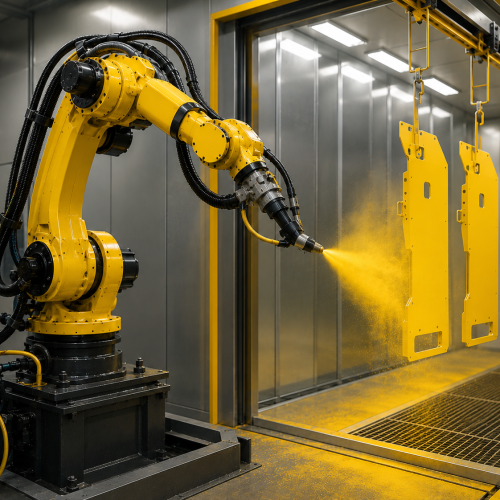
Robotic Powder Coating Automation from Mahajan Automation provides precise, consistent, and efficient powder application for high-quality industrial finishing. Our advanced robotic powder coating systems automate the spraying process to achieve uniform coating thickness, excellent surface coverage, high transfer efficiency, and optimized powder utilization while reducing manual labor and material waste. These solutions are ideal for electrical enclosures, furniture, architectural products, automotive components, industrial equipment, metal cabinets, heavy fabricated structures, appliances, and agricultural equipment. Key features include automatic powder spray control, programmable robotic movement, consistent coating quality, reduced overspray, lower rework, faster color change, and improved production throughput. By maintaining accurate spray distance, angle, speed, and powder flow, robotic automation delivers repeatable finishes across complex components. Mahajan Automation designs customized powder coating automation solutions that improve productivity, coating consistency, operational efficiency, and overall finishing performance.
Robotic Glue Dispensing System
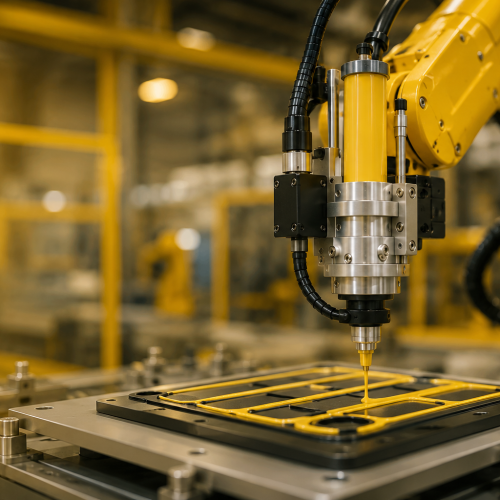
Robotic Glue Dispensing Systems from Mahajan Automation provide precise, consistent, and automated adhesive application for modern manufacturing processes. Our advanced robotic adhesive dispensing solutions use programmable industrial robots and precision dispensing equipment to control bead size, adhesive flow, dispensing speed, and application path with high accuracy. These systems are suitable for automotive assembly, electronics manufacturing, furniture production, white goods, packaging equipment, plastic assembly, and consumer product manufacturing. Depending on production requirements, our solutions support continuous bead dispensing, pattern dispensing, multi-component adhesive dispensing, precision volume control, automatic path correction, and high-speed operation. Robotic glue dispensing helps achieve accurate adhesive placement, uniform bonding, reduced glue consumption, improved bonding strength, minimized material waste, and repeatable dispensing quality. By automating adhesive application, manufacturers can reduce production costs, improve throughput, enhance process consistency, and maintain reliable product quality. Mahajan Automation designs customized robotic adhesive dispensing systems for complex components, high-volume production lines, and demanding industrial applications.
Robotic Adhesive Sealant Application
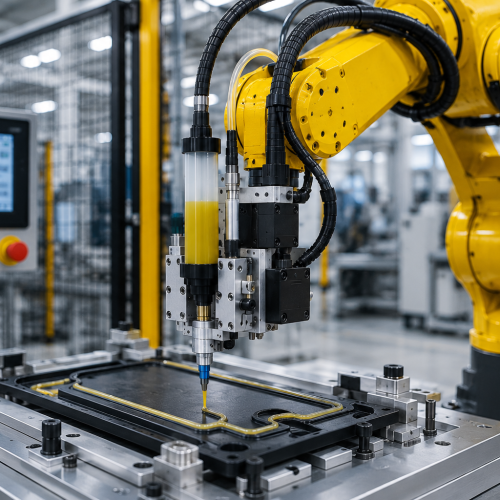
Robotic Adhesive & Sealant Application from Mahajan Automation provides precise, consistent, and automated dispensing of structural adhesives, sealants, silicone, polyurethane, epoxy, and other industrial bonding materials. Our advanced robotic adhesive application systems are designed to deliver accurate bead size, controlled material flow, consistent application speed, and precise dispensing paths across complex components and assemblies. Typical applications include automotive body assembly, EV battery manufacturing, electronics, white goods, HVAC equipment, composite products, glass bonding, and structural assembly. The systems support continuous bead application, gasket dispensing, seam sealing, edge bonding, structural adhesive dispensing, silicone application, and foam gasket dispensing. By automating adhesive and sealant application, manufacturers can reduce manual variability, minimize material waste, improve bonding consistency, enhance sealing performance, and increase production efficiency. Mahajan Automation develops customized robotic adhesive dispensing solutions tailored to specific materials, components, production volumes, and manufacturing requirements
Advanced Robotic Solutions for Manufacturing Industry

Automotive, Auto Ancillary & EV
Advanced robotic painting, coating, glue dispensing, and adhesive application systems for automotive OEMs, Tier-1 suppliers, auto components, and EV manufacturing. Improve finish consistency, bonding accuracy, cycle time, and production throughput.

Electronics, White Goods & Consumer Products
Precision robotic dispensing and coating automation for electronics, appliances, and consumer products. Achieve controlled material application, consistent surface finishing, reduced material consumption, and reliable high-volume production.

Furniture, Packaging & Plastics
Automated painting, adhesive dispensing, and coating solutions for furniture, packaging, and plastic components. Ensure uniform application, repeatable bonding, improved aesthetics, lower wastage, and greater manufacturing efficiency.

Heavy Engineering, Steel & Machinery
Robotic automation for heavy engineering, structural steel fabrication, industrial machinery, and construction equipment. Handle complex components with accurate robot paths, consistent coating thickness, reduced manual intervention, and improved productivity.

Aerospace, HVAC & Precision Manufacturing
High-precision robotic painting, coating, and dispensing systems for aerospace components and HVAC manufacturing. Deliver repeatable application, controlled spray patterns, improved surface quality, and dependable process performance.

Integrated Industrial Automation
Our solutions support diverse industrial manufacturing applications requiring robotic painting, powder coating, glue dispensing, adhesive application, and precision material handling. Scalable automation helps manufacturers improve quality, productivity, safety, and process consistency.
Benefits of Robotic Fluid Dispensing Solutions
Consistent, Precise Material Application
Programmable robots maintain exact bead size, spray pattern, flow rate, and gun/nozzle positioning on every cycle, eliminating the variability of manual application.
Reduced Material Waste & Overspray
Precise robot paths and controlled dispensing minimize excess paint, adhesive, and coating consumption, lowering material costs and reducing rework.
Higher Production Throughput
Continuous, high-speed robotic dispensing keeps pace with production lines, increasing output compared to manual painting, coating, or adhesive application.
Improved Bonding & Finish Quality
Accurate, repeatable dispensing paths deliver stronger, more uniform bonds and smoother, more consistent surface finishes across every part.
Reduced Operator Exposure to Fumes & Chemicals
Automating painting, coating, and adhesive dispensing keeps workers away from paint fumes, solvents, and chemical exposure, improving workplace safety.
Frequently Asked Questions FAQ
What are Robotic Fluid Dispensing Solutions?
Robotic dispensing systems can be configured for various industrial materials, including *adhesives, silicones, sealants, epoxy, grease, oils, resins, and protective coatings*. The dispensing equipment is selected according to the fluid viscosity, application method, and production requirements.
What types of fluids can robotic dispensing systems handle?
Robotic dispensing systems can be configured for various industrial materials, including *adhesives, silicones, sealants, epoxy, grease, oils, resins, and protective coatings*. The dispensing equipment is selected according to the fluid viscosity, application method, and production requirements.
What are the benefits of robotic fluid dispensing automation?
Robotic dispensing provides *consistent bead size, accurate material application, reduced material wastage, improved product quality, and higher production efficiency*. Automation also reduces dependence on manual dispensing and improves process repeatability across production batches.
Can robotic dispensing systems apply fluids to complex component shapes?
Yes. Robots can follow programmed 3D paths and dispense materials accurately around *curves, edges, joints, grooves, holes, and complex component geometries*. Machine vision and customized fixtures can further improve positioning accuracy for variable components.
Can Robotic Fluid Dispensing Solutions be integrated into existing production lines?
Yes. Robotic dispensing cells can integrate with *conveyors, PLCs, machine vision systems, curing stations, fixtures, sensors, and other automated equipment*. The system can be customized for applications such as adhesive bonding, sealing, gasketing, lubrication, and automated coating.