
Robotic Glue Dispensing System
Streamline your adhesive application with our advanced Robotic Glue Dispensing solutions engineered for precision, consistency, and speed. Moreover, reduce material waste, eliminate manual errors, and ensure uniform bonding across every component. Partner with Mahajan Automation today to elevate your production efficiency, improve product quality, and achieve reliable, repeatable results.
Advanced Robotic Glue Dispensing Systems
Robotic Glue Dispensing system is an advanced industrial automation solution designed to deliver precise, consistent, and repeatable adhesive application across a wide range of manufacturing processes. By integrating intelligent robotic arms with programmable dispensing technology, the system accurately applies adhesives, sealants, and bonding materials while maintaining precise control over glue flow, bead size, and placement. This ensures uniform bonding quality, reduces material waste, and enhances overall product reliability. Ideal for high-volume production environments, robotic dispensing systems eliminate manual inconsistencies, improve process efficiency, and support complex assembly requirements with exceptional accuracy. For manufacturers seeking complete automation, these systems can be integrated with Robotic Fluid Dispensing Solutions to streamline material application processes and improve production performance. Widely used in automotive, electronics, appliance manufacturing, and industrial assembly, robotic glue dispensing systems help achieve stronger bonds, faster cycle times, and superior quality control.
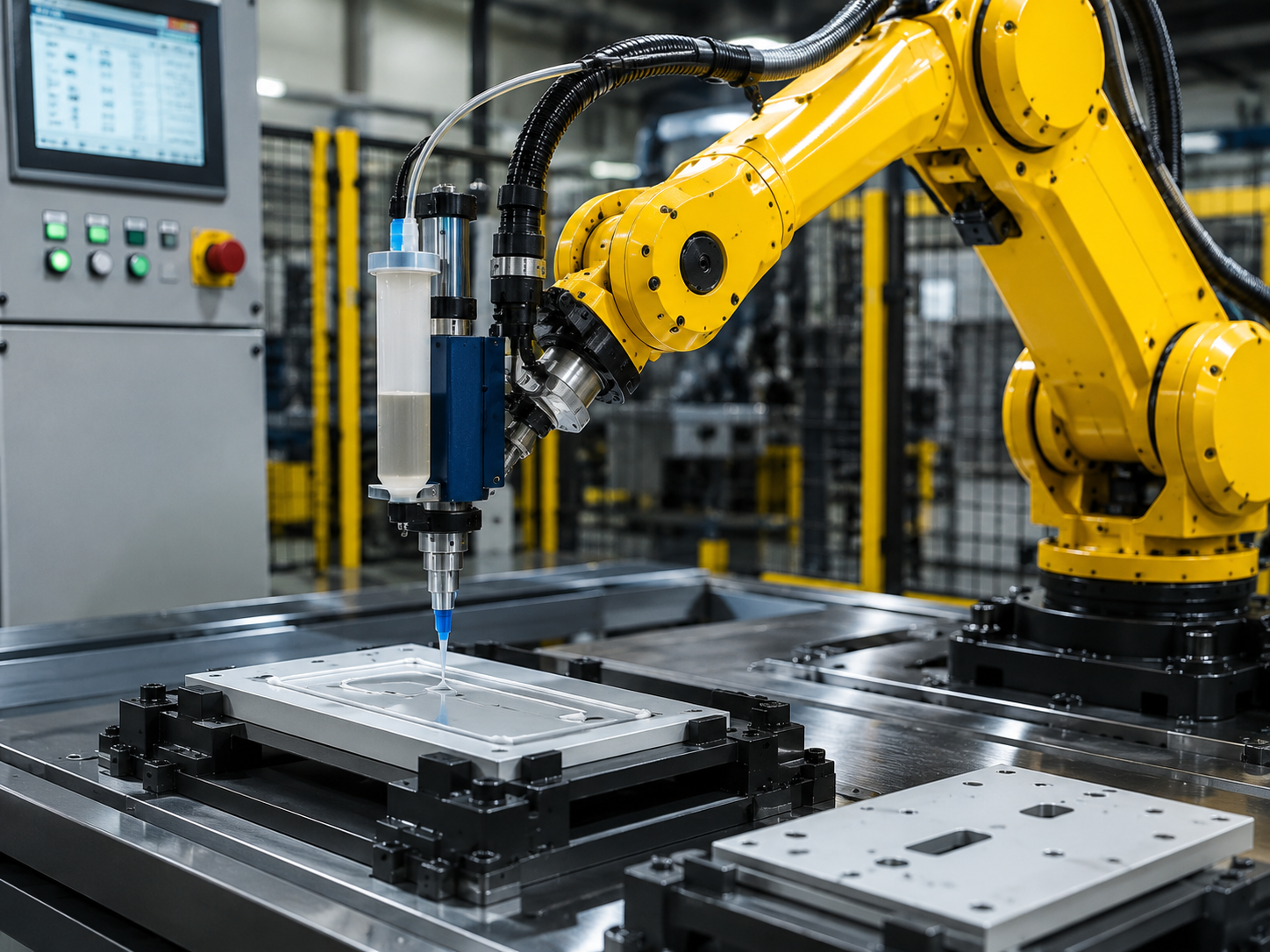
Advanced Robotic Glue Dispensing Solutions for Precision Adhesive Application
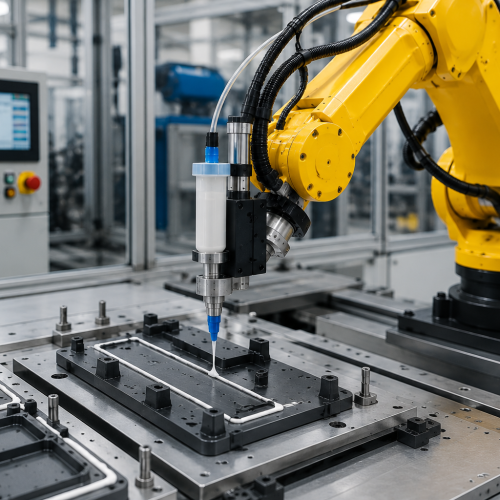
Robotic Glue Dispensing is an advanced automation solution designed to apply adhesives, sealants, and bonding materials with exceptional precision and consistency across industrial manufacturing processes. By integrating intelligent robotic arms with programmable dispensing technology, the system ensures accurate glue placement, uniform bead formation, and controlled material flow for reliable bonding performance. As a result, manufacturers benefit from stronger adhesion, reduced material waste, and improved product quality. Robotic glue dispensing also minimizes manual errors, enhances repeatability, and supports high-volume production with consistent results. Designed to handle complex geometries and intricate assembly requirements, these systems improve operational efficiency while maintaining strict quality standards. Furthermore, real-time control of dispensing parameters such as flow rate, pressure, and volume helps optimize process stability, reduce rework, and lower production costs. For manufacturers pursuing smart factory initiatives, robotic glue dispensing can be integrated with Robotic Fluid Dispensing Solutions to create a more efficient and fully automated production environment.
Types of Glue Dispensing
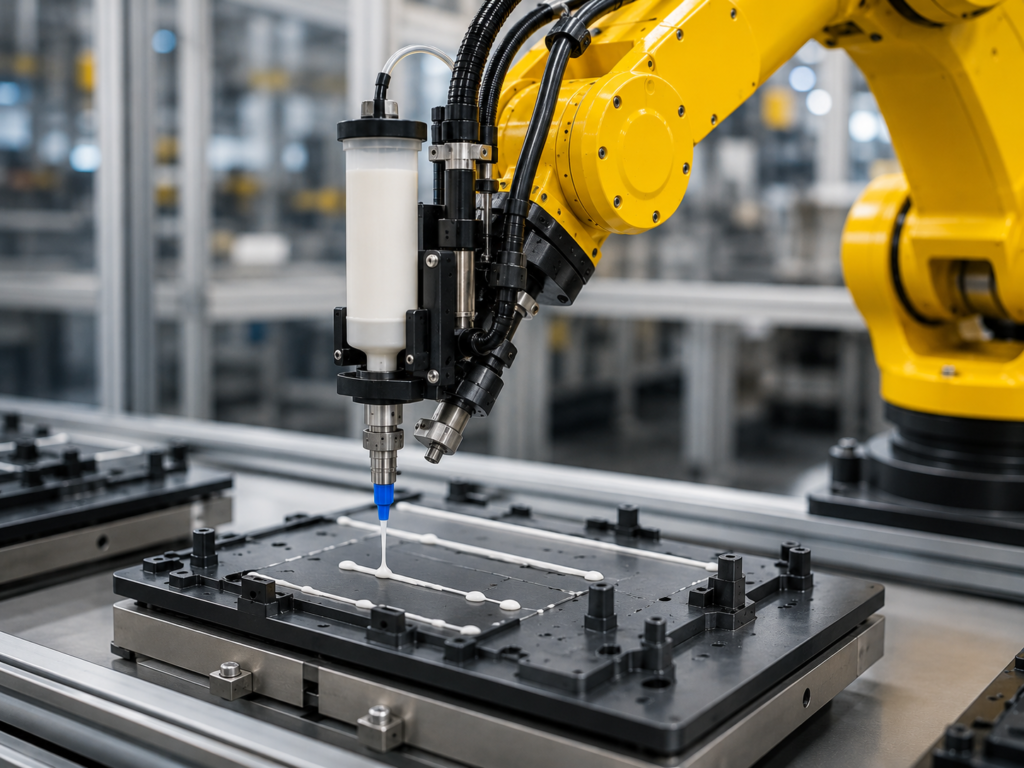
Robotic Glue Dispensing
Robotic Glue Dispensing systems apply controlled adhesive beads with high precision and repeatability. As a result, they ensure consistent bonding strength, reduced material waste, and improved product reliability. Moreover, automated programming enhances efficiency in high-volume manufacturing environments.
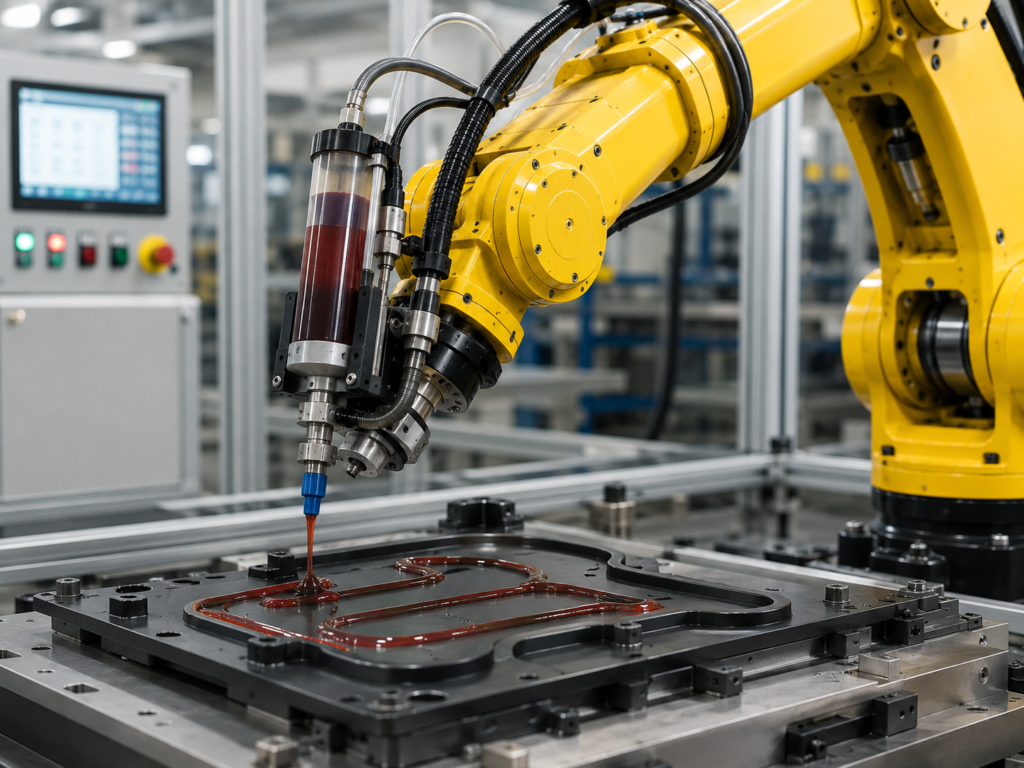
Robotic Resin Dispensing
Robotic Resin Dispensing delivers accurate and uniform application of resin materials for sealing, coating, and encapsulation processes. In addition, advanced flow control ensures proper curing and strong adhesion. Therefore, manufacturers benefit from improved durability and long-term performance of assembled components.

Robotic Epoxy Dispensing
Robotic Epoxy Dispensing systems precisely mix and apply two-component epoxy adhesives for high-strength structural bonding. Consequently, they maintain correct mixing ratios, uniform bead formation, and superior joint integrity. Furthermore, automation reduces manual errors while enhancing production consistency and safety.
Robotic Glue Dispensing Application's

Automotive Industry
In the automotive industry, robotic glue dispensing ensures precise adhesive application for body panels, interiors, windshields, and electronic components. As a result, it improves bonding strength, reduces vibration, and enhances overall vehicle durability while maintaining high production efficiency.

Heavy Engineering Industry
For heavy engineering applications, robotic dispensing systems apply sealants and structural adhesives with consistent accuracy. Moreover, they enhance joint strength and equipment reliability, thereby reducing maintenance and extending operational lifespan.

Infrastructure &Structural Fabrication
In infrastructure and structural fabrication, robotic glue dispensing supports bonding and sealing of panels, composite structures, and metal assemblies. Consequently, it ensures uniform adhesion, improved load-bearing capacity, and long-term structural integrity.

Oil & Gas Industry
Within the oil and gas sector, robotic adhesive systems apply sealants and bonding materials to pipelines, enclosures, and critical components. In addition, automated precision ensures leak prevention and resistance to harsh chemicals and extreme environments.

Railways & Transport
In railway and transport manufacturing, robotic glue dispensing improves bonding for coaches, panels, and interior assemblies. Therefore, it enhances vibration resistance, reduces noise, and ensures long-lasting structural performance.

Shipbuilding & Offshore
For shipbuilding and offshore applications, robotic dispensing systems apply marine-grade adhesives and sealants with high accuracy. As a result, vessels and offshore structures gain improved waterproofing, corrosion resistance, and durability in harsh marine conditions.
Benefits of Robotic Glue Dispensing
High Precision & Consistent Bonding
Robotic Glue Dispensing systems apply adhesives with exact control over bead size, placement, and volume. As a result, they ensure uniform bonding strength and eliminate inconsistencies caused by manual application.
Reduced Material Waste
By accurately controlling adhesive flow and minimizing over-application, robotic systems significantly reduce glue wastage. Consequently, manufacturers achieve better material utilization and lower production costs.
Increased Productivity & Faster Cycle Times
Because the system operates with programmed automation, it speeds up adhesive application without compromising quality. Moreover, it enables continuous operation in high-volume manufacturing environments.
Improved Product Quality & Reliability
Automated dispensing ensures repeatable accuracy in every cycle. Therefore, products benefit from stronger joints, improved durability, and enhanced structural integrity across various industrial applications.
Enhanced Workplace Safety
Robotic automation reduces direct human exposure to chemicals and fumes. In addition, it creates a safer and cleaner working environment while maintaining strict quality and process control.
Frequently Asked Questions FAQ
What is Robotic Glue Dispensing?
Robotic Glue Dispensing is an automated system that precisely applies adhesives, sealants, or bonding materials using programmable robotic arms. As a result, it ensures accurate bead placement, consistent bonding strength, and reduced material waste.
How does robotic glue dispensing improve manufacturing efficiency?
Because the system operates with programmed precision and repeatability, it reduces manual errors and speeds up production cycles. Consequently, manufacturers achieve higher throughput while maintaining consistent product quality.
Which industries use robotic glue dispensing systems?
Industries such as automotive, heavy engineering, infrastructure, oil & gas, railways, and shipbuilding widely use robotic glue dispensing. Moreover, it is ideal for any sector requiring accurate and reliable adhesive application.
Can robotic systems handle different types of adhesives?
Yes, robotic dispensing systems can handle various adhesives, including epoxy, resin, silicone, polyurethane, and sealants. In addition, they can be customized to manage different viscosities and application requirements.
How does robotic glue dispensing reduce adhesive waste?
By controlling flow rate, pressure, and dispensing volume with high accuracy, the system minimizes over-application and spillage. Therefore, it improves material efficiency and reduces overall operational costs.