
Robotic Robotic Powder Coating System
A Robotic Powder Coating System automates the powder coating process to deliver uniform, high-quality finishes with exceptional precision and consistency. Using advanced industrial robots, automated spray guns, and intelligent motion control, the system ensures even coating thickness while minimizing overspray and material waste. It enhances transfer efficiency, reduces manual labor, and improves workplace safety by limiting operator exposure to powder particles. Robotic powder coating automation is ideal for automotive, metal fabrication, electrical panels, appliances, furniture, and industrial equipment. Integrated with conveyor systems, curing ovens, and machine vision technology, the solution increases production speed, ensures repeatable coating quality, and lowers operating costs. With faster cycle times, superior corrosion protection, and reliable surface finishing, a Robotic Powder Coating System helps manufacturers achieve higher productivity, consistent product quality, and efficient automated finishing for modern manufacturing environments.
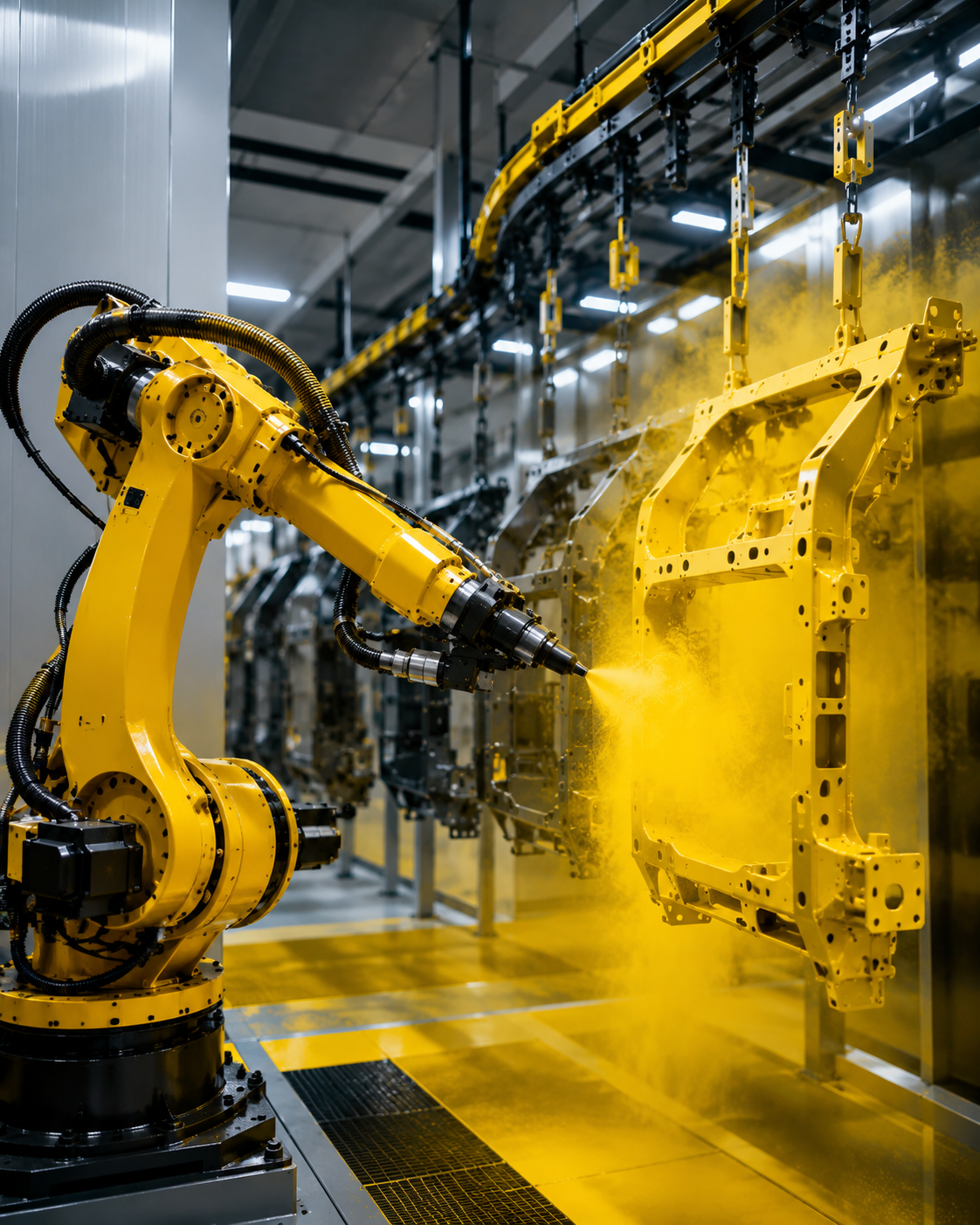
Robotic Powder Coating Applications
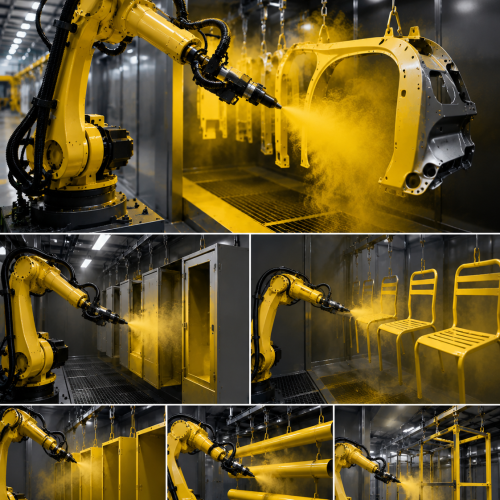
Coating Systems Powder coating robots use advanced automation to deliver uniform, high-performance coatings on metal and industrial components. By combining intelligent motion control with precision spray systems, these robots ensure consistent powder distribution, excellent surface adhesion, and superior corrosion resistance while minimizing material waste.
Designed for high-volume manufacturing, robotic powder coating improves transfer efficiency, reduces overspray, and enhances overall finishing quality. The automated process supports complex shapes and hard-to-reach areas, ensuring complete coverage with repeatable accuracy.
In addition to boosting productivity, powder coating robots create safer work environments by reducing operator exposure to airborne particles. With lower emissions and optimized powder usage, this technology supports environmentally responsible manufacturing and modern smart factory standards.
Types of Powder Fluidizing & Spraying
Electrostatic Powder Spraying
Uses an electrostatic charge to attract powder particles to grounded metal surfaces, ensuring even coverage, high transfer efficiency, and minimal powder loss.
Dense Phase Powder Fluidizing
Delivers powder at low velocity with a high concentration, producing a smoother finish, better control, and significantly reduced overspray.
Venturi Powder Spraying
Generates an electrical charge through friction without requiring high voltage, making it ideal for complex geometries and recessed surfaces.
HVLP High Volume Low Pressure Spray
Applies an electrical charge to paint particles, attracting them directly to grounded surfaces. This method maximizes paint utilization, reduces waste, and ensures a highly consistent finish.
Tribo Charging Spray System
Integrates industrial robots with smart spray controls to maintain precise distance, angle, and flow rate — ensuring repeatable quality and faster production speeds.
Automated Multi-Gun Powder System
Integrates multiple robotic spray guns to achieve faster coating cycles, consistent thickness, and improved productivity in high-demand manufacturing environments.
Benefits of Powder Coating System
Superior Finish
Robotic spray painting systems deliver consistent film thickness, smooth surface finish, and precise coverage on every part. Automated path control eliminates streaks, overspray variation, and human inconsistency—ensuring premium-quality results.
Minimal Powder Waste
Robots operate at optimized speeds with repeatable motion, significantly reducing cycle time. Continuous operation enables high-volume production with predictable output and minimal downtime.
Consistent Thickness.
Precise spray control and optimized atomization minimize overspray and material loss. This leads to lower paint consumption, reduced rework, and significant cost savings on coatings and consumables.
Improved Worker Safety & Environmental Compliance
Robotic systems reduce operator exposure to hazardous fumes, solvents, and airborne particles. They also support controlled booth environments and compliance with environmental and workplace safety regulations.
Flexibility Across Parts, Materials & Coatings
Robotic spray painting systems can handle complex geometries and support various coatings—such as liquid paint, powder coating, primers, sealants, and protective finishes—across industries including automotive, aerospace, appliances, furniture, and general manufacturing.
Frequently Asked Questions FAQ
What is a Robotic Powder Coating System?
A Robotic Powder Coating System is an automated coating solution that uses industrial robots to apply powder coating uniformly on components. It provides consistent coating quality while reducing manual effort.
What are the benefits of robotic powder coating?
Robotic powder coating improves coating consistency, reduces material wastage, increases productivity, enhances operator safety, and provides better control over coating thickness and coverage.
Which components can be coated using a robotic powder coating system?
Robotic powder coating systems can handle a wide range of components, including automotive parts, metal enclosures, fabricated components, machinery parts, appliances, and other industrial products.
How does a robotic powder coating system improve coating quality?
The robot follows programmed coating paths and maintains consistent spray distance, speed, and angle. This helps achieve uniform coverage, consistent coating thickness, and reduced overspray.
Can robotic powder coating systems be integrated into existing production lines?
Yes. Robotic powder coating systems can be integrated with conveyors, powder coating booths, curing ovens, part handling systems, and other automated equipment to create an efficient end-to-end coating process.