
Turnkey Industrial IIoT Solutions
(Industrial Internet of Things)
Transform Your Factory into a Smart, Connected, Data-Driven Manufacturing Facility
Transform your factory into a smart, connected, and data-driven manufacturing facility with Mahajan Automation’s advanced IIoT solutions. Connect machines, monitor production in real time, optimize processes, reduce downtime, and improve OEE with intelligent Industry 4.0 technologies. Contact Mahajan Automation today to build your smart factory.
What is Industrial IIoT?
Industrial Internet of Things (IIoT) connects machines, industrial robots, sensors, production equipment, and enterprise software into a unified digital ecosystem. It continuously collects critical manufacturing data, including machine status, robot cycle time, production output, downtime, energy consumption, temperature, pressure, vibration, tool wear, machine health, alarm history, quality parameters, and production efficiency. Instead of relying on manual data collection, IIoT solutions automatically capture, process, and visualize real-time production information through intuitive dashboards and mobile applications. This connected approach gives manufacturers greater visibility into their operations, enabling faster decision-making, improved productivity, predictive maintenance, reduced downtime, and the development of a truly smart factory powered by real-time industrial data.
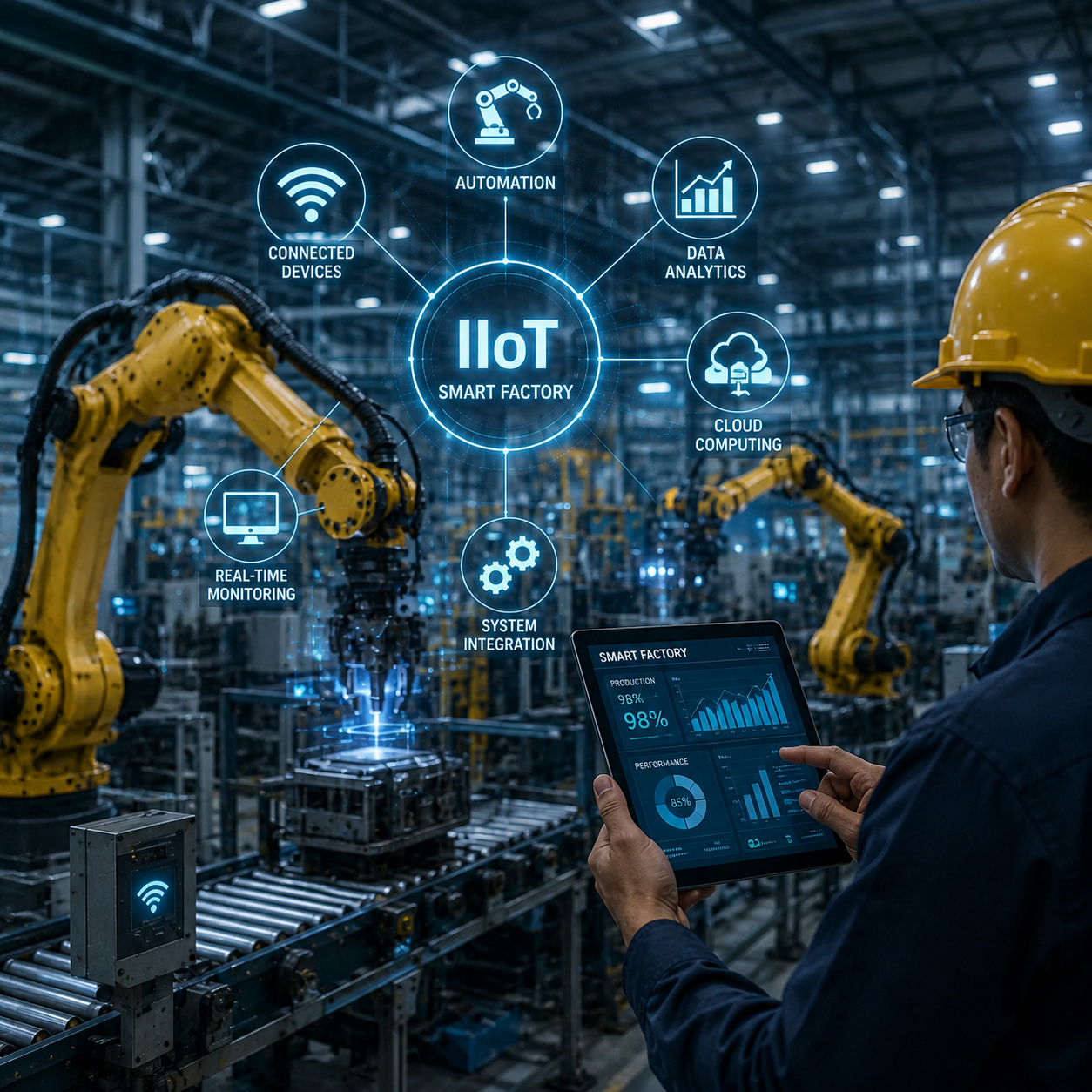
Complete Turnkey IIoT Implementation
Mahajan Automation provides end-to-end turnkey IIoT implementation services to help manufacturers connect, monitor, and optimize their production systems. Our solutions cover the complete digital transformation lifecycle, from factory assessment and IIoT architecture design to installation, commissioning, and ongoing support. We integrate PLCs, robots, CNC machines, sensors, machine vision, SCADA, MES, ERP, cloud platforms, and industrial networks into a connected manufacturing ecosystem. Our services also include edge computing, industrial gateways, machine retrofits, data analytics, AI-based reporting, alarm management, predictive maintenance, cybersecurity, operator training, and annual support, enabling manufacturers to build scalable and data-driven smart factories.
Multi-Brand Industrial Robot Integration
Mahajan Automation’s IIoT platform integrates seamlessly with leading industrial robot brands, including FANUC, ABB, KUKA, Yaskawa Motoman, and Kawasaki Robotics. Our solutions monitor robot health, servo status, alarms, program status, cycle time, utilization, idle time, production count, tool life, welding data, and motion history. This provides manufacturers with real-time visibility into robotic operations and helps identify performance issues quickly. By connecting robots with the overall production ecosystem, manufacturers can improve utilization, reduce downtime, and increase productivity.
Dedicated IIoT & Smart Manufacturing Team
Mahajan Automation has a dedicated team of IIoT and smart manufacturing professionals focused on industrial digital transformation. Our multidisciplinary expertise covers IIoT, Machine Vision, PLC, SCADA, MES, AI, data analytics, cloud platforms, robotics, industrial networking, and database development. We develop customized dashboards, production monitoring systems, KPI reports, AI analytics, cloud applications, and mobile solutions. These technologies are tailored to each customer’s manufacturing processes to deliver actionable insights and smarter factory operations.
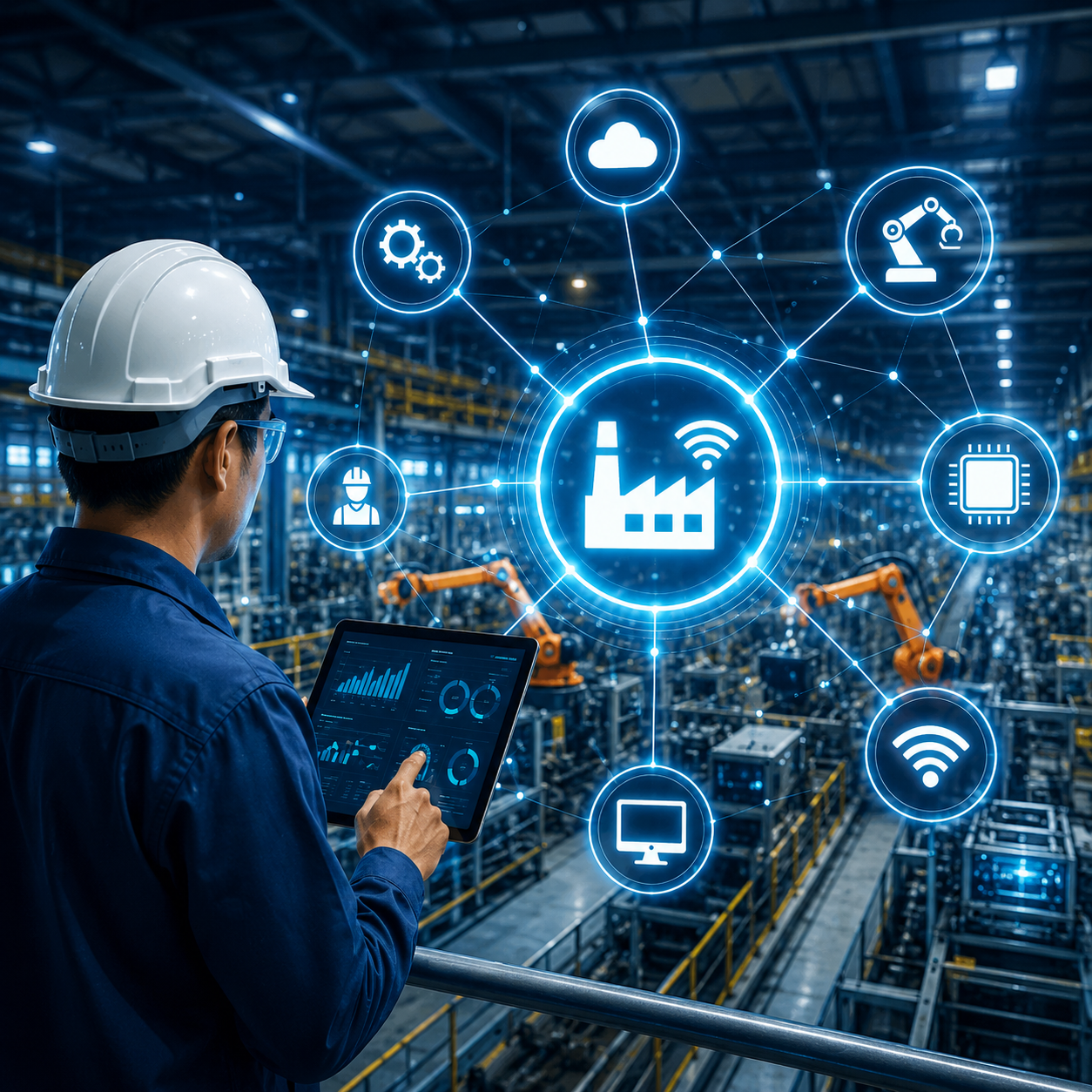
Where Can IIoT Be Implemented?
Industrial Internet of Things (IIoT) solutions can be deployed across almost every manufacturing process, from individual machines and robotic cells to complete production lines and utility systems. Mahajan Automation connects equipment, sensors, robots, PLCs, and software platforms to collect real-time operational data, identify inefficiencies, and improve productivity, quality, and equipment performance.
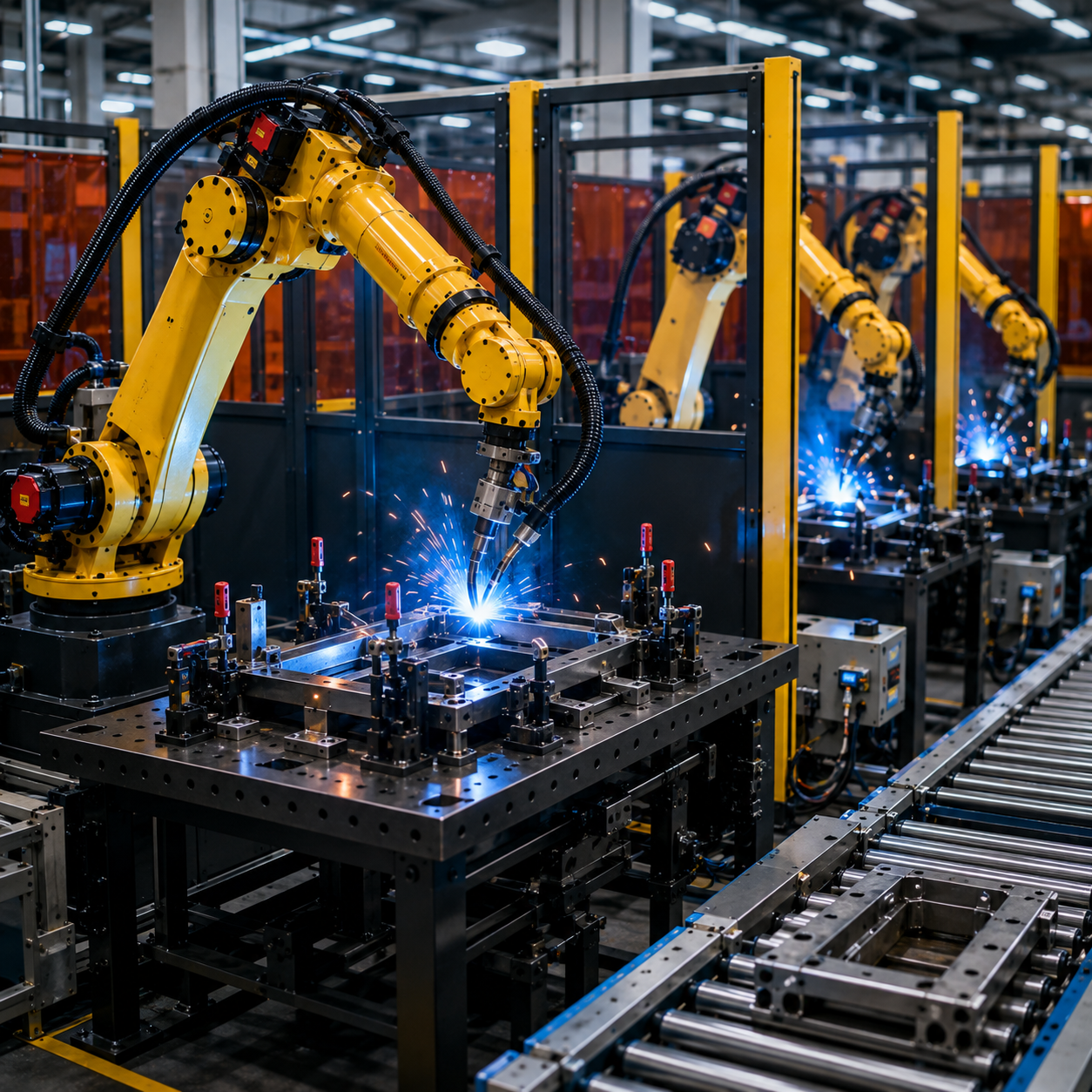
Robotic Welding Cells
IIoT enables real-time monitoring of welding current, voltage, gas consumption, robot cycle time, weld count, robot utilization, torch life, welding quality, and robot alarms. Manufacturers can use this data to identify process variations, reduce welding defects, maximize robot uptime, and improve overall welding productivity.
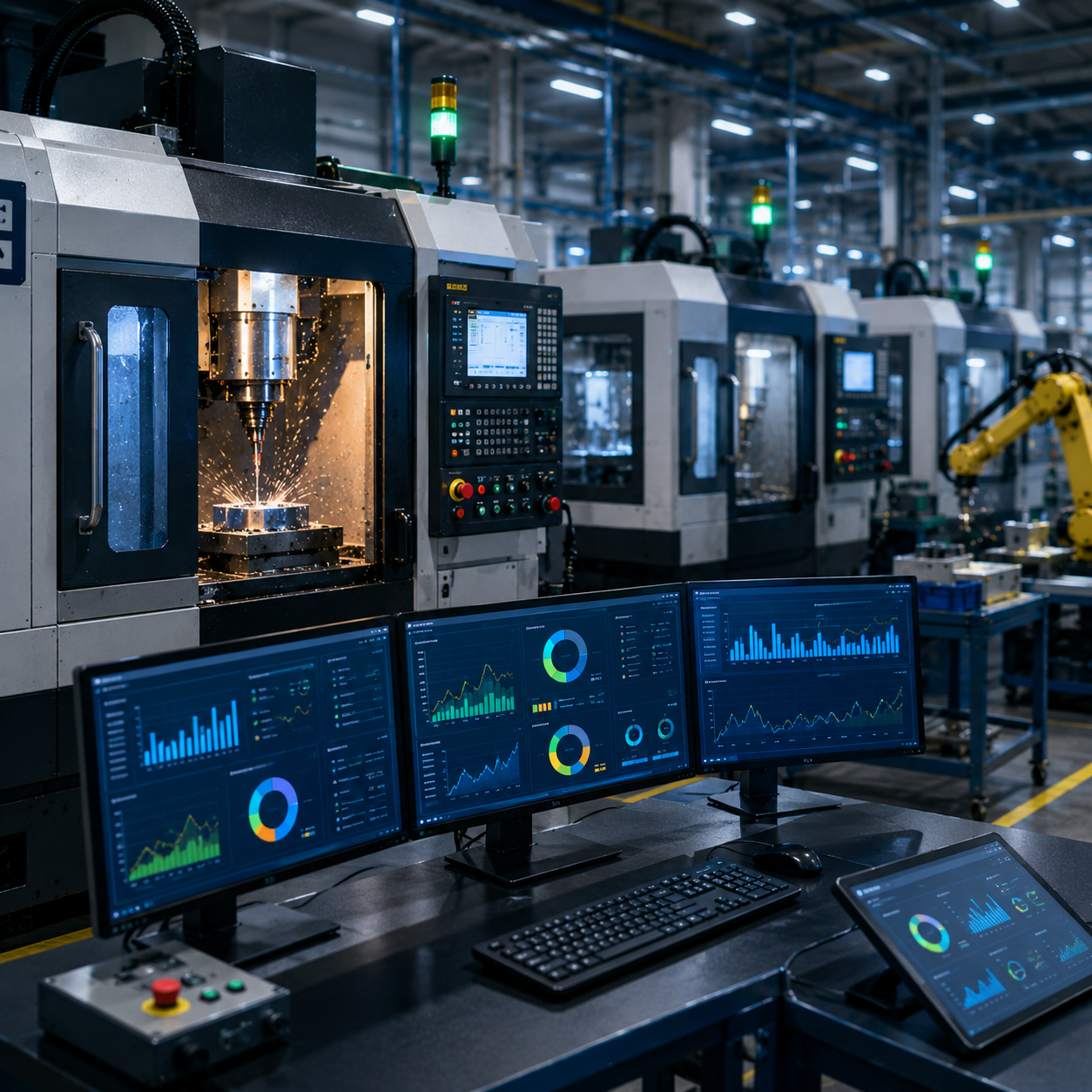
CNC Machine Monitoring
Connect CNC machines to monitor machine running time, idle time, tool changes, production quantity, alarm history, OEE, and machine performance. Real-time CNC monitoring helps manufacturers identify downtime causes, improve machine utilization, optimize production planning, and increase overall equipment effectiveness.
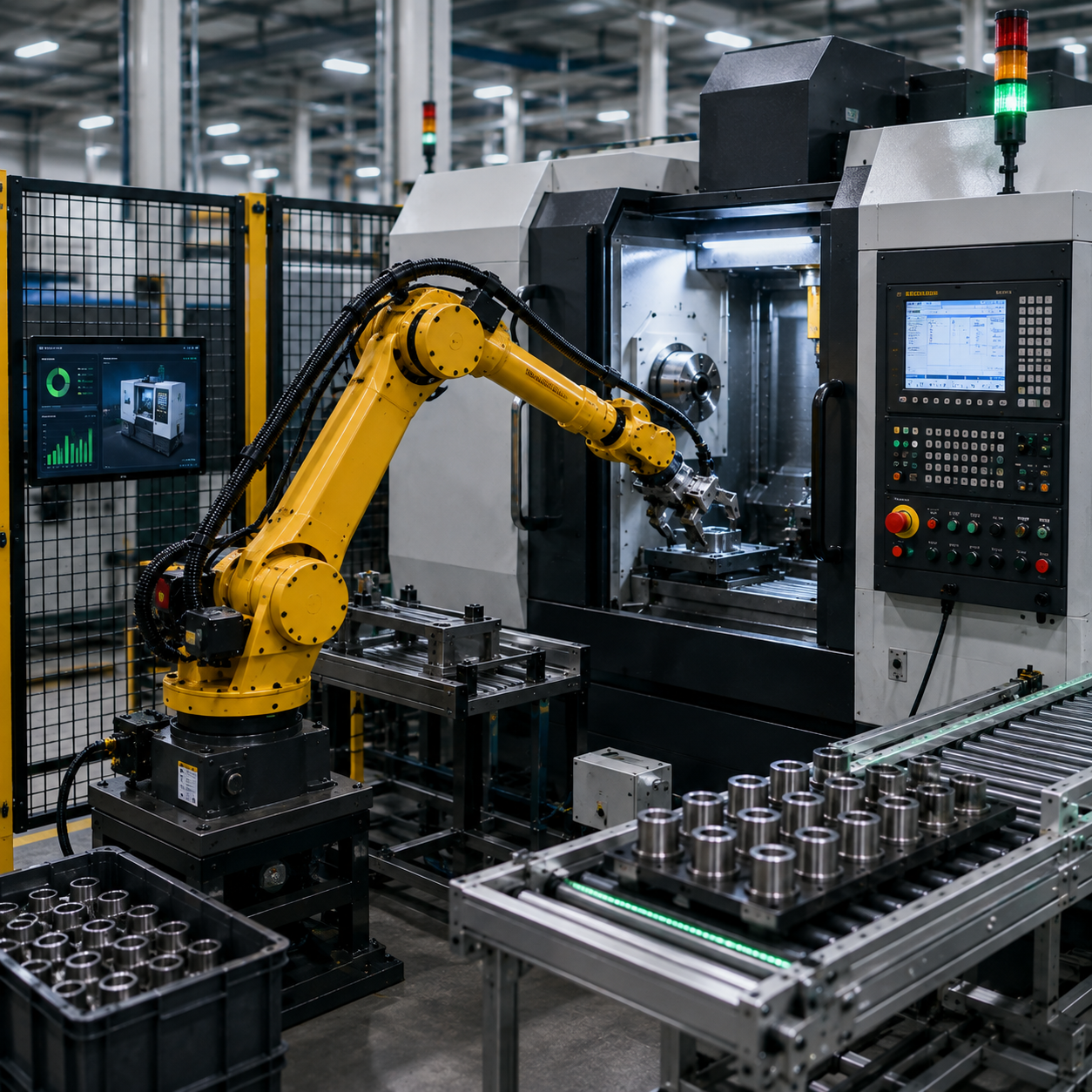
Machine Tending Automation
IIoT connects robots and machines in automated machine-tending applications to track robot status, part loading time, machine availability, production quantity, and reject counts. This improves coordination between machines and robots, shortens production cycles, reduces manual intervention, and supports more consistent automated production.
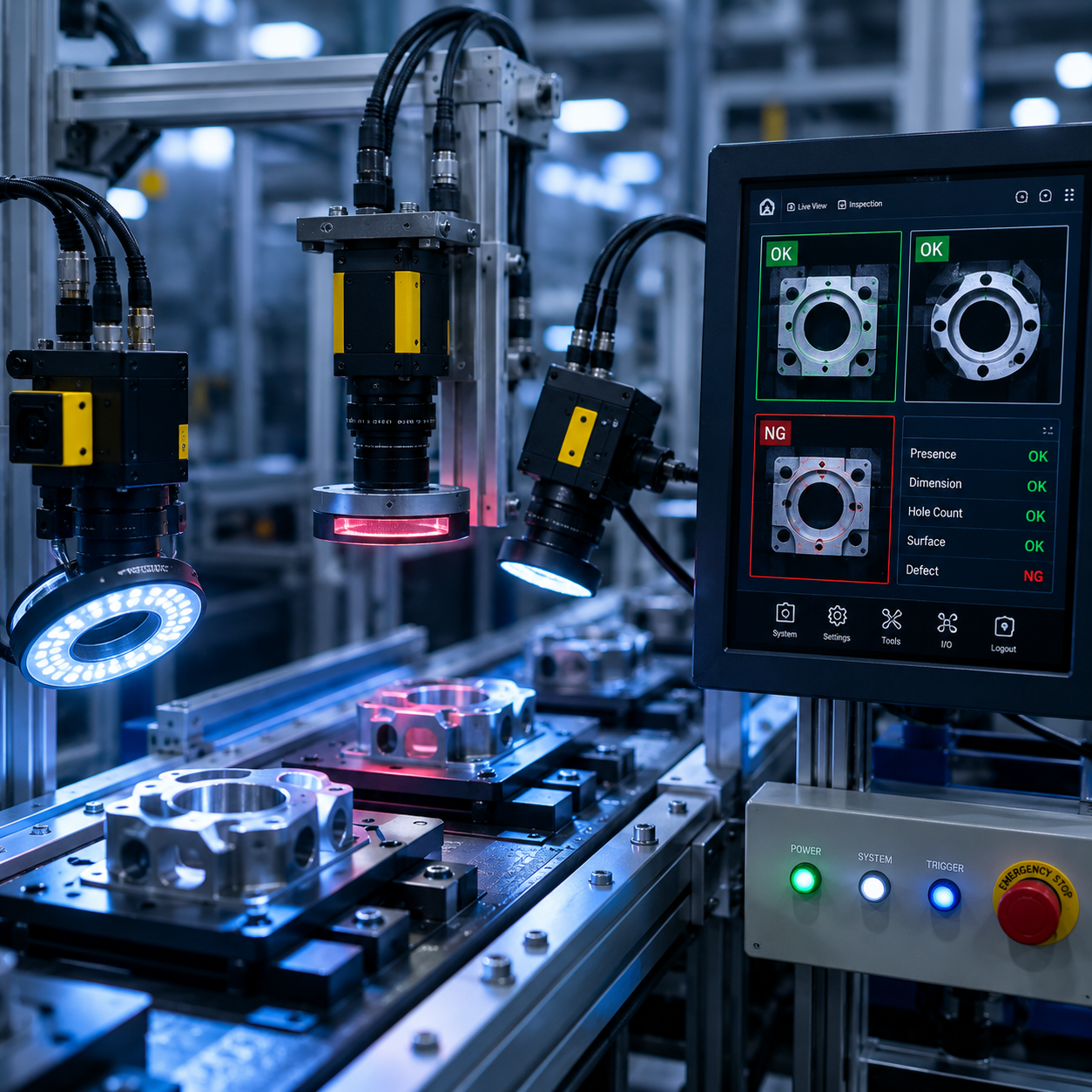
Industrial Machine Vision System
Integrating Machine Vision and IIoT enables manufacturers to monitor inspection results, defect trends, rejection rates, camera health, and AI-based detection performance. This provides deeper visibility into quality processes, supports root-cause analysis, improves inspection accuracy, and enables continuous process improvement.
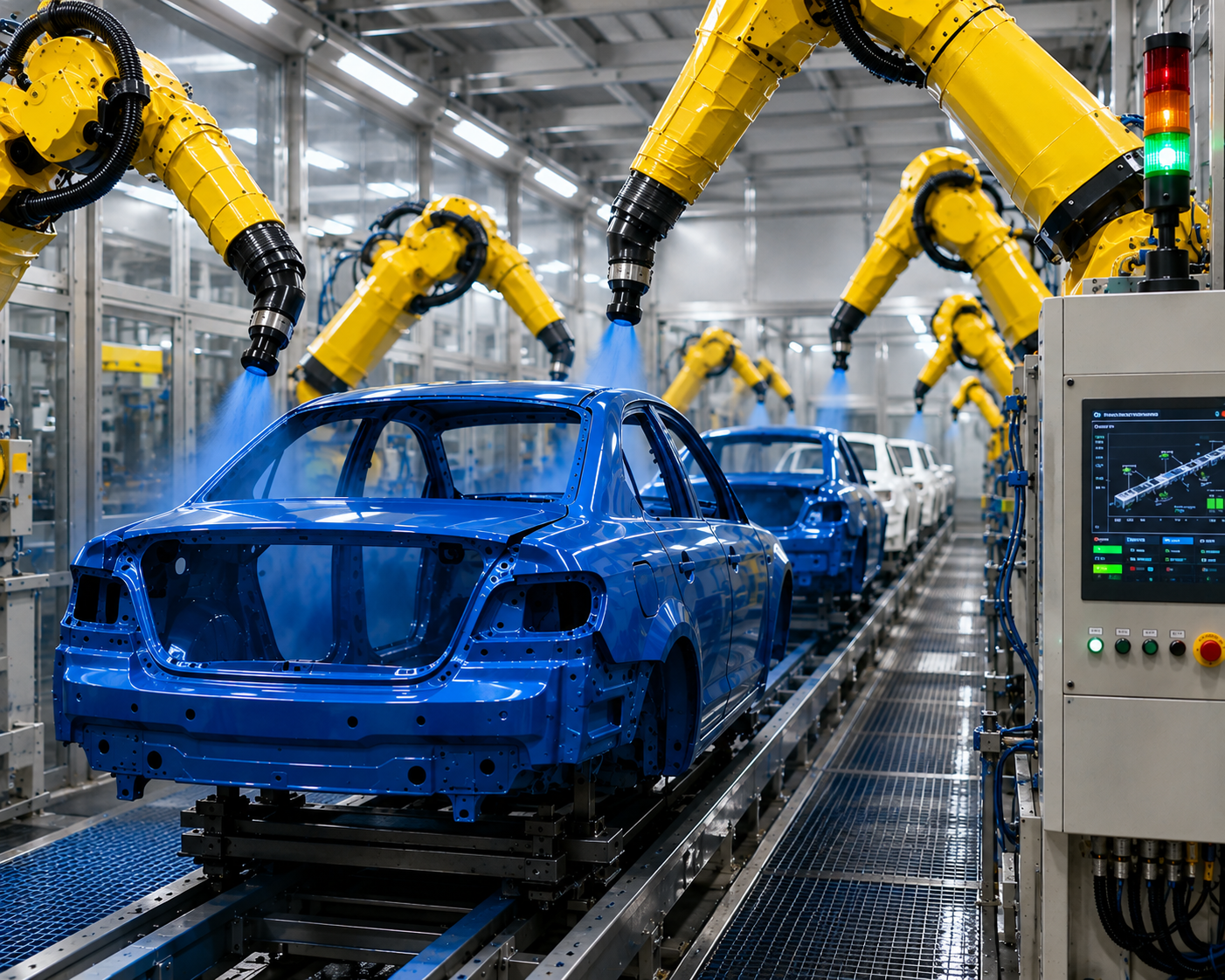
Paint Shop Automation
IIoT solutions can monitor paint consumption, spray pressure, robot utilization, color change time, production output, and process parameters across automated paint shops. Real-time data helps reduce material wastage, maintain consistent coating quality, improve equipment utilization, and control operating costs
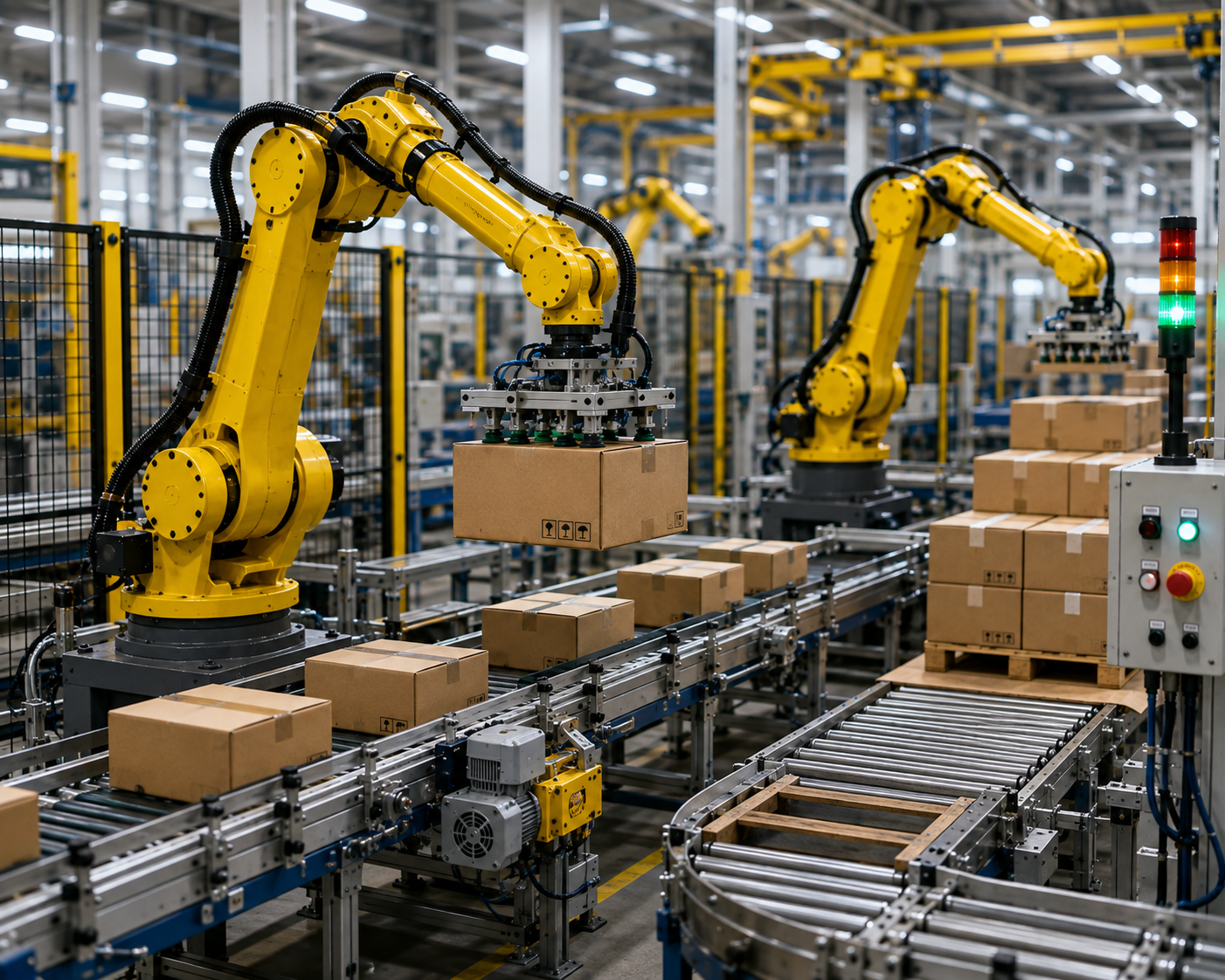
Packaging & Material Handling
IIoT can connect conveyors, robots, palletizing systems, and packaging equipment to monitor conveyor speed, robot throughput, pallet count, box count, machine availability, and material flow. This helps manufacturers identify bottlenecks, improve material movement, increase throughput, and achieve better production and warehouse efficiency.
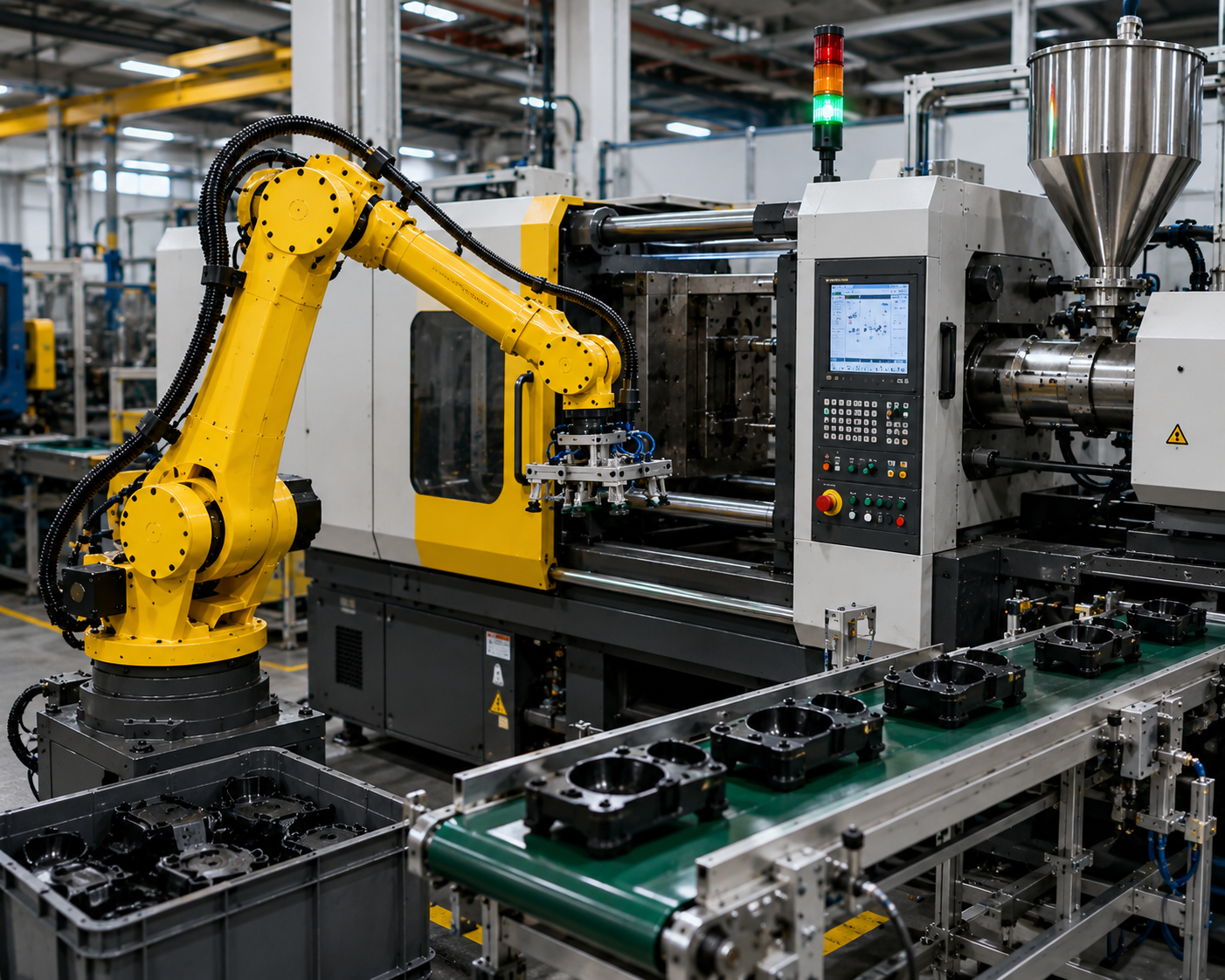
Injection Moulding
For injection moulding operations, IIoT can track mould temperature, injection pressure, cycle time, cooling time, machine performance, and reject trends. Manufacturers can use this information to optimize moulding parameters, improve product consistency, reduce scrap, and identify potential process issues before they affect production.
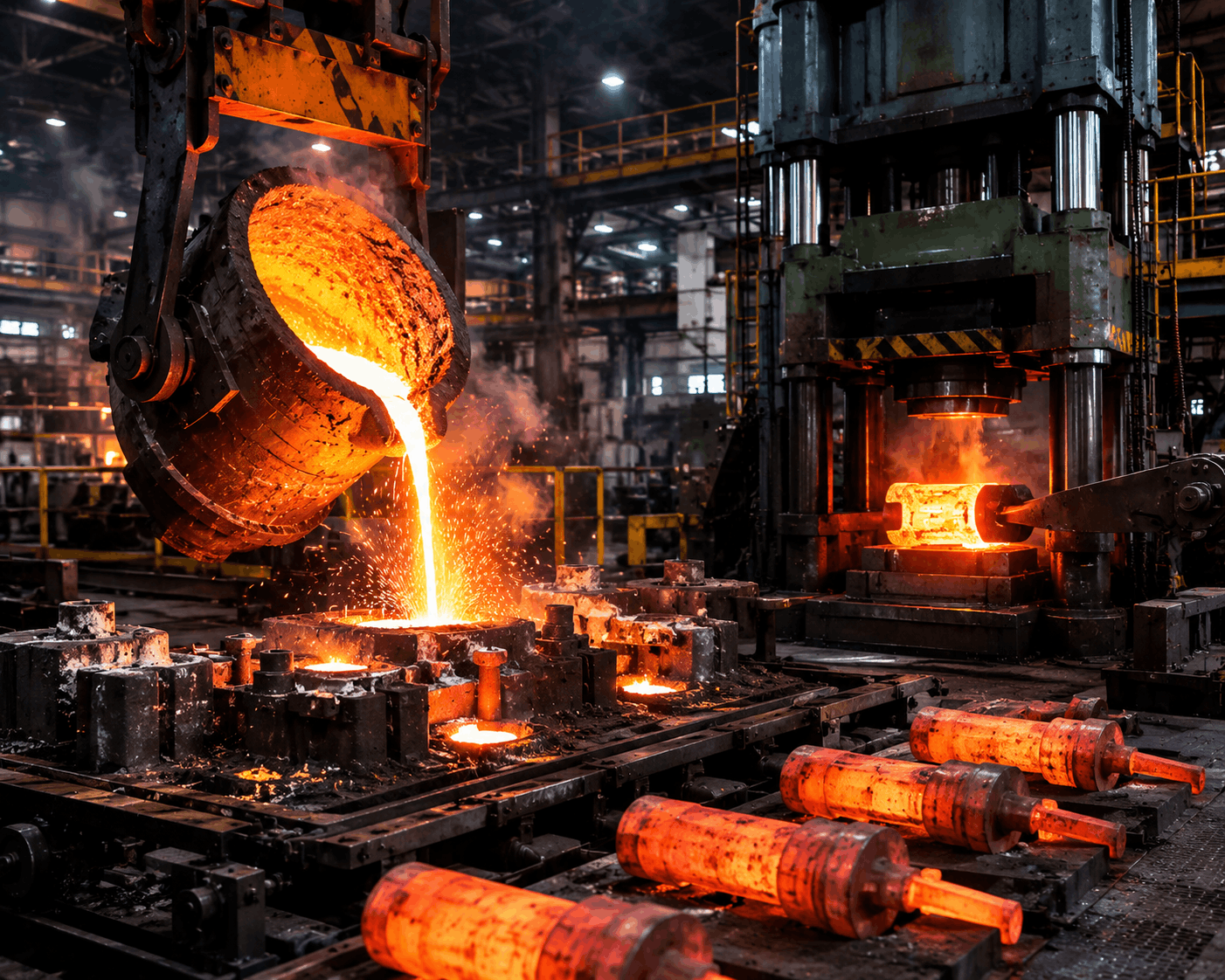
Foundry & Forging
IIoT solutions provide real-time visibility into foundry and forging operations by monitoring furnace temperature, machine utilization, grinding hours, robotic performance, energy consumption, and critical process parameters. Connected production data supports better process control, higher equipment efficiency, predictive maintenance, and reduced operating costs.
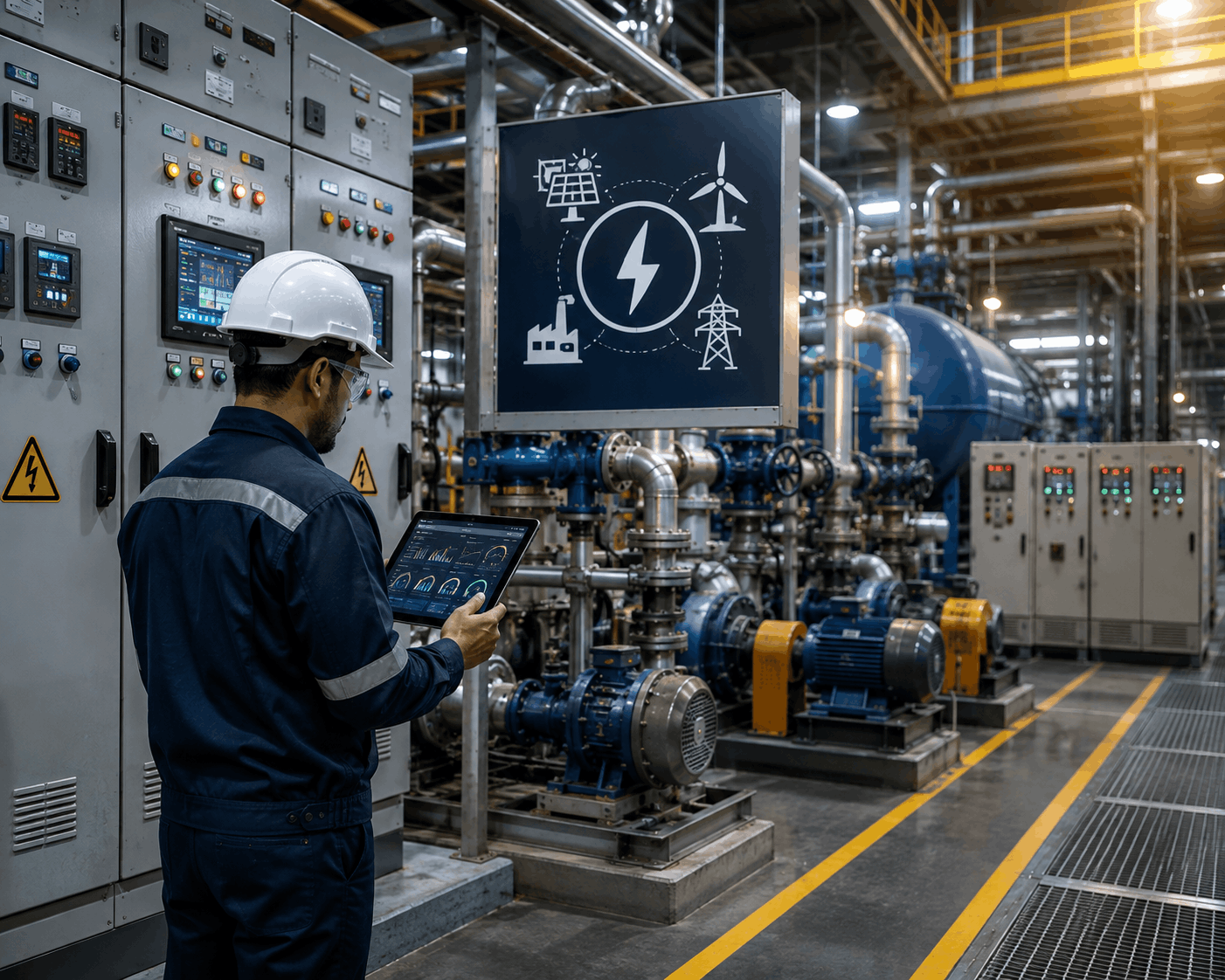
Utilities & Energy Management
IIoT extends beyond production equipment to monitor critical plant utilities such as electricity consumption, compressed air, water usage, steam, gas flow, and power quality. Energy data collected in real time helps manufacturers identify excessive consumption, reduce utility costs, improve energy efficiency, and generate reliable data for sustainability and energy-management initiatives.
Real-Time Production Dashboard & Predictive Maintenance
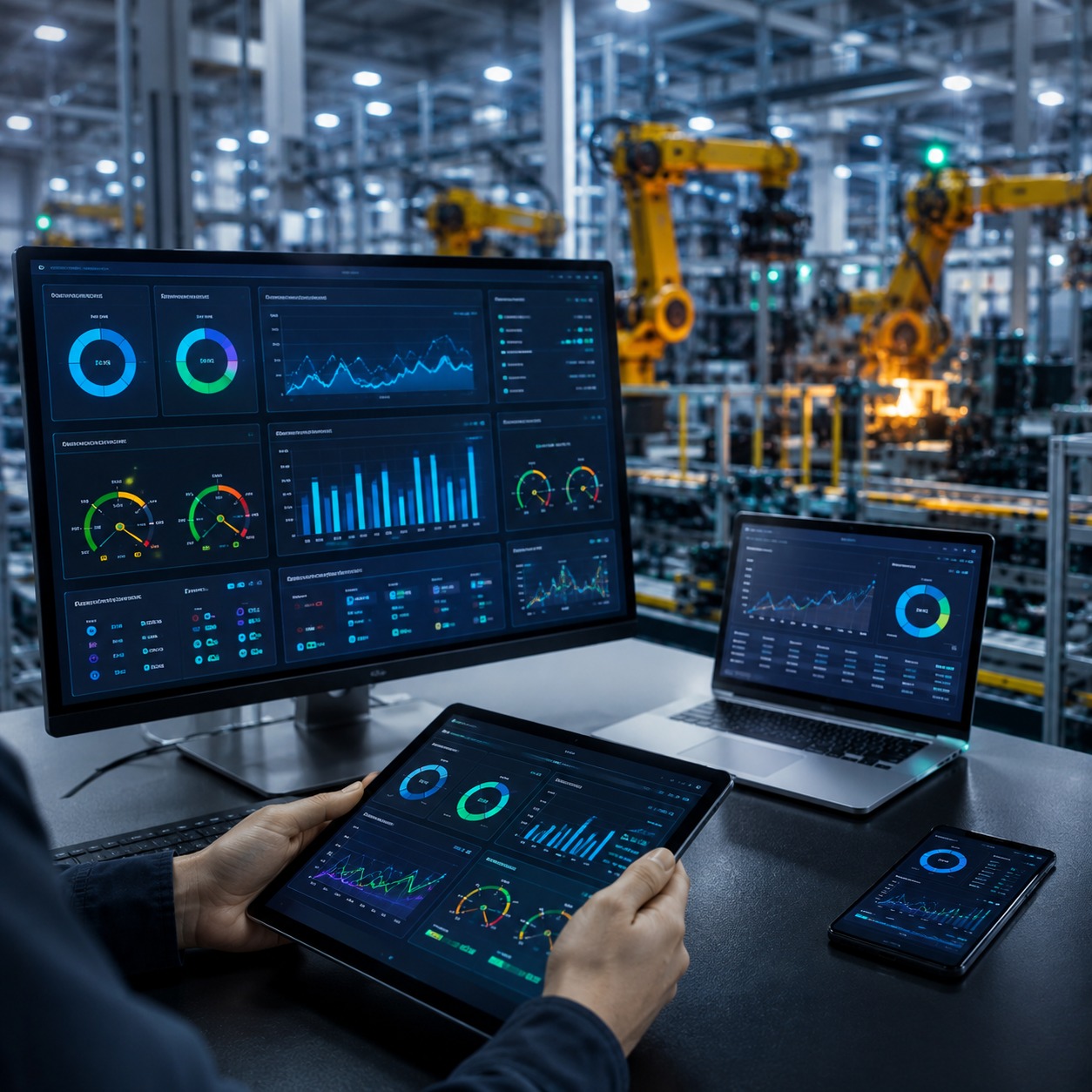
Real-Time Production Dashboard for Smart Manufacturing
Mahajan Automation delivers advanced CAM Engineering Solutions and Robotic Automation for manufacturers seeking higher productivity, precision, and process efficiency. Our solutions cover CAM programming, robotic programming, machining process optimization, toolpath development, and robotic integration for complex industrial applications. We combine engineering expertise with automation technologies to improve accuracy, repeatability, cycle time, and overall production performance. From process analysis and system design to programming, integration, commissioning, and support, we provide complete turnkey automation solutions tailored to specific manufacturing requirements. With 3,000+ automation projects, Mahajan Automation helps industries implement reliable, scalable, and Industry 4.0-ready manufacturing systems that reduce manual intervention, improve quality, and maximize operational efficiency. Our solutions support CNC machining, robotic machining, material handling, welding, and other automated manufacturing processes. We focus on delivering practical, application-specific solutions aligned with production goals. Our experienced engineering team ensures seamless integration from concept to production.
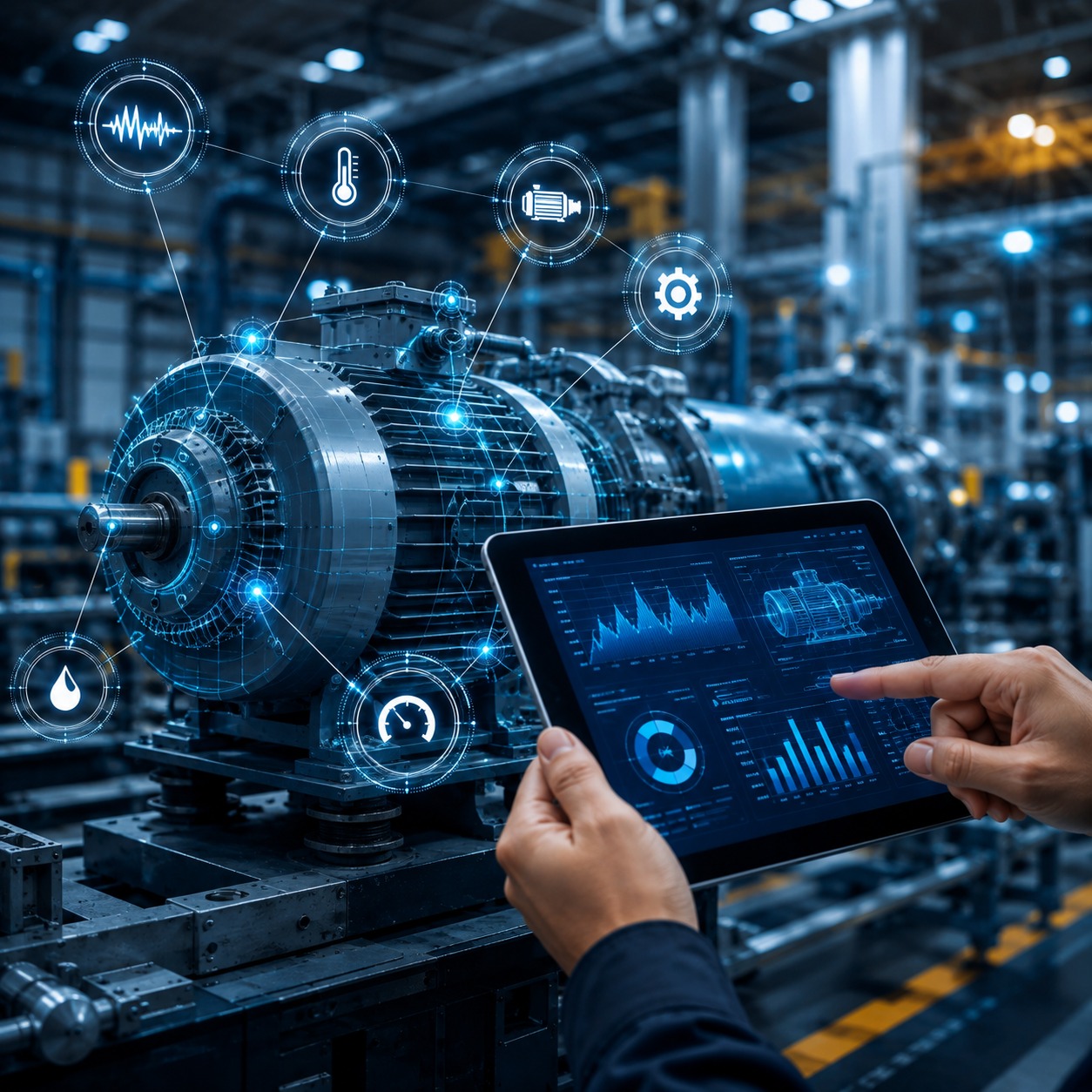
Early Fault Detection for Industrial Machinery
Mahajan Automation’s Predictive Maintenance solutions use IIoT technology to continuously monitor critical machine parameters and identify potential equipment issues before failures occur. Real-time monitoring of bearing vibration, motor temperature, servo load, hydraulic pressure, lubrication status, tool wear, and overall machine health helps manufacturers detect abnormal operating conditions at an early stage. By replacing reactive maintenance with data-driven maintenance strategies, businesses can reduce unexpected breakdowns, optimize maintenance schedules, and improve equipment reliability. Predictive maintenance also helps extend machine life, reduce maintenance costs, minimize production interruptions, and increase overall equipment availability. Mahajan Automation enables smarter, more reliable, and data-driven industrial maintenance.
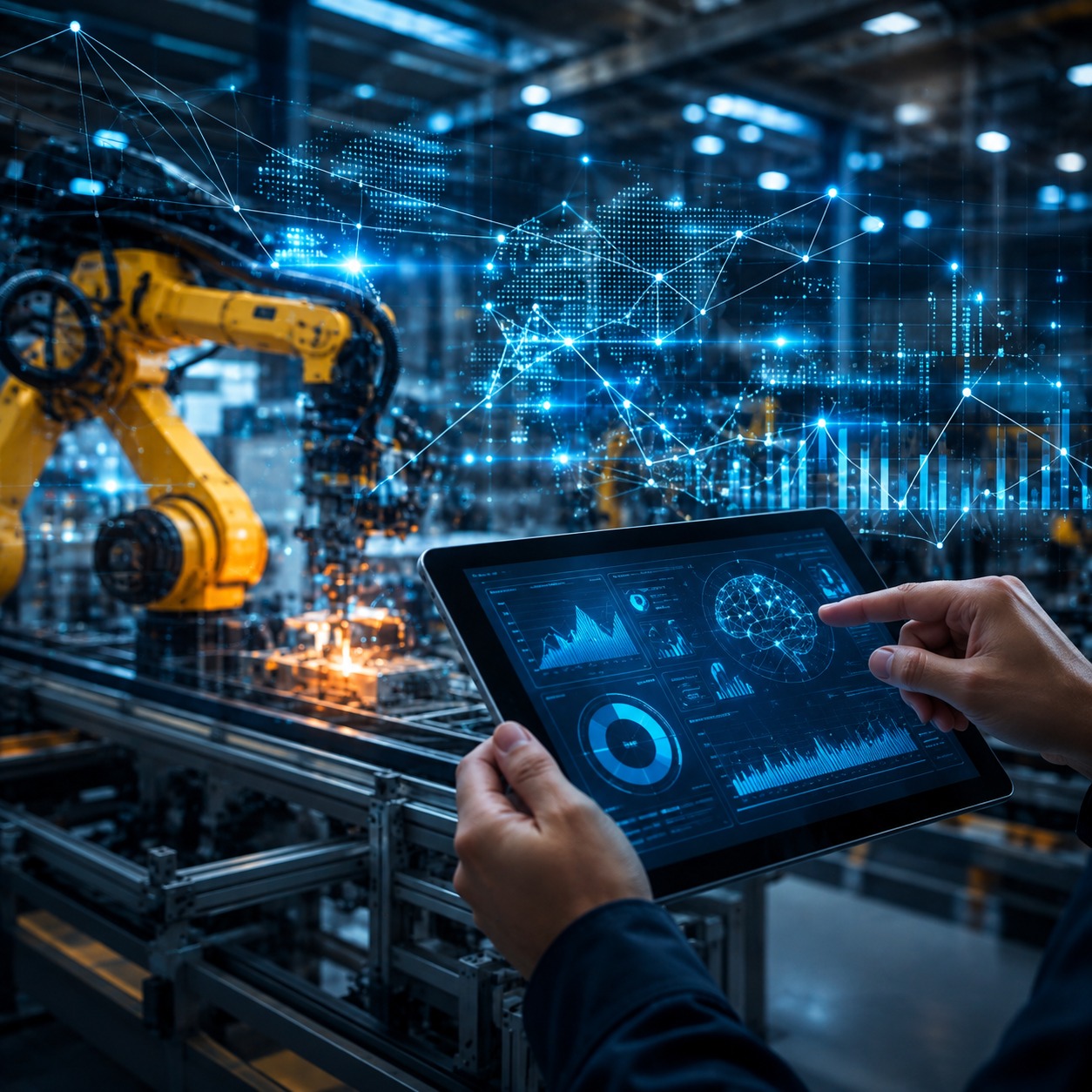
AI-Powered Manufacturing Intelligence & Data Analytics
Mahajan Automation integrates AI and Data Analytics with IIoT platforms to transform factory data into actionable insights and smarter business decisions. Advanced analytics enables manufacturers to improve production forecasting, downtime prediction, quality prediction, maintenance scheduling, process optimization, defect analysis, and energy optimization. By analyzing real-time machine and production data, AI identifies operational patterns, detects performance gaps, and supports proactive decision-making. These intelligent capabilities help manufacturers reduce downtime, improve product quality, optimize resource utilization, and increase overall production efficiency. Mahajan Automation’s AI-powered industrial analytics solutions enable businesses to build smarter, connected, and data-driven manufacturing environments with continuous performance improvement.
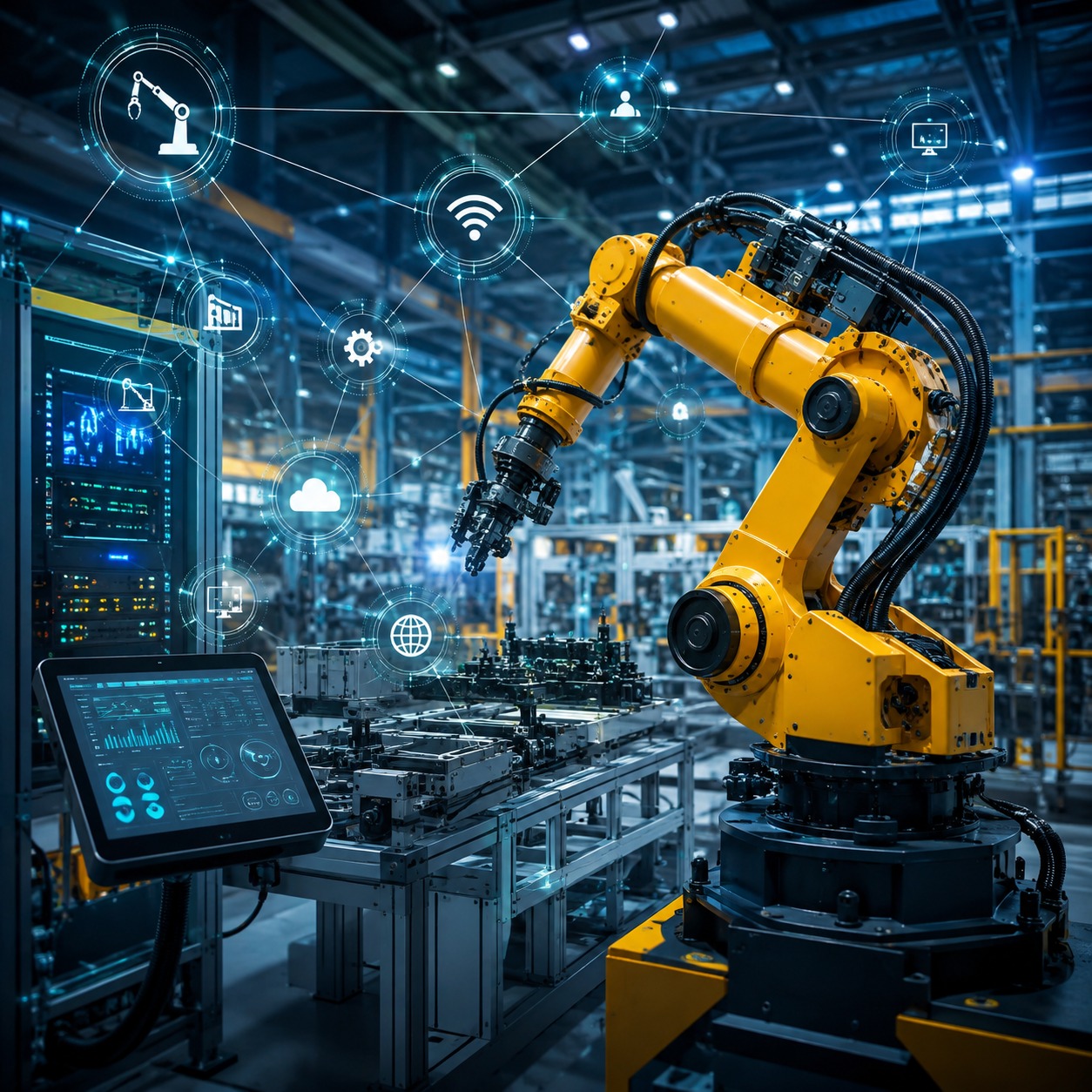
Connected Smart Factory & Industry 4.0 Integration
Mahajan Automation’s Industry 4.0 Integration solutions connect machines, systems, and production processes through advanced IIoT technologies. Our platform integrates seamlessly with PLC systems, SCADA, MES, ERP, industrial robots, CNC machines, machine vision, barcode systems, RFID, AGV & AMR, warehouse management systems, and cloud platforms. This connected ecosystem enables real-time data exchange, centralized monitoring, improved process visibility, and intelligent decision-making across the factory. By integrating diverse industrial technologies, manufacturers can optimize production workflows, reduce downtime, enhance operational efficiency, and improve traceability. Mahajan Automation helps businesses build a fully connected Smart Factory designed for scalable, data-driven, and future-ready manufacturing operations.
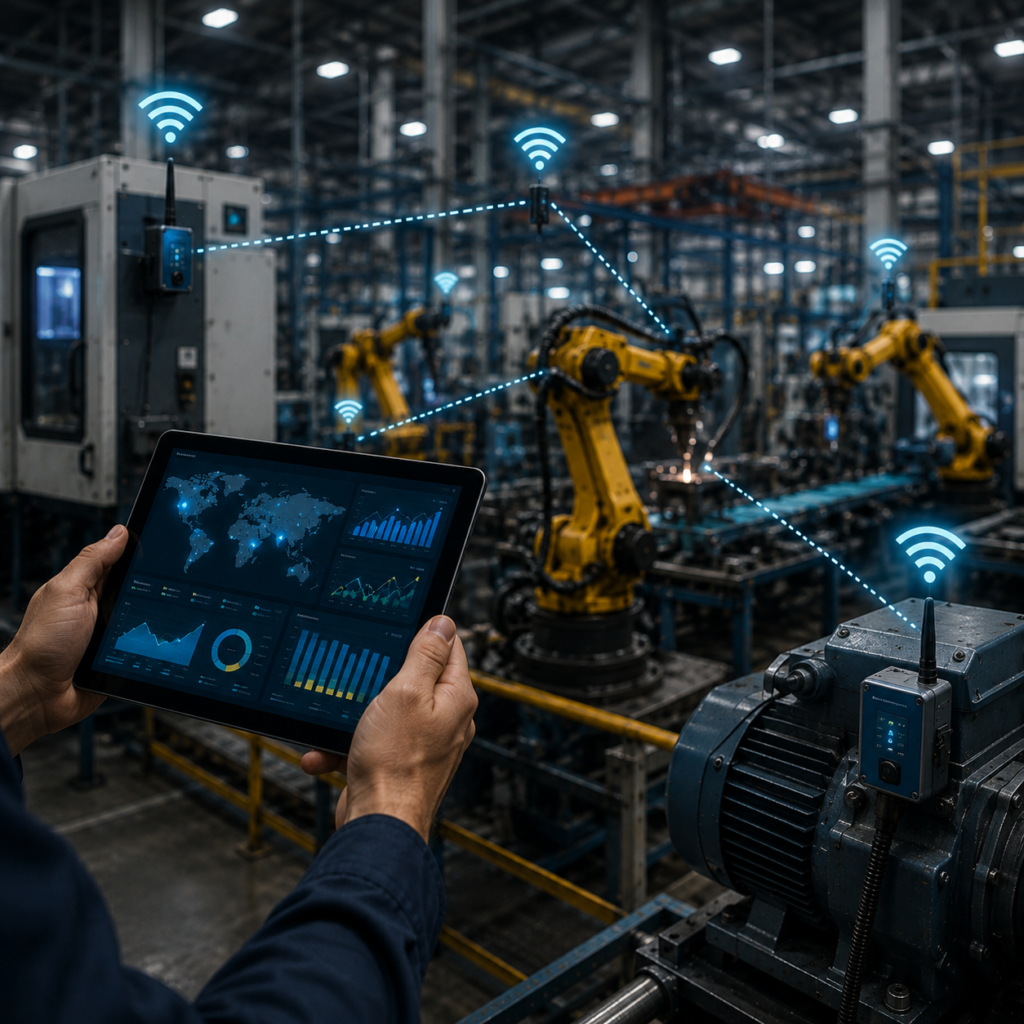
Robotic IIoT Automation Solutions Smart Industrial Automation for Modern Manufacturing
Robotic IoT Automation combines Robotics, Industrial Automation, and Internet of Things (IoT) technologies to create smart, connected, and automated industrial systems. It enables machines, robotic arms, sensors, and control systems to communicate in real time for improved efficiency, accuracy, and productivity.
IoT-enabled robotic systems collect and analyze operational data such as temperature, pressure, motion, speed, and machine performance through smart sensors. This data is processed using automation software, PLCs, and cloud-based monitoring platforms to optimize industrial operations and reduce manual intervention.
Robotic automation is widely used for welding, material handling, assembly, packaging, inspection, machine loading, and quality control. These systems improve production speed, reduce human errors, and ensure consistent output in manufacturing environments.
Industrial IoT automation also supports predictive maintenance by detecting machine issues before failures occur. Remote monitoring dashboards allow operators to track equipment performance and control industrial processes from anywhere.
IIoT Solutions Across Diverse Manufacturing Industries

Automotive & Auto Ancillary
IIoT solutions for automotive manufacturing and auto component plants enable real-time machine monitoring, production tracking, predictive maintenance, and OEE analysis. Improve productivity, quality, traceability, and equipment availability across connected production lines.

Engineering, Steel & Metal Industries
For heavy engineering, structural fabrication, steel plants, foundries, forging, and metal processing, IIoT enables machine health monitoring, energy tracking, production analytics, and downtime reduction. Gain better visibility across complex industrial operations.

Electronics, Plastic & Consumer Manufacturing
Our IIoT solutions for electronics, plastics, white goods, furniture, and consumer goods connect machines and production systems for real-time performance monitoring. Improve process efficiency, quality control, production visibility, and resource utilization.

Food, Pharmaceutical & Chemical
IIoT helps food and beverage, pharmaceutical, and chemical manufacturers monitor critical processes, equipment performance, production parameters, and energy consumption. Enable better traceability, compliance, quality management, and predictive maintenance.

Packaging & Process Manufacturing
For packaging and process industries, connected IIoT systems provide real-time production data, machine monitoring, downtime analysis, and performance insights. Optimize production workflows, reduce losses, and improve overall equipment effectiveness.

Warehousing & Logistics
IIoT integration for warehousing and logistics operations connects equipment, material movement, inventory systems, and automated technologies. Real-time monitoring improves asset utilization, operational visibility, traceability, and warehouse productivity.
Benefits of Implementing IIoT in Your Plant
Improve OEE & Production Efficiency
Monitor availability, performance, quality, cycle times, and bottlenecks in real time. Identify production losses and optimize overall equipment effectiveness.
Reduce Downtime & Maintenance Costs
Use real-time machine data and predictive maintenance insights to identify potential failures early. Minimize breakdowns, production interruptions, and unexpected maintenance costs.
Enhance Quality & Traceability
Track process parameters, inspection results, rejects, and production history digitally. Improve product consistency, quality control, and end-to-end manufacturing traceability.
Optimize Energy & Asset Utilization
Monitor electricity, compressed air, water, gas, and steam consumption alongside machine performance. Identify inefficiencies and maximize the utilization of machines, robots, and production assets.
Enable Real-Time Smart Decisions
Access live dashboards, alerts, reports, and production analytics from connected systems. Make faster, data-driven decisions and continuously improve manufacturing performance.
Frequently Asked Questions FAQ
What are Industrial IIoT and Automation Solutions?
Industrial IIoT and Automation Solutions connect *machines, industrial robots, PLCs, CNC machines, sensors, SCADA, MES, ERP, and cloud platforms* into a unified digital manufacturing ecosystem. They enable real-time data collection, machine monitoring, production analytics, predictive maintenance, and intelligent factory management.
How does IIoT improve manufacturing productivity?
IIoT continuously collects production data such as *machine status, cycle time, production quantity, downtime, OEE, energy consumption, alarms, and equipment health*. Manufacturers can use this real-time information to identify bottlenecks, reduce downtime, improve machine utilization, optimize production processes, and make faster data-driven decisions.
Can IIoT solutions be integrated with existing industrial machines and robots?
Yes. Adaptive CAM technology can optimize robot paths for *complex geometries, different component designs, part variations, and changing process conditions*. This provides greater production flexibility and allows manufacturers to adapt robotic programs without extensive manual reprogramming.
What is predictive maintenance in Industrial IIoT?
Predictive maintenance uses real-time machine data to identify abnormal operating conditions before they result in equipment failure. Parameters such as *vibration, motor temperature, servo load, hydraulic pressure, lubrication status, tool wear, and machine health* can be monitored to detect early fault conditions, reduce unplanned downtime, optimize maintenance schedules, and improve equipment reliability.
How can Industrial IIoT help manufacturers build a Smart Factory?
Industrial IIoT creates a connected Smart Factory by linking *production equipment, robots, machines, sensors, software, and industrial networks*. Real-time dashboards, AI-powered analytics, predictive maintenance, OEE monitoring, quality tracking, energy management, and automated reporting provide manufacturers with actionable insights for improving productivity, quality, traceability, and overall operational efficiency.