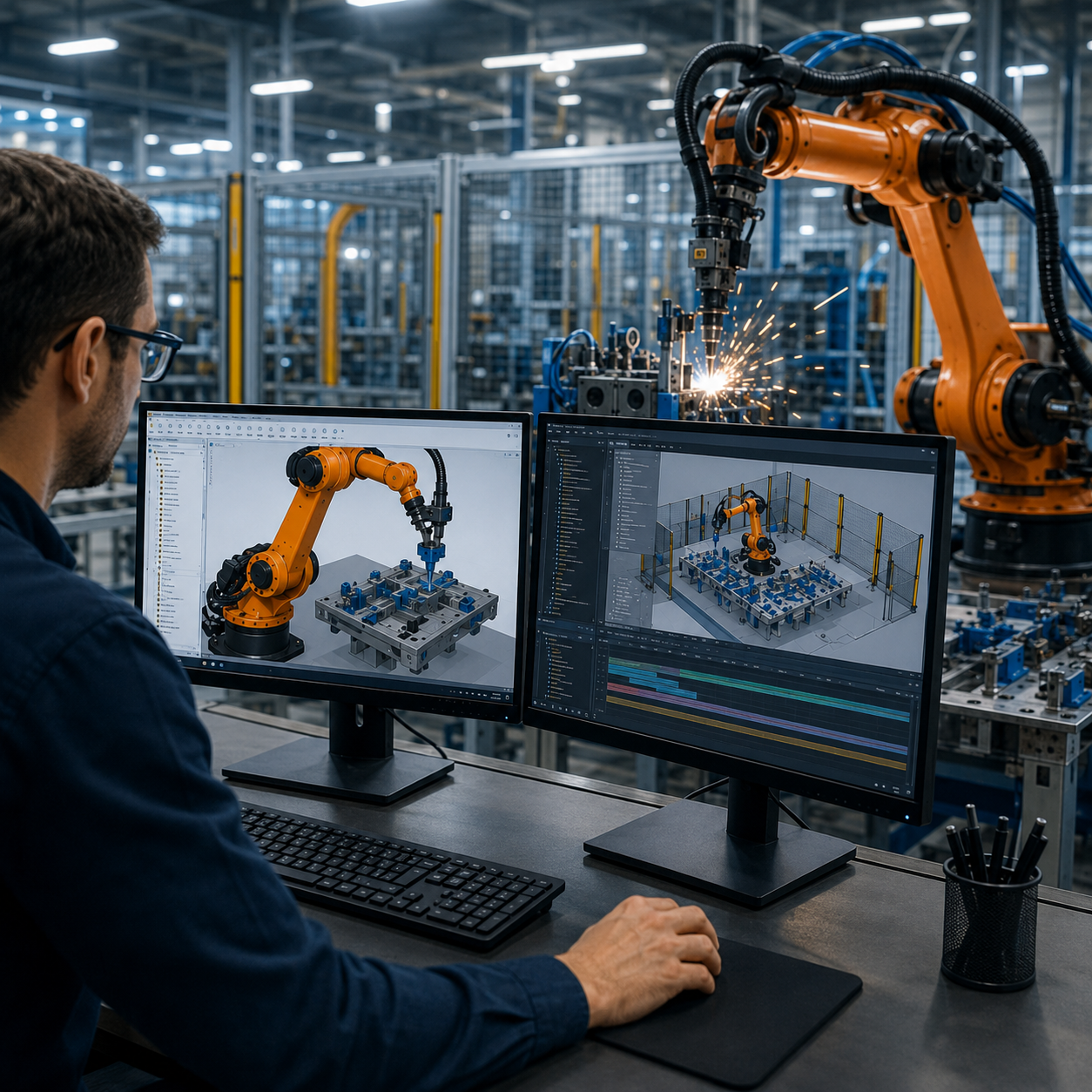
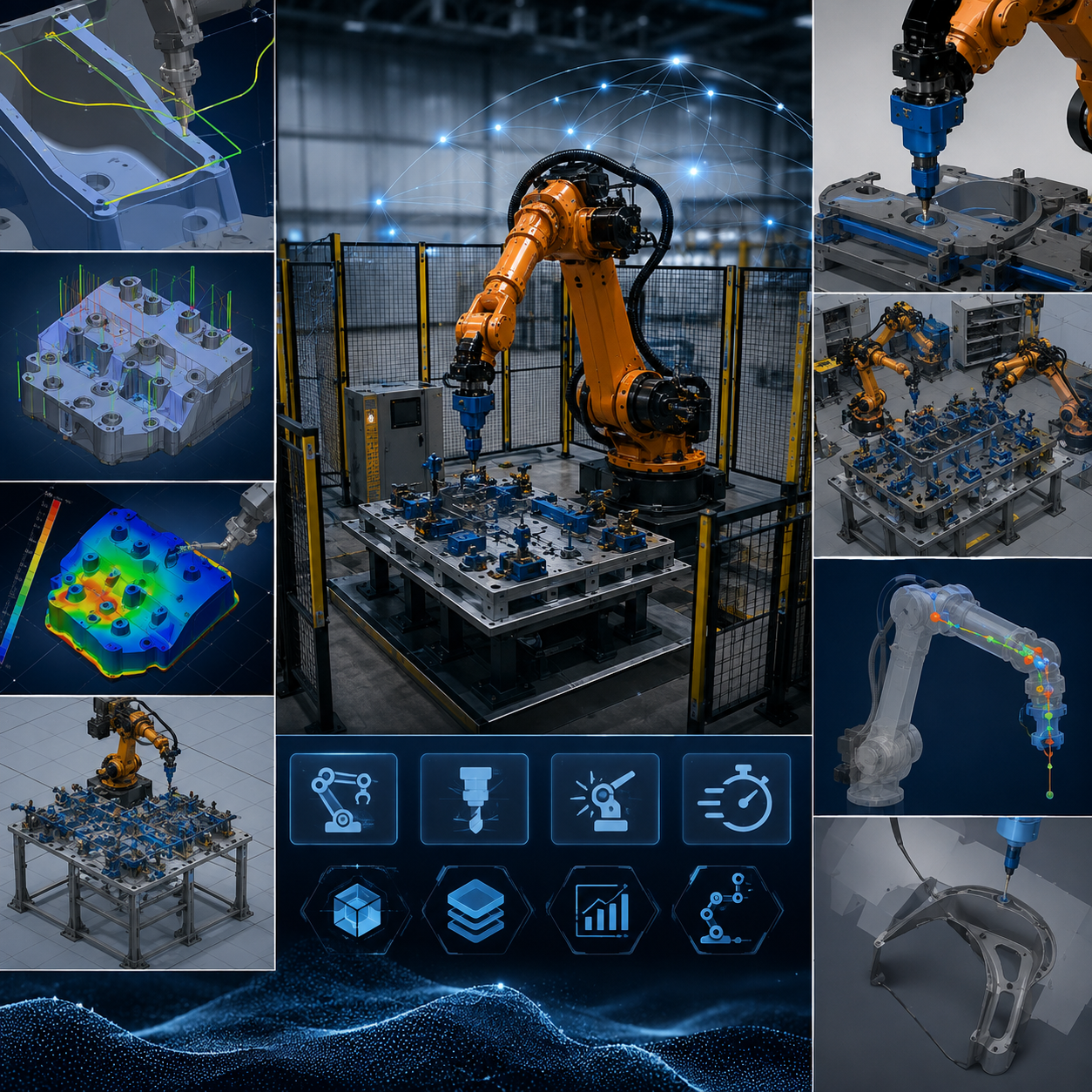
ENCY CAM solutions enable advanced robotic programming, offline simulation, path planning, and process optimization for industrial automation. We help manufacturers improve robot performance, reduce programming time, optimize cycle times, and achieve reliable, efficient robotic production with ENCY CAM and robotic automation solutions
Robotic Applications
Why is ENCY CAM required for robotics?
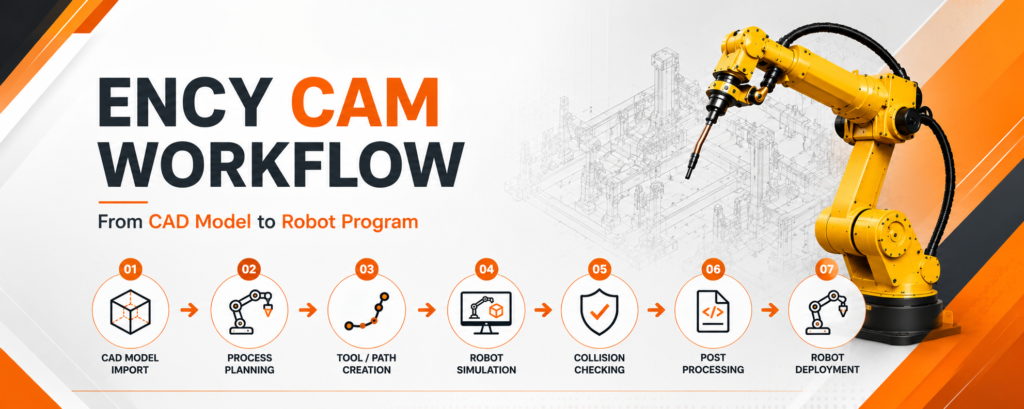
ENCY CAM is an advanced CAD/CAM-based solution that connects digital CAD models with robotic programming, enabling manufacturers to automatically generate optimized robot toolpaths directly from 3D designs. It reduces the need for manually teaching thousands of robot points and supports accurate, efficient programming for complex industrial applications such as robotic welding, cutting, trimming, grinding, dispensing, and machining. By enabling offline robot programming, ENCY CAM helps minimize production downtime while providing features such as collision detection, toolpath optimization, and simulation. Its CAM-based workflow makes it easier to program robots along precise paths and complex freeform surfaces, making ENCY CAM a valuable technology for industrial automation, robotic manufacturing, and Industry 4.0 production environments.
Advanced ENCY CAM Features for Robotic Automation
ENCY CAM for Robotic Automation
ENCY CAM provides powerful offline robot programming and path-planning capabilities, allowing manufacturers to create accurate robot movements directly from 3D CAD models. Its 3D simulation, collision detection, and reachability analysis help validate robot paths before deployment, while cycle-time optimization improves productivity and reduces production downtime.
Our ENCY CAM services cover complete robotic programming and automation optimization, including ENCY CAM implementation, robot programming, CAM programming, robotic simulation, and post-processor development. We also optimize robotic processes and existing robot cells to improve toolpaths, cycle times, accuracy, and overall production efficiency—helping manufacturers achieve faster and more reliable robotic automation.
Key Robotic Applications of ENCY CAM
Robotic Welding
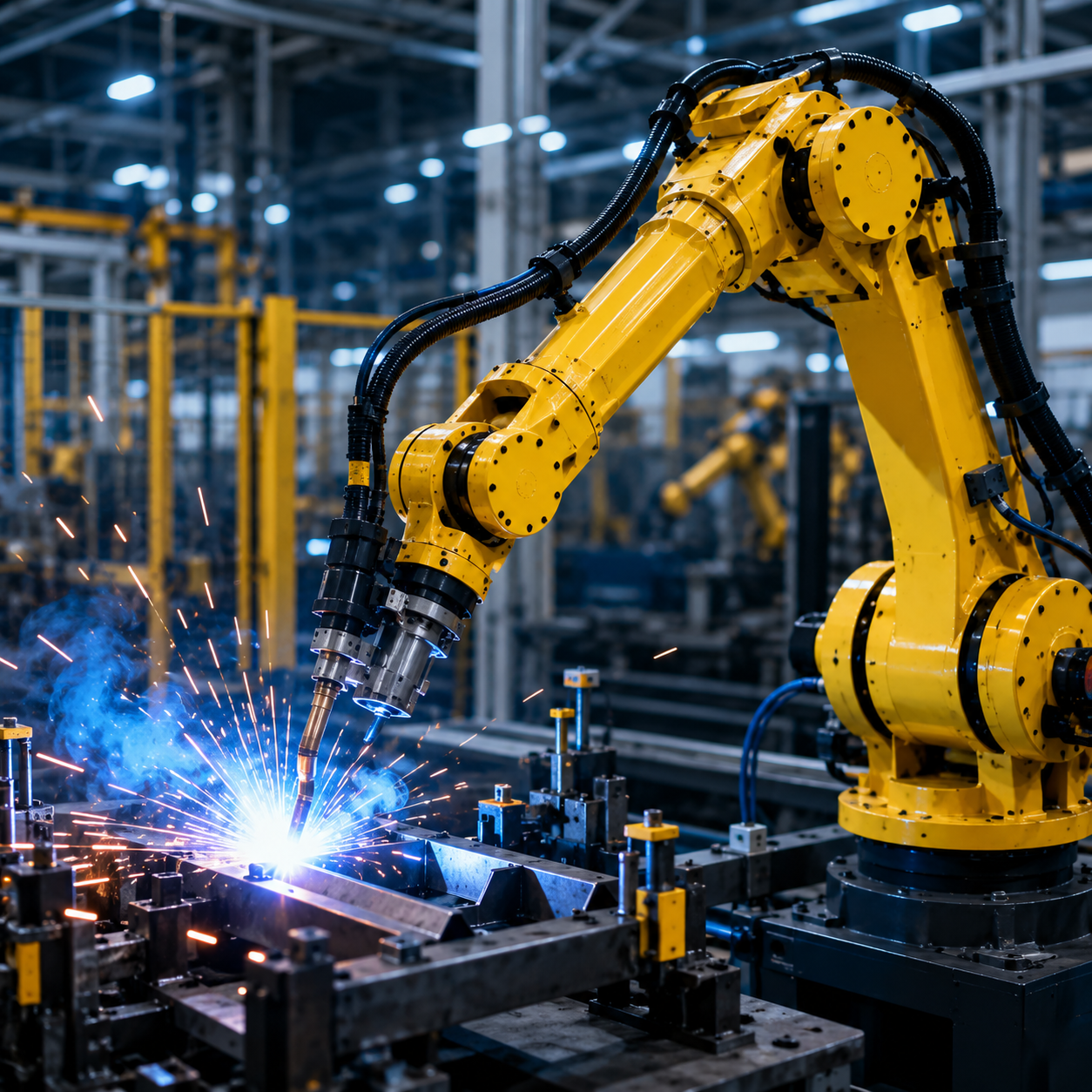
Generate precise weld paths directly from CAD models for structural welding, chassis, pressure vessels, and complex fabrication. Optimize torch angles, welding sequences, and collision-free movements.
Robotic Cutting
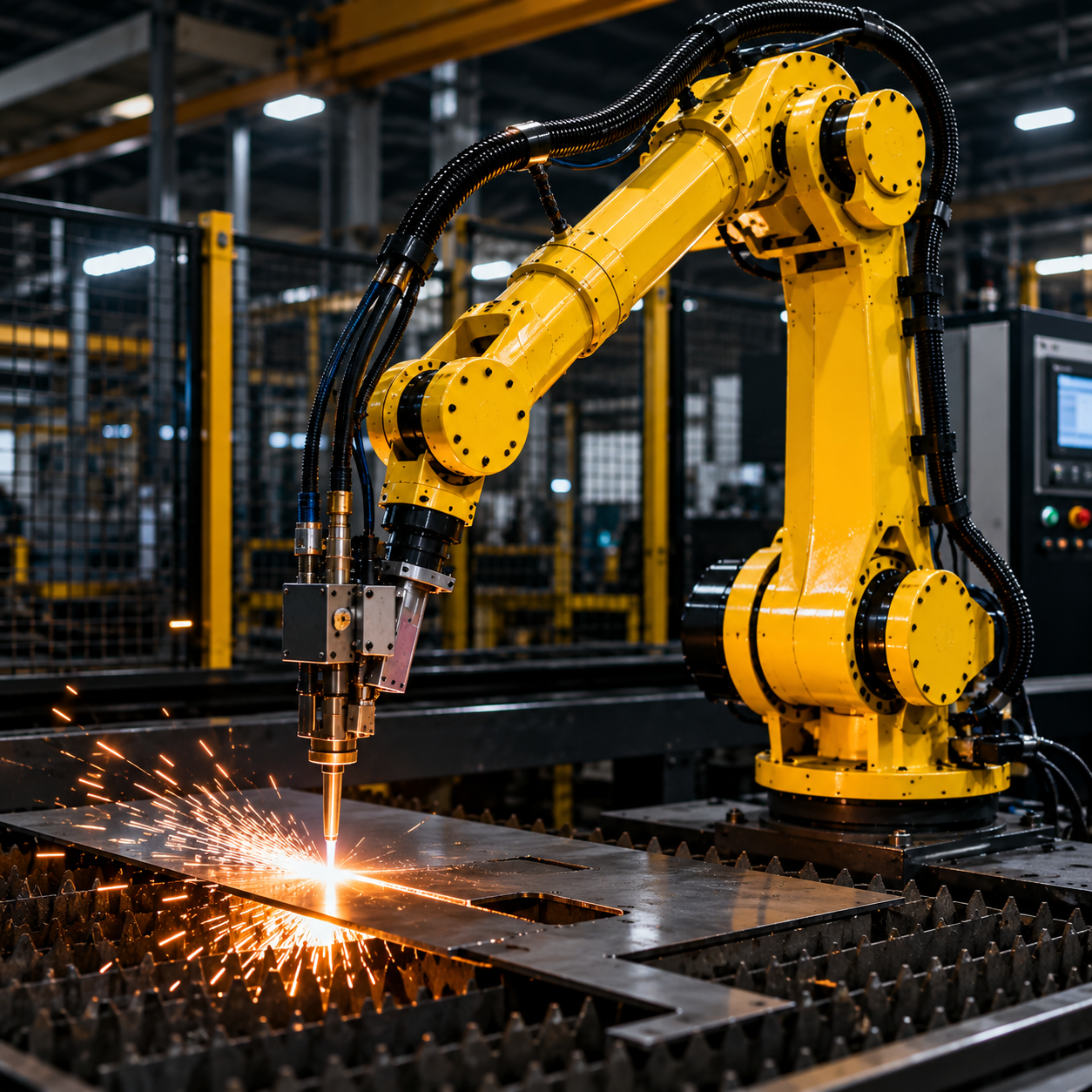
Create accurate toolpaths for plasma, laser, waterjet, knife cutting, and composite trimming. ENCY CAM helps maintain consistent cutting paths and improves robotic cutting efficiency.
Robotic Machining
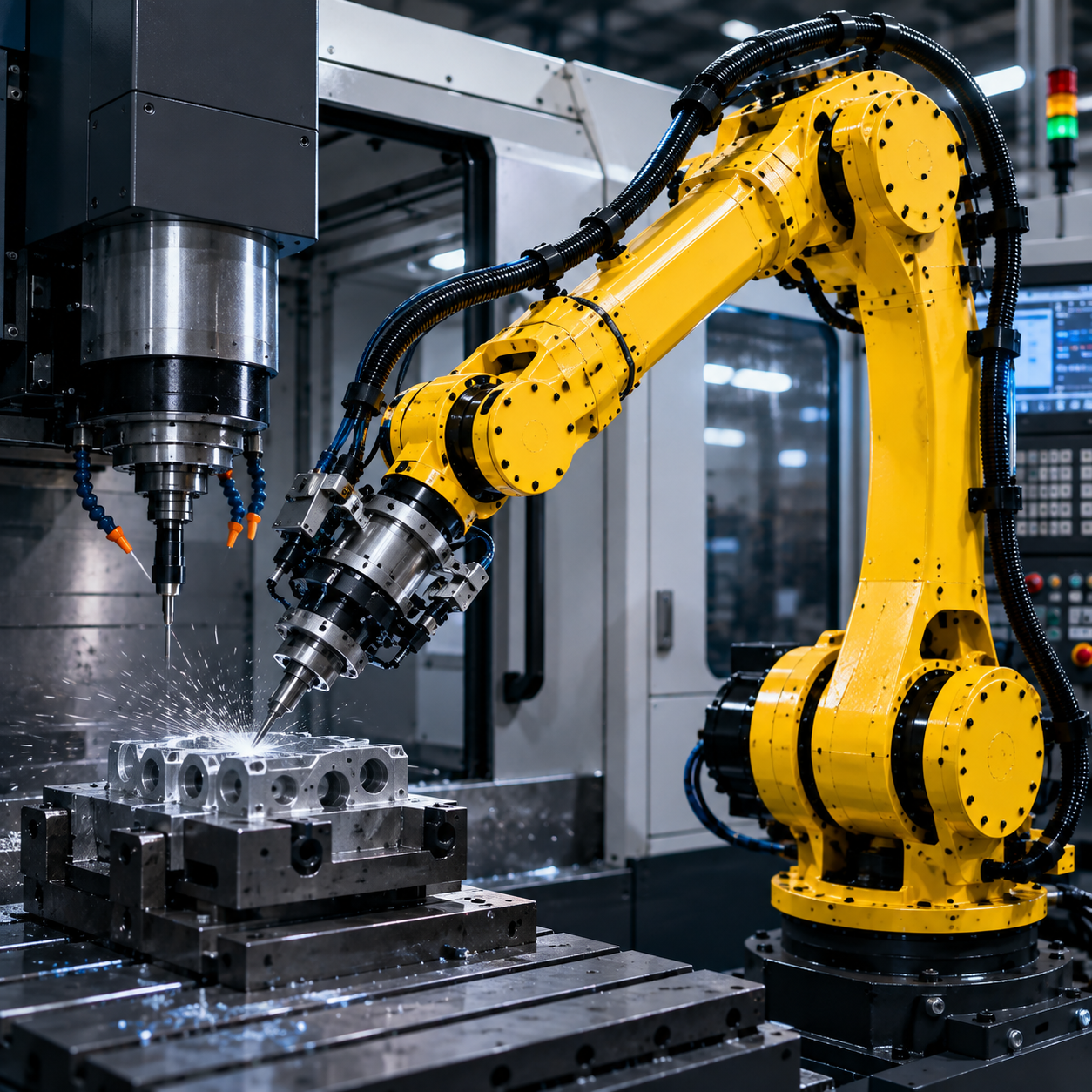
Program robots for milling, trimming, foam machining, mold finishing, and composite machining. Multi-axis toolpath generation enables CNC-like machining performance on complex components.
Robotic Grinding & Polishing
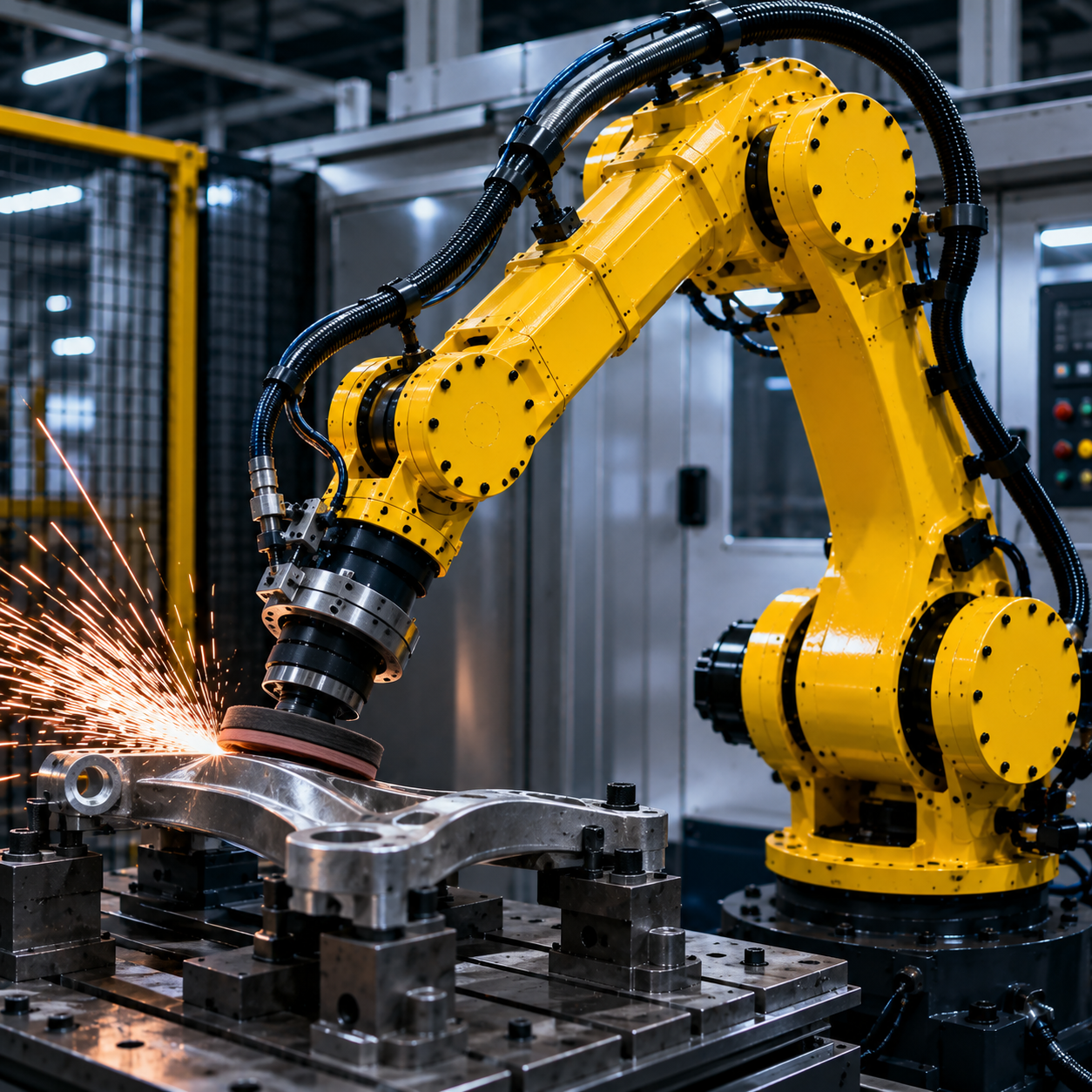
Automate deburring, weld bead removal, casting finishing, and surface polishing with consistent toolpaths. This improves surface quality while reducing repetitive manual operations.
Robotic Material Handling
Plan optimized robot movements for loading, unloading, transferring, and positioning components. Offline simulation helps validate reachability and improve cycle-time efficiency.
Robotic Painting & Coating
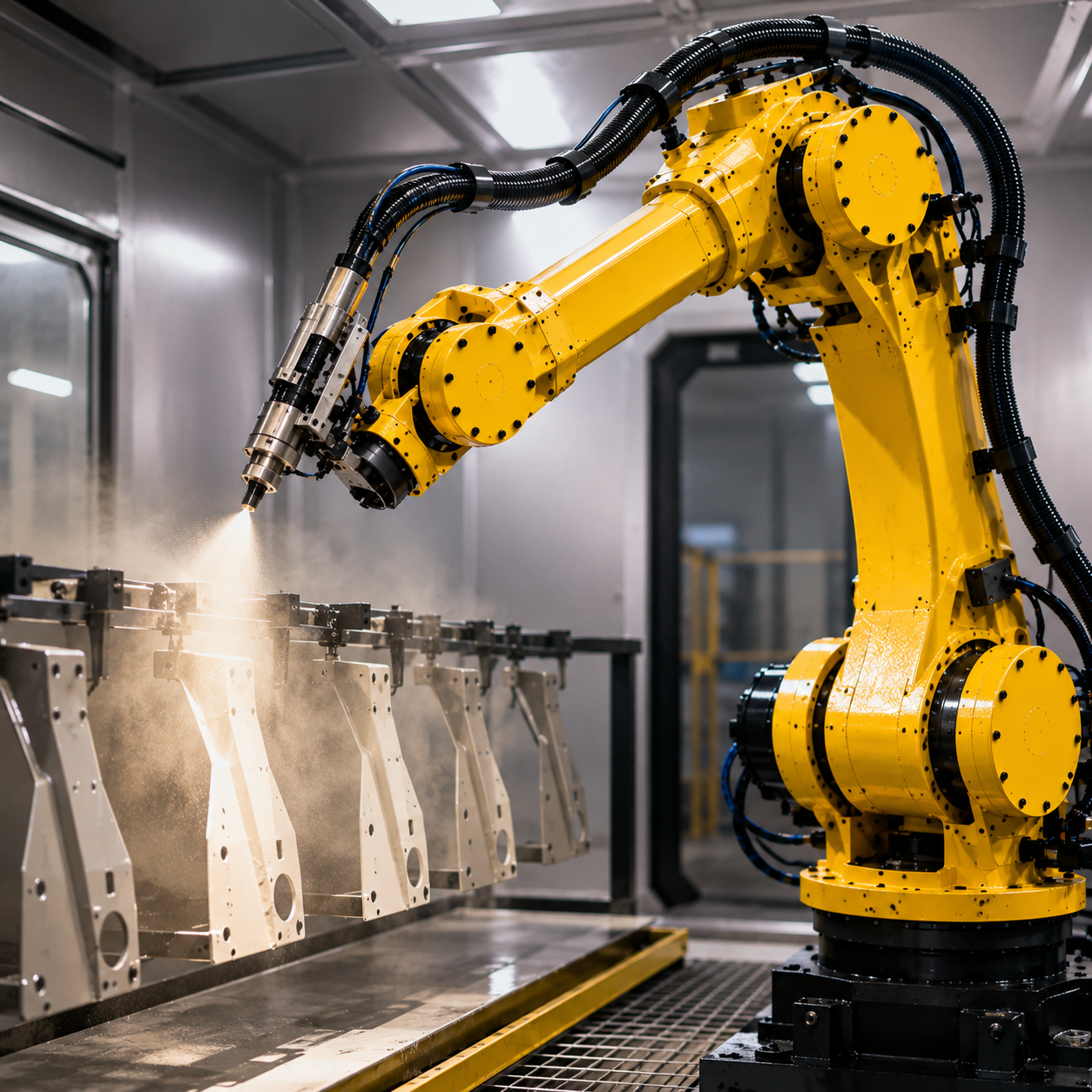
Generate controlled spray paths with consistent tool orientation, distance, and coverage. This helps achieve uniform coating quality while reducing paint consumption and overspray.
Robotic Dispensing
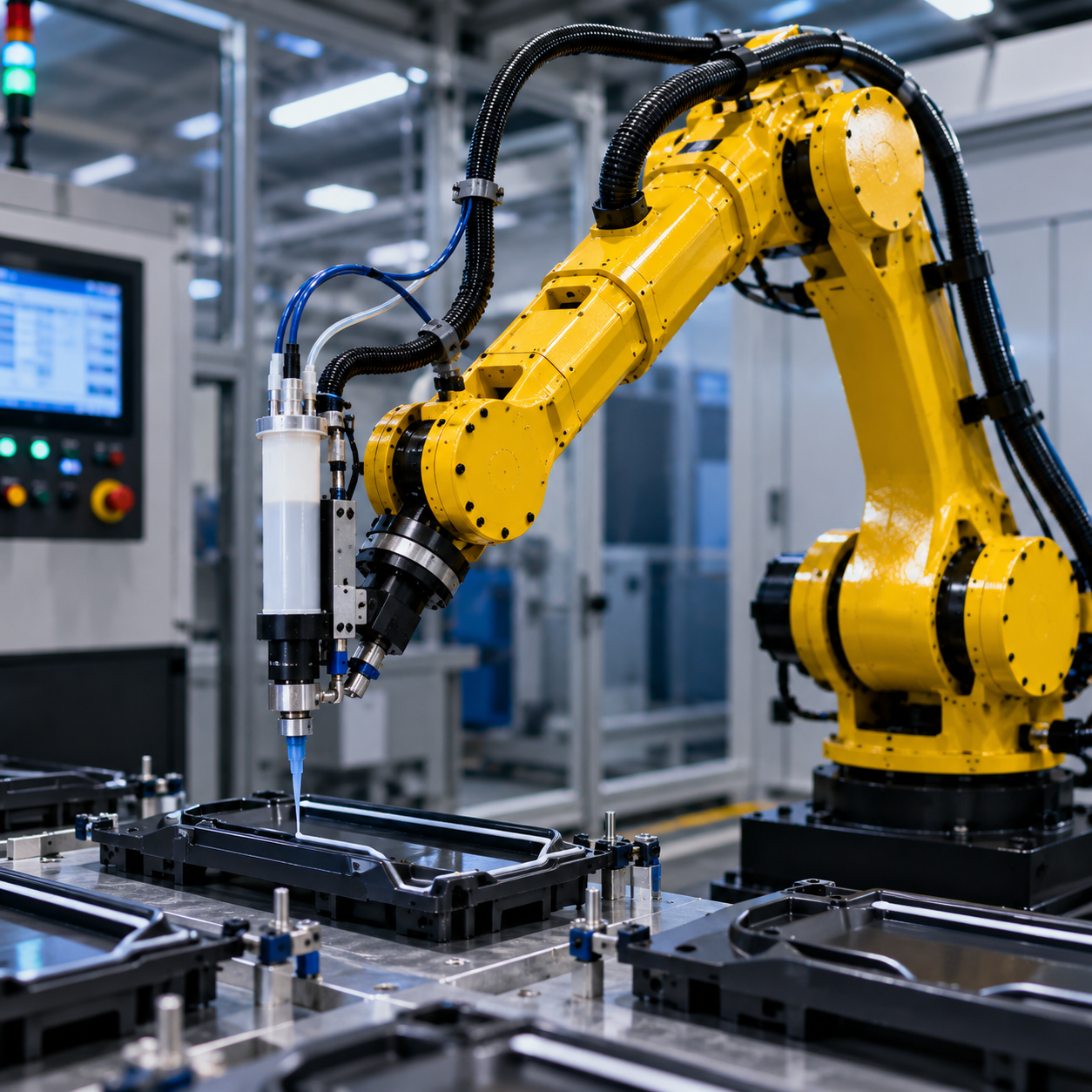
Create accurate CAD-based paths for adhesive, sealant, silicone, and gasket dispensing. Consistent tool movement helps maintain uniform bead size and application quality.
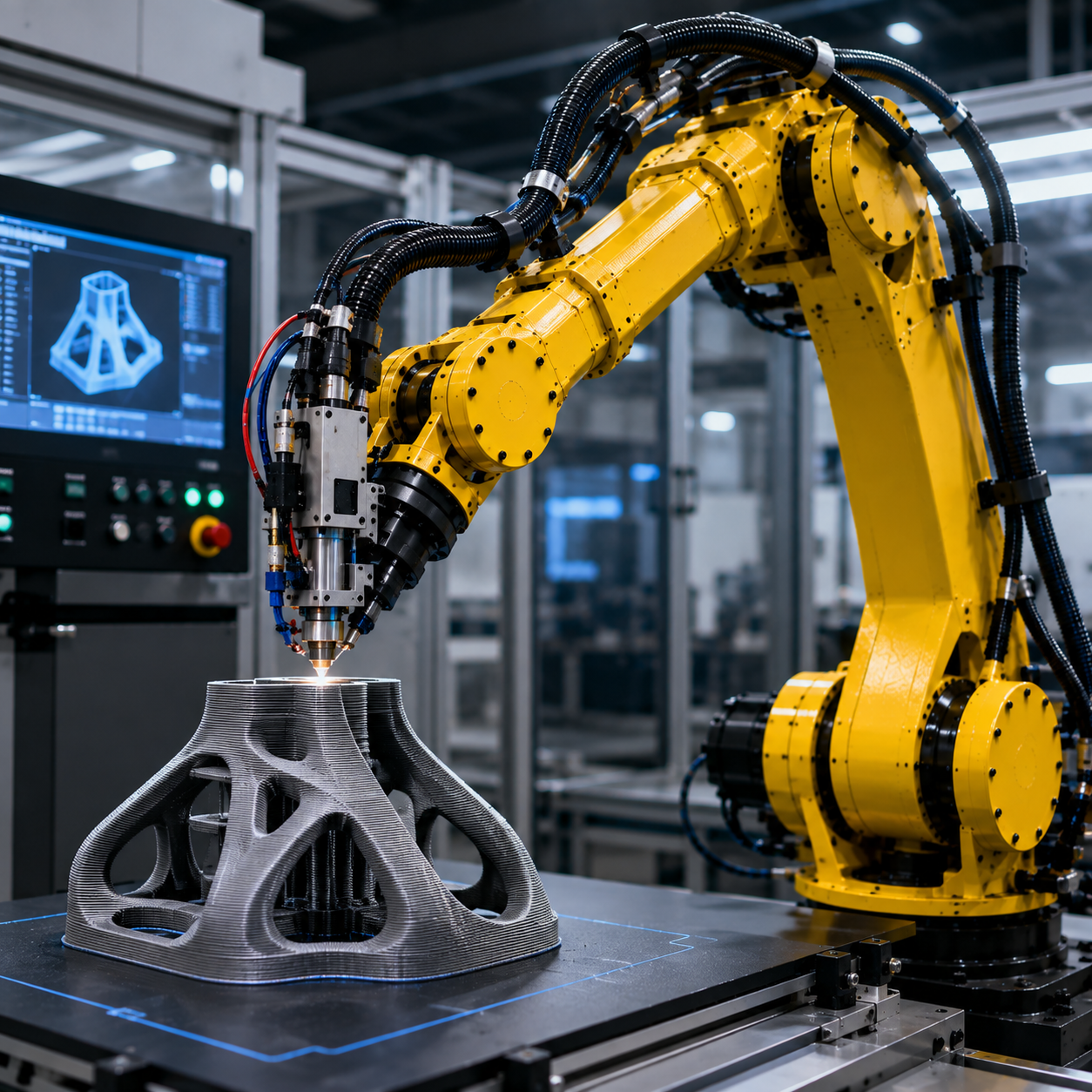
Robotic 3D Printing
Support robotic additive manufacturing applications such as large-scale 3D printing, plastic extrusion, concrete printing, and metal wire deposition with optimized multi-axis toolpaths.
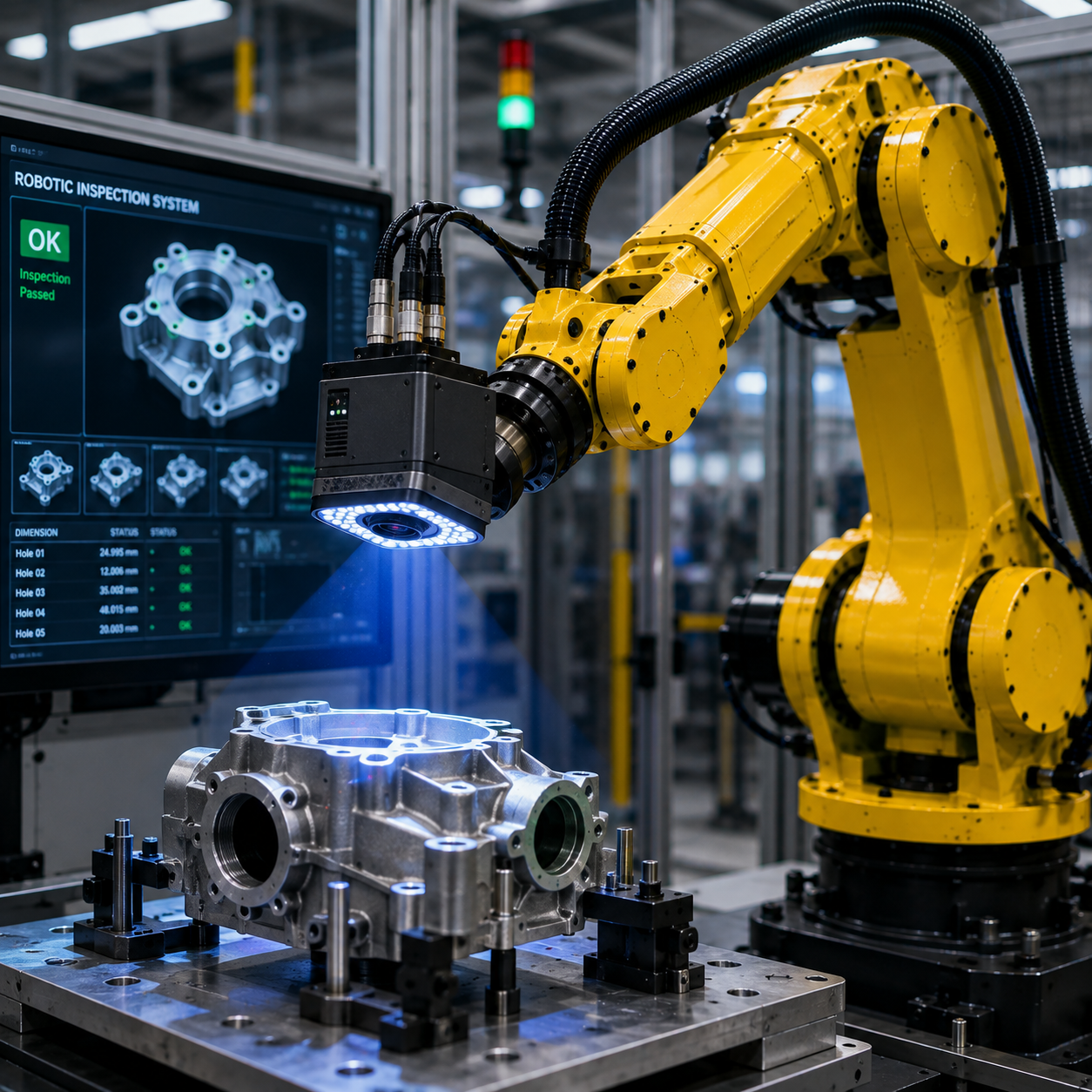
Robotic Inspection
Use CAD-based robotic paths for automated inspection, scanning, measurement, and quality verification. Simulation and reachability analysis help ensure complete and reliable inspection coverage.
Industries Using ENCY CAM for Robotic Automation
Automotive & Aerospace
ENCY CAM enables precise robotic welding, machining, trimming, and cutting for complex automotive and aerospace components, improving accuracy and production efficiency.
Heavy Fabrication & Shipbuilding
Optimize robot programming for large structures, complex weld seams, and heavy components with accurate toolpaths, simulation, and collision-free motion planning.
Railways & Defense
Support robotic manufacturing of large and complex components with offline programming, multi-axis toolpaths, and optimized robot movements for consistent production.
Foundries & Steel Plants
Automate grinding, deburring, cutting, finishing, and material processing while reducing manual programming and improving repeatability in demanding industrial environments.
Wind Energy & Large Component Manufacturing
ENCY CAM helps program robots for large-scale welding, cutting, grinding, and finishing applications, enabling efficient processing of oversized components.
Medical, Mold & Die Manufacturing
Create precise robotic machining, polishing, finishing, and inspection paths for molds, dies, medical components, and other complex parts requiring high accuracy.
Robotic Applications
Why ENCY CAM Is Valuable for Mahajan Automation
Faster Robotic Welding Projects
ENCY CAM enables offline robotic welding programming directly from CAD models, reducing manual teaching and programming time. Mahajan Automation can deliver complex welding projects faster and with greater consistency.
Advanced Robotic Machining
For complex robotic machining, trimming, cutting, and grinding applications, ENCY CAM generates optimized multi-axis toolpaths. This enables Mahajan Automation to handle intricate components with improved accuracy and surface quality.
Reduced Commissioning Time
With offline programming and 3D robot simulation, programs can be prepared and validated before installation at the customer site. This minimizes production interruptions and helps reduce robot commissioning time.
First-Time-Right Robot Programming
ENCY CAM supports collision detection, reachability analysis, and motion optimization before the robot is deployed. This helps Mahajan Automation identify programming issues early and deliver reliable robot programs with fewer corrections.
Expand Advanced Robotic Solutions
ENCY CAM allows Mahajan Automation to offer advanced CAM-based robotic automation for welding, machining, grinding, cutting, dispensing, painting, and 3D printing. This strengthens its ability to automate complex manufacturing processes beyond conventional robot teaching.
Transform CAD Designs into Smarter, Faster Robotic Automation with ENCY CAM.
Frequently Asked Questions FAQ
What is ENCY CAM used for in robotic automation?
ENCY CAM is used for offline robot programming, CAD-based toolpath generation, 3D simulation, and robotic motion optimization. It helps automate applications such as welding, machining, cutting, grinding, painting, dispensing, and additive manufacturing.
How does ENCY CAM reduce robotic programming time?
ENCY CAM generates robot toolpaths directly from 3D CAD models, reducing the need to manually teach thousands of robot points. This allows programs to be prepared offline while production continues.
Can ENCY CAM program robots for complex 3D components?
Yes. ENCY CAM is suitable for complex surfaces, large components, multi-axis machining, and intricate robotic paths. Reachability analysis, simulation, and collision checking help create reliable programs before deployment.
Which robots can be programmed using ENCY CAM?
ENCY CAM supports robotic programming workflows for major industrial robot platforms, including FANUC, ABB, KUKA, Yaskawa, and Universal Robots, depending on the available post-processor and application requirements.
Why should manufacturers choose ENCY CAM for robotic applications?
ENCY CAM helps manufacturers achieve faster programming, reduced commissioning time, optimized cycle times, collision-free robot movements, and improved production consistency. It is particularly valuable for complex robotic welding, machining, cutting, grinding, dispensing, and 3D printing applications.
Scroll to Top
Welcome to Mahajan Automation!
Scan the code
Discuss with our Expert Application Engineering team.