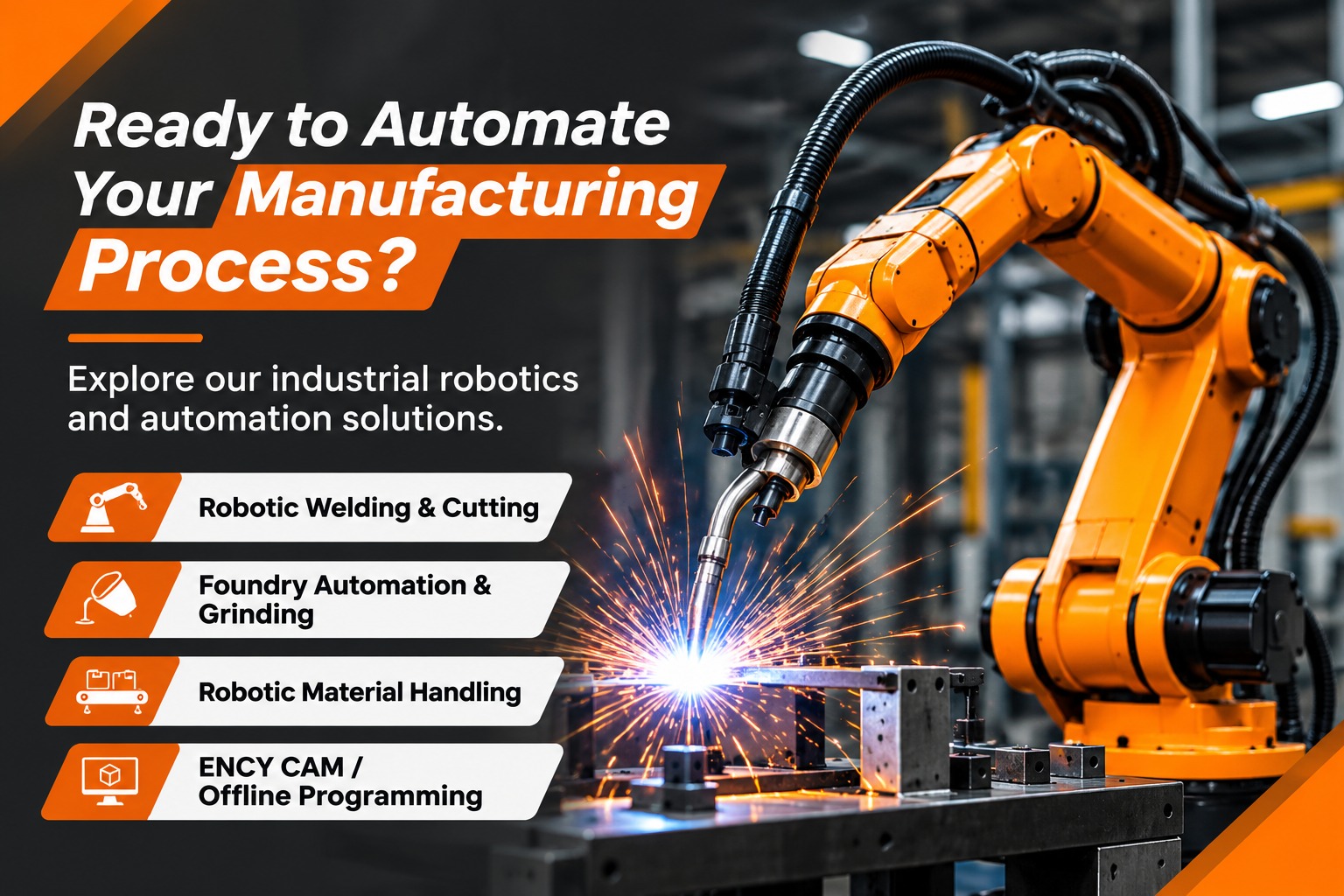
Modern manufacturers face a defining engineering decision when scaling production capacity: investing in high-precision robotic arms vs. traditional automation. Whether you are upgrading an automotive sub-assembly cell, streamlining electronics manufacturing, or modernizing heavy metal fabrication, choosing the wrong architecture can lock your plant into rigid tooling or unnecessary capital expenditure. Traditional fixed automation has powered mass production for decades through mechanical cams, dedicated conveyors, and single-purpose machinery, yet contemporary market demands increasingly favor agile, programmable robotics capable of handling rapid product changeovers without tearing down the shop floor.
Understanding how both technologies perform under real-world industrial workloads requires looking beyond upfront equipment quotes. Plant directors and operations engineers must evaluate repeatability tolerances, SKU variability, floor-space utilization, maintenance overhead, and multi-year return on investment. At Mahajan Automation, our engineering teams work directly with manufacturers across India and global markets to audit assembly bottlenecks and deploy tailored automation architectures. In this comprehensive technical guide, we break down the core differences, operational trade-offs, and selection frameworks so you can determine which system belongs on your assembly line.
Understanding the Core Architectures of Assembly Line Automation
Before comparing throughput metrics or payback periods, it helps to establish clear engineering definitions for how each approach executes mechanical work on a factory floor. Both systems aim to eliminate manual bottlenecks and improve assembly line automation, yet their underlying philosophies are fundamentally opposite.
What Are High-Precision Robotic Arms?
High-precision robotic arms are multi-axis, software-programmable manipulators designed to replicate and surpass human dexterity with sub-millimeter accuracy. Most industrial deployments rely on six-axis articulated robots, SCARA (Selective Compliance Articulated Robot Arm) units, or high-speed Delta robots mounted on pedestals, gantries, or linear tracks.
Unlike single-task machines, an articulated robotic arm moves freely across three-dimensional space. By swapping out end-of-arm tooling (EOAT)—such as pneumatic grippers, vacuum suction arrays, laser welding heads, or precision fluid dispensers—the exact same robot can transition from pick-and-place kitting to ultrasonic welding or optical inspection. Industry-leading platforms from Fanuc, ABB, and KUKA routinely achieve positional repeatability between ±0.01 mm and ±0.05 mm, making them indispensable for tight-tolerance assembly.
What Is Traditional Automation?
Traditional automation—commonly referred to as fixed automation or hard automation—consists of custom-engineered mechanical equipment built specifically to manufacture one exact component or execute one repetitive sequence. Think of dedicated rotary index tables, cam-driven pick-and-place mechanisms, custom vibratory bowl feeders, single-purpose stamping presses, and fixed-stroke pneumatic actuators.
In a traditional setup, the sequence of operations is physically dictated by gears, cams, wiring, and mechanical stops rather than flexible software logic. Every fixture, chute, and transfer rail is machined to match the exact geometry of a single part number. When that single part runs uninterrupted for years, hard automation delivers astonishing raw speed. However, the moment product dimensions change, the machinery often requires extensive mechanical re-machining or complete replacement.
Global Manufacturing Momentum: Why Factories Are Rethinking Legacy Lines
The debate between legacy fixed machinery and programmable robotics is unfolding against a historic surge in global factory modernization. According to the International Federation of Robotics (IFR) World Robotics Report, the global operational stock of industrial robots surpassed a record 5 million units, driven by more than 600,000 new annual installations worldwide. Notably, India ranked sixth globally in annual installations while posting a remarkable 27% compound annual growth rate between 2020 and 2025 as automotive, electronics, and consumer goods manufacturers accelerated domestic capacity.
This rapid shift reflects a structural change in consumer and industrial supply chains. Product lifecycles are shrinking across every sector. Automotive OEMs and Tier-1 suppliers are simultaneously producing internal combustion, hybrid, and electric vehicle components on shared lines. Electronics and white-goods manufacturers introduce updated enclosures and circuit layouts every six to twelve months. Under these conditions, relying exclusively on rigid, single-SKU machinery creates severe financial exposure.
High-Precision Robotic Arms vs. Traditional Automation: Head-to-Head Comparison
When evaluating high-precision robotic arms vs. traditional automation, plant managers need an objective side-by-side view across critical operational dimensions. The table below contrasts how both systems perform in active production environments.
| Evaluation Criteria | High-Precision Robotic Arms | Traditional (Hard) Automation |
| Product & SKU Flexibility | High: Reprogrammed via software and quick-change EOAT to handle dozens of part variants. | Low: Physically built for a single product geometry; changes require mechanical rebuilds. |
| Raw Cycle Speed | Fast to Very Fast: Optimized through path smoothing, though multi-axis motion has slight kinematic overhead. | Ultra-Fast: Simultaneous cam-driven actions achieve extreme throughput for simple, single-part runs. |
| Positional Repeatability | Sub-Millimeter (±0.01 mm to ±0.05 mm): Consistent across complex 3D paths and angled insertions. | High Mechanical Repeatability: Driven by physical hard stops, though prone to mechanical wear over time. |
| Upfront Capital Cost (CAPEX) | Moderate to High: Includes robot arm, controller, safety guarding, and custom EOAT integration. | High for Custom Builds: Heavy non-recurring engineering (NRE) costs for bespoke tooling and fixtures. |
| Reusability & Salvage Value | High (70%–85%+): Robots can be redeployed to entirely new lines when a product line retires. | Very Low (10%–20%): Dedicated machines are frequently scrapped when the target SKU is discontinued. |
| Floor Space Footprint | Compact: Pedestal, wall, or overhead gantry mounting saves valuable shop-floor real estate. | Expansive: Linear transfer lines and dedicated stations require large contiguous floor areas. |
| Smart Factory Integration | Native Industry 4.0: Seamless connectivity with machine vision, PLCs, and IIoT analytics. | Limited: Often requires retrofitted external sensors to capture real-time telemetry. |
7 Critical Factors to Decide What Fits Your Assembly Line
Selecting the optimal automation strategy depends on the specific physics, economics, and production targets of your facility. Use these seven engineering criteria to evaluate your assembly line before committing capital.
1. Production Volume and SKU Mix (High-Mix vs. High-Volume)
Production profile is the single strongest indicator of which system will win on your floor.
- When Traditional Automation Wins: If your factory produces millions of identical units per year—such as beverage bottle caps, standard fasteners, blister packs, or simple stamped brackets—and the product design will remain unchanged for five to ten years, traditional hard automation delivers unmatched cost-per-part efficiency. Dedicated rotary indexing machines perform multiple operations simultaneously at blistering speeds that a single articulated arm cannot match.
- When High-Precision Robotic Arms Win: If your facility operates in a high-mix, low-to-medium volume environment, flexible manufacturing systems powered by robotic arms are vastly superior. By storing multiple part programs inside the robot controller and pairing the cell with automated tool changers, operators can switch between different assembly models in seconds rather than hours.
2. Precision, Repeatability, and Tolerance Requirements
Modern assemblies increasingly demand micron-level accuracy across complex geometries. Think of inserting delicate electronic connectors, applying continuous structural adhesive beads around curved automotive housings, or executing multi-pass TIG and laser welds.
While traditional mechanical fixtures rely on physical hard stops that gradually wear down through friction and vibration, high-precision robotic arms maintain consistent path accuracy across millions of cycles. Furthermore, integrating 2D or 3D machine vision allows a robotic arm to dynamically compensate for slight variations in incoming part presentation—something rigid mechanical automation simply cannot do without jamming.
3. Cycle Time Optimization and Throughput Targets
Achieving target takt time requires balancing raw speed against system uptime. Traditional automation excels when every station executes a short, linear stroke in parallel. However, a single mechanical jam in a rigid transfer line halts the entire downstream sequence until maintenance clears the fault.
In robotic cells, engineers achieve cycle time optimization through dual-gripper end-of-arm tooling, coordinated multi-robot motion, and intelligent path planning. Even better, robotic cells can be arranged in modular parallel workcells; if one cell requires routine tip dressing or nozzle cleaning, adjacent cells continue running uninterrupted, protecting overall plant OEE (Overall Equipment Effectiveness).
4. Total Cost of Ownership (TCO) and Multi-Year ROI
Evaluating equipment strictly by initial purchase price often leads to costly mistakes. A custom special-purpose machine (SPM) might appear slightly cheaper on day one than a fully integrated six-axis robotic cell, yet its lifecycle economics tell a different story.
Consider what happens at year three when a major client updates a component specification:
- With Traditional Automation: You must pay for new mechanical design engineering, custom CNC-machined fixtures, assembly downtime, and commissioning—essentially buying a new machine.
- With Industrial Robotic Automation: The core robot arm, servo drives, controller, and safety fencing remain completely intact. You only invest in updated EOAT fingers and offline simulation reprogramming.
For budget-conscious manufacturers seeking rapid payback, deploying certified refurbished or rental industrial robots from trusted global brands (such as Fanuc, ABB, and KUKA) lowers initial CAPEX even further while delivering full industrial precision.
5. Floor Space Constraints and Plant Layout
Factory floor space is an expensive, finite asset. Traditional linear assembly lines stretch horizontally across long stretches of the shop floor, requiring wide maintenance aisles around every dedicated station.
High-precision robotic arms offer remarkable spatial efficiency. An articulated arm has a compact base footprint while reaching across a wide spherical work envelope. Engineers can mount robots upside-down on overhead gantries, on walls, or on elevated risers above existing conveyors—freeing up floor space for material staging, quality inspection, or additional production lines.
6. Integration with Machine Vision, IIoT, and Smart Manufacturing
As highlighted by the National Institute of Standards and Technology (NIST) Smart Manufacturing Program, modern industrial competitiveness depends on interoperable, sensor-driven systems capable of real-time process monitoring and adaptive control.
High-precision robotic arms are built from the ground up for Industry 4.0 connectivity. They integrate effortlessly with:
- Inline Machine Vision: Guided bin picking, barcode/QR verification, surface defect detection, and dimensional gauging.
- Force-Torque Sensors: Delicate press-fit assembly, gear meshing, and deburring where the robot “feels” resistance in real time.
- IIoT & Predictive Maintenance: Continuous monitoring of servo motor currents, joint temperatures, and cycle counts to predict component wear before unexpected breakdowns occur.
Traditional mechanical automation lacks native digital intelligence, forcing engineers to bolt on costly third-party PLCs and sensor arrays just to achieve basic operational visibility.
7. Workforce Safety, Ergonomics, and Skill Requirements
Assembly lines frequently involve repetitive strain injuries, sharp sheet-metal edges, toxic fumes, or heavy sub-assemblies. Both automation types remove operators from hazardous tasks, yet robotic systems simplify compliance with modern ISO 10218 and ISO/TS 15066 safety standards through programmable safety zones, light curtains, and laser area scanners.
On the maintenance side, traditional hard automation demands specialized mechanical millwrights capable of troubleshooting custom cams and pneumatic timing valves. Modern robotic arms feature standardized interfaces, intuitive teach pendants, and offline CAM/simulation software—allowing a single controls engineer to maintain dozens of robots across multiple departments.
Real-World Industry Applications: Where Each Solution Shines
To see how high-precision robotic arms vs. traditional automation play out in practice, let us examine four major manufacturing sectors.
Automotive and Auto Components
Automotive assembly demands uncompromising repeatability and tolerances alongside frequent model-year refreshes. Six-axis robotic arms dominate body-in-white spot welding, precision MIG/TIG chassis welding, structural adhesive dispensing, and CNC machine tending. Meanwhile, high-speed traditional feeding systems still handle standardized sub-components like spark plug assembly or bearing race pressing before handing off parts to robotic cells.
Electronics, FMEG, and White Goods
Consumer electronics and appliances undergo rapid design iterations. High-precision SCARA and small-payload six-axis robots excel at PCB handling, micro-screwdriving, conformal coating, and optical display alignment. Traditional automation is generally restricted to upstream component tape-and-reel packaging where geometries stay constant.
Foundry, Forging, and Heavy Engineering
Harsh environments involving molten metal, extreme heat, abrasive dust, and heavy payloads require ruggedized protection. Heavy-duty articulated robots equipped with foundry-grade wrist protection automate die-casting extraction, fettling, grinding, and deburring with zero fatigue—eliminating the most dangerous manual jobs in heavy manufacturing.
FMCG, Food, Beverage, and Pharmaceuticals
High-volume bottling, blister sealing, and cartoning lines rely heavily on traditional continuous-motion rotary machinery to hit hundreds of units per minute. However, at the end of the line, high-speed Delta and articulated robots take over for primary pick-and-place, multi-SKU case packing, and mixed-load palletizing.
The Hybrid Approach: Combining Robotic Arms with Traditional Automation
Choosing between high-precision robotic arms vs. traditional automation does not have to be an all-or-nothing binary decision. In fact, the highest-performing modern assembly lines use a hybrid automation architecture that pairs the raw speed of dedicated mechanics with the intelligence and agility of multi-axis robotics.
In a typical hybrid assembly cell:
- Traditional Conveyors and Vibratory Feeders rapidly orient, buffer, and transport high-volume base components into a repeatable presentation zone.
- High-Precision Robotic Arms equipped with custom EOAT pick those components, execute complex multi-angle assembly, apply precision sealants, or perform vision-guided quality checks.
- Automated Guided Vehicles (AGVs) or Autonomous Mobile Robots (AMRs) transport finished sub-assemblies seamlessly between workcells and warehouse dispatch zones.
By combining both technologies, manufacturers capture maximum throughput on standardized steps while preserving complete agility where product variations occur.
How Mahajan Automation Engineers Turnkey Assembly Line Solutions
Designing an assembly line that delivers guaranteed cycle times, zero bottlenecks, and rapid ROI requires far more than purchasing a standalone robot arm. True performance comes from holistic system engineering—integrating fixtures, end-of-arm tooling, PLC controls, safety interlocks, and offline simulation into one cohesive production cell.
Since 2011, Mahajan Automation has partnered with leading manufacturers across automotive, foundry, heavy engineering, electronics, FMCG, and pharmaceuticals to deliver end-to-end turnkey robotics integration. Operating out of our 12,140+ sq. meter engineering and project setup facility in Pune—supported by four strategic regional locations across India—our team of 70+ automation specialists executes every stage of your project in-house.
Why Manufacturers Partner with Mahajan Automation
- 100% Proven Global Robot Platforms: We engineer solutions around world-class industrial robots from Fanuc, ABB, and KUKA, ensuring unmatched reliability, spare-parts availability, and multi-decade service life.
- Comprehensive Application Expertise: Whether your line requires turnkey robotic welding and cutting solutions, precision fluid dispensing, machine tending, robotic foundry automation, or high-speed material handling, we build custom cells tailored to your exact takt time.
- Smart Vision & Industry 4.0 Connectivity: We pair articulated arms with industrial machine vision inspection and IIoT smart factory integration so you gain real-time OEE tracking, defect detection, and predictive maintenance insights.
- Flexible Deployment Models (New, Used & Rental): Need to validate a process or scale rapidly on a tight budget? Alongside brand-new turnkey installations, we maintain ready-to-deploy inventory of certified used robots and short- or long-term robot rental programs.
Ready to Optimize Your Assembly Line? Schedule a Free Engineering Audit
Do not let rigid legacy machinery or manual bottlenecks hold back your production targets. Whether you are evaluating high-precision robotic arms vs. traditional automation for a greenfield facility or retrofitting an existing line, our automation engineers will analyze your CAD drawings, cycle-time goals, and ROI targets to recommend the highest-performing architecture.
Frequently Asked Questions (FAQs)
1. What is the main difference between high-precision robotic arms and traditional automation?
The core difference lies in programmability and adaptability. Traditional automation uses custom-built mechanical cams, dedicated fixtures, and fixed-stroke actuators engineered to produce a single specific product at ultra-high speeds. High-precision robotic arms are multi-axis, software-controlled manipulators that can be reprogrammed and fitted with different end-of-arm tooling to handle multiple product variants and complex 3D paths with sub-millimeter repeatability.
2. When is traditional automation better than robotic arms?
Traditional (hard) automation is the better choice when you manufacture a single, standardized product in massive annual volumes—such as beverage caps, standard fasteners, or simple stamped parts—and do not anticipate product design changes for five or more years. Under steady, single-SKU conditions, dedicated rotary or linear machines achieve faster raw cycle times and lower unit costs than articulated robots.
3. How accurate are high-precision industrial robotic arms on an assembly line?
Leading six-axis and SCARA industrial robotic arms from manufacturers like Fanuc, ABB, and KUKA routinely achieve positional repeatability between ±0.01 mm and ±0.05 mm. When paired with 2D/3D machine vision systems or force-torque sensors, robotic arms can dynamically adjust for part tolerances during delicate electronic assembly, dispensing, or precision welding.
4. What is the typical ROI payback period for robotic assembly line automation?
Most manufacturers achieve a full return on investment within 12 to 24 months. Payback is driven by continuous multi-shift operation without fatigue, drastic reductions in scrap and rework rates, lower direct labor costs, and the ability to reuse the same robot across future product launches without buying new machinery.
5. Can small and medium-sized manufacturers afford high-precision robotic arms?
Yes. While custom turnkey cells require upfront investment, SMEs can significantly reduce initial capital expenditure by starting with modular single-cell automation, selecting certified refurbished industrial robots, or utilizing flexible robot rental programs. As production demand scales, additional robotic cells can be added incrementally without disrupting existing operations.
6. Can high-precision robotic arms work alongside existing traditional machinery?
Absolutely. Many modern factories use a hybrid automation setup where traditional conveyors, bowl feeders, or stamping presses feed components directly into a robotic workcell. The robotic arm then performs complex assembly, vision inspection, or palletizing—giving you the speed of legacy equipment combined with the flexibility of smart factory Industry 4.0 robotics.